Coming back to Norway meant that Harald Hardrada had two relatives to deal with – Sweyn and Magnus. It would make for an interesting path to the Norwegian throne.
By 1043 the wheel of fortune had turned once more, and the family of Harald Hardrada was triumphant. While Harald had busied himself in his exile waging war across the wine-dark sea in the employ of the empire of the Romans, his nephew Magnus, the illegitimate son of Harald’s half-brother King Olaf II, had become the figurehead of a powerful bloc of Norwegian aristocrats disaffected by the burdens and excesses of Danish overlordship. With their support and after a decade of warfare, Magnus was able to not only secure his hold on Norway, doing much to establish and disseminate notions of royal authority, but also capture the throne of Denmark. Their traditional enemies and tormentors had all fallen by the wayside or been bent to purpose. Cnut the Great and his sons, their power fragmented by internecine rivalries and squabbles, all fell victim to illness and tragedy while the Norwegian aristocrats who had overthrown and then slain Olaf II had all reconciled themselves to Magnus and the notion of Norwegian kingship.
Magnus, whose role in the political unification of Norway and establishment of the kingdom has all too often been overlooked and undervalued, is known to history as Magnus the Good. He earnt this epithet we are told by the 13th-century saga material because rather than seek revenge against his father’s killers and perpetuate a destructive blood feud, Magnus chose to forgive them and work together in challenging Danish hegemony over Norway. Of course, Magnus was only eleven when he was first proclaimed king in 1035, therefore despite the support of several powerful advocates, such as his stepmother Queen Astrid and her brother King Arnud Jacob of Sweden, the extent to which he could have struck back against his aristocratic sponsors is highly questionable. Harald’s epithet of Hardrada on the other hand translates into English into something along the lines of the severe or stern. Wars fought between those famed for their decency and gentleness of heart and those known for their severe and forceful nature seldom last long.
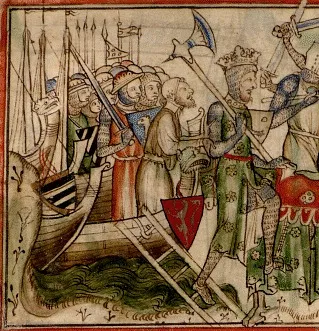
And it was to be war, for Harald arrived in Scandinavia intent upon seizing the throne of Norway for himself. Perhaps he felt like he had come too far, seen too much and served too many simply to present himself to his nephew as just another poor relation, a potential military proxy and advisor in a royal court already replete with vested interests and aristocratic affinities. Harald had departed Constantinople with considerable haste with a meagre handful of ships and a few hundred diehard followers at the most. Yet he was a force to be reckoned with.
Read the rest of this article...

























/https://tf-cmsv2-smithsonianmag-media.s3.amazonaws.com/filer_public/55/b3/55b3b557-ad11-46b8-9dcf-7529d123781f/openerletterboxed.jpg)