Saturday, 24 June 2023

Wild Cattle in Britain – Descendants of Viking Cattle?


Also known as the Chillingham Cattle, Britain is home to four flocks of White Cattle living in the wild since the 12th century.

The fierce and shy wild cattle living in the park at Chillingham is but one flock of four roaming at Woburn, Dynevor, and Cadzow. Earlier on, such herds were a common feature in the British landscape, probably kept for their ornamental and symbolic value. Known in the 12th century as Tauri Sylvestres, they have apparently always been considered a wild sub-species. The herd at Chillingham, though, was first mentioned in 1645. Today, about 130 animals live in the 150-ha large park in Northumberland. The herd is protected from being earmarked, a true sign of their “wild” status.

These flocks of wild cattle were treated as a kind of super-deer eaten on festive occasions, such as at the Archbishop of York installation feast in 1466. At the celebrations, six wild bulls were roasted and served. It appears the white cattle survived as potent medieval status symbols alongside other wild species. Evidence from Auckland Castle indicates a herd of White Cattle was kept in the 15th-century deer park for ornamental reasons together with wild horses.

Read the rest of this article...

Thursday, 22 June 2023

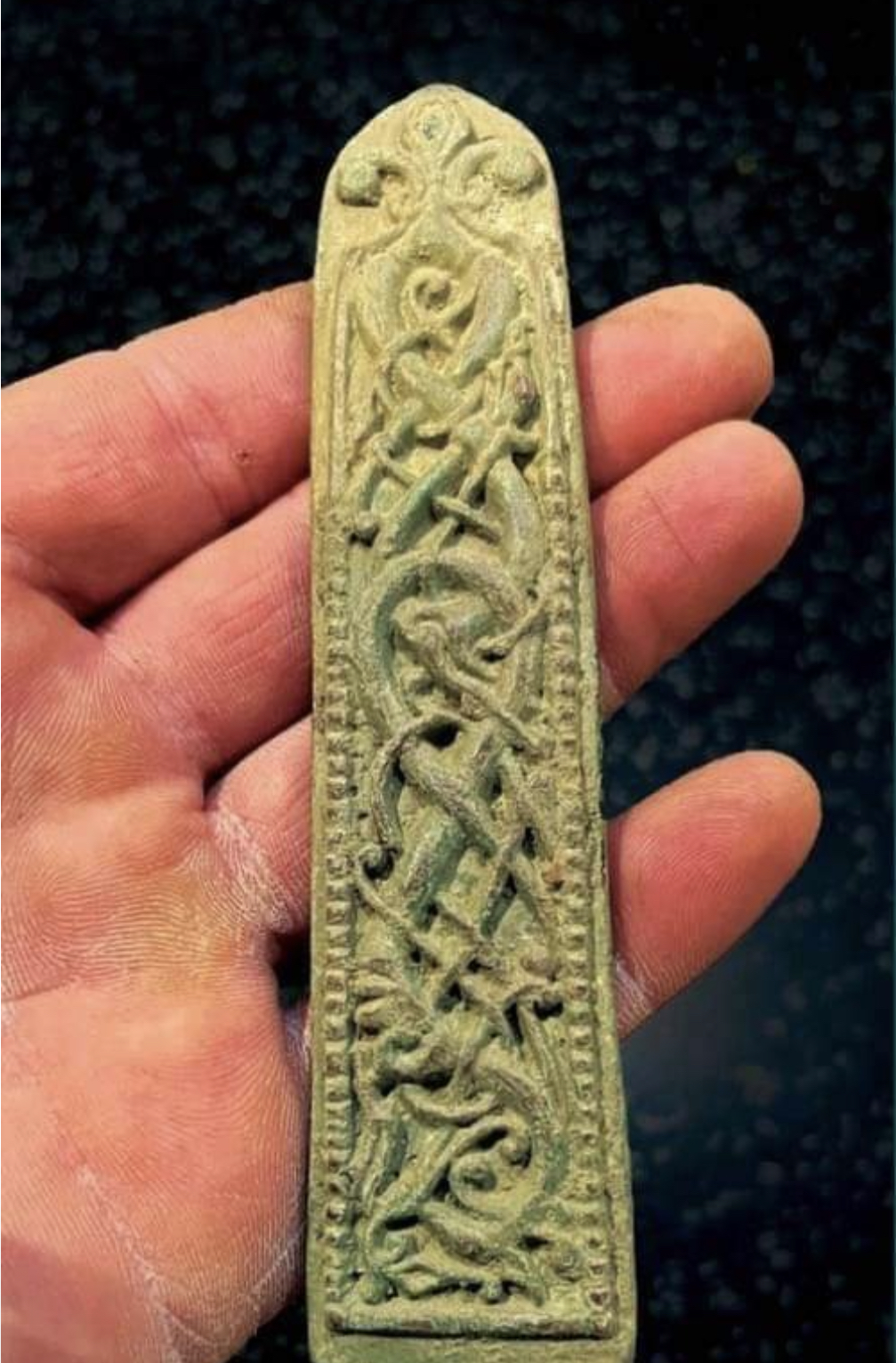
Viking artefact unearthed by metal detectorist to be sold at auction

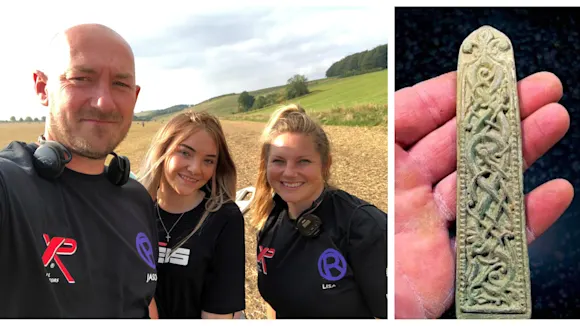
The bronze artefact, called a die, would have been used to create decorative motifs to be applied to a military helmet (Jason Jones/PA)

A metal detectorist has unearthed a Viking artefact that was used to craft decorative motifs for military helmets.

Jason Jones, 44, of Norwich, made the find while searching a field near Watton in Norfolk in January this year, having previously found two medieval silver coins there.

The construction industry worker, who was with his wife Lisa, said he had forgotten to charge his main detector and was using his backup machine.

“I returned to the area where the coins were found and got a loud signal, and at a depth of just two inches found an unusual bronze object,” he said.

“Lisa came over and was speechless when she saw it.

Read the rest of this article...

Viking artefact unearthed by metal detectorist in Norfolk field could fetch £24,000 at auction

Jason Jones, 44, with his wife and daughter, found a Viking artefact in a field in Norfolk.
Credit: Jason Jones / PA / Noonans auctioneers

A Viking artefact unearthed by a metal detectorist in Norfolk could fetch up £24,000 at auction.

Jason Jones, 44, of Norwich, made the find while searching a field near Watton in Norfolk in January this year, having previously found two medieval silver coins there.

The construction industry worker, who was with his wife Lisa, said he had forgotten to charge his main detector and was using his backup machine.

“I returned to the area where the coins were found and got a loud signal, and at a depth of just two inches found an unusual bronze object,” he said.

Read the rest of this article...

A Couple Renovating Their Kitchen in Denmark Found an Ancient Stone Carved With Viking Runes

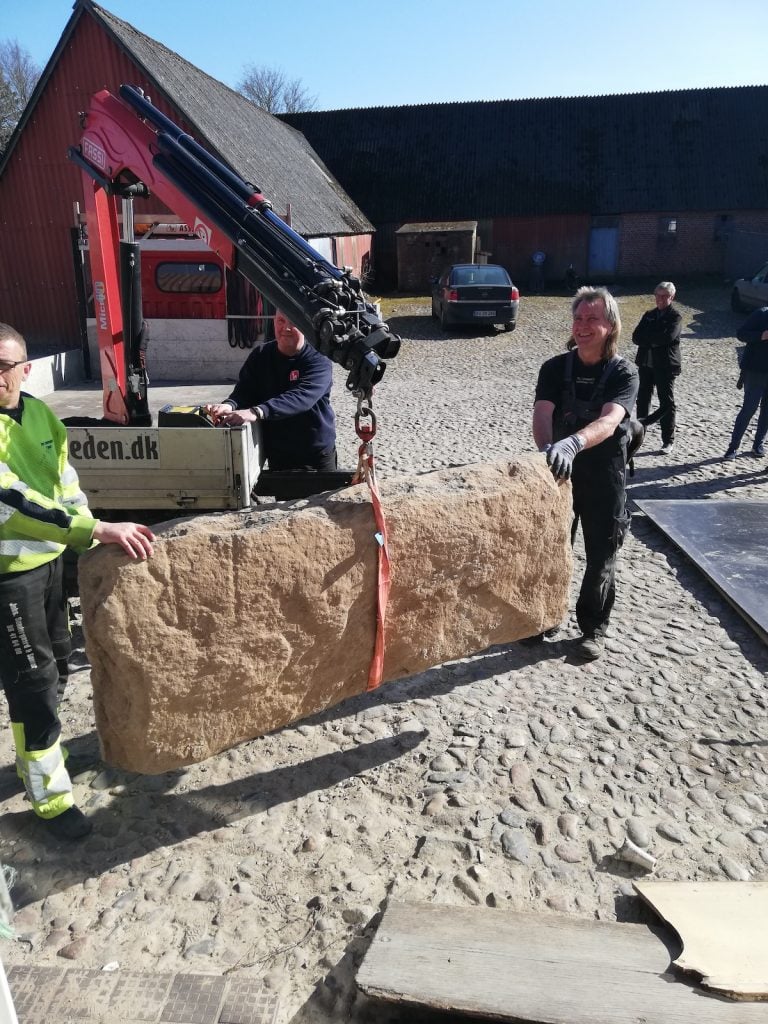
An ancient stone was discovered under the kitchen floor in a home in Denmark.
Photo Lene Brandt, courtesy National Museum of Denmark.

When Lene Brandt and her husband, Anders Nielsen, were preparing to tear up the linoleum floors in the kitchen in their home in the village of Mosekær, in Denmark, they probably expected the normal things that occur in the course of such a project: cost overruns, delays, and problems with contractors.

Instead, what they found was an ancient artifact. The couple stumbled across a nearly 2,000-pound stone, measuring more than six feet long, carved with ancient runes. The couple contacted local experts at the Museum Østjylland. Staff archaeologist Benita Clemmensen is quoted by the cultural news site Skjalden saying that these stones are the sole written records of the Viking Age. 

Five runes can be found carved into the stone’s surface, reading “aft Bi,” which can be translated as “after B.” 

Read the rest of this article...

Tuesday, 20 June 2023

Game piece with runic inscription found in Trondheim


A round soapstone game piece discovered in an archaeological survey in advance of sewer pipe repair in Trondheim, Norway, is inscribed with runes. This is only the second known game piece with a runic inscription ever discovered in Norway.

The excavation uncovered a sunken pit with archaeological layers dating to the Middle Ages. The deepest part of the pit, more than 12 feet below today’s street surface, has been dated to between 1000 and 1150 A.D. A coal layer above it was only slightly more recent, dating to 1030-1180 A.D. The soapstone game piece was found between the two layers.

Archaeologists first thought the lines incised on the round piece’s surface could be stylized floral motifs, but the geometry was also reminiscent of runic inscriptions albeit laid out in artistic fashion.

The team sent high-resolution images of the piece to runologist Karen Langsholt Holmqvist. She was so intrigued she was compelled to view the object in person. That’s when she conclusively identified the decoration as runic writing.

Read the rest of this article...

What did the Vikings eat?

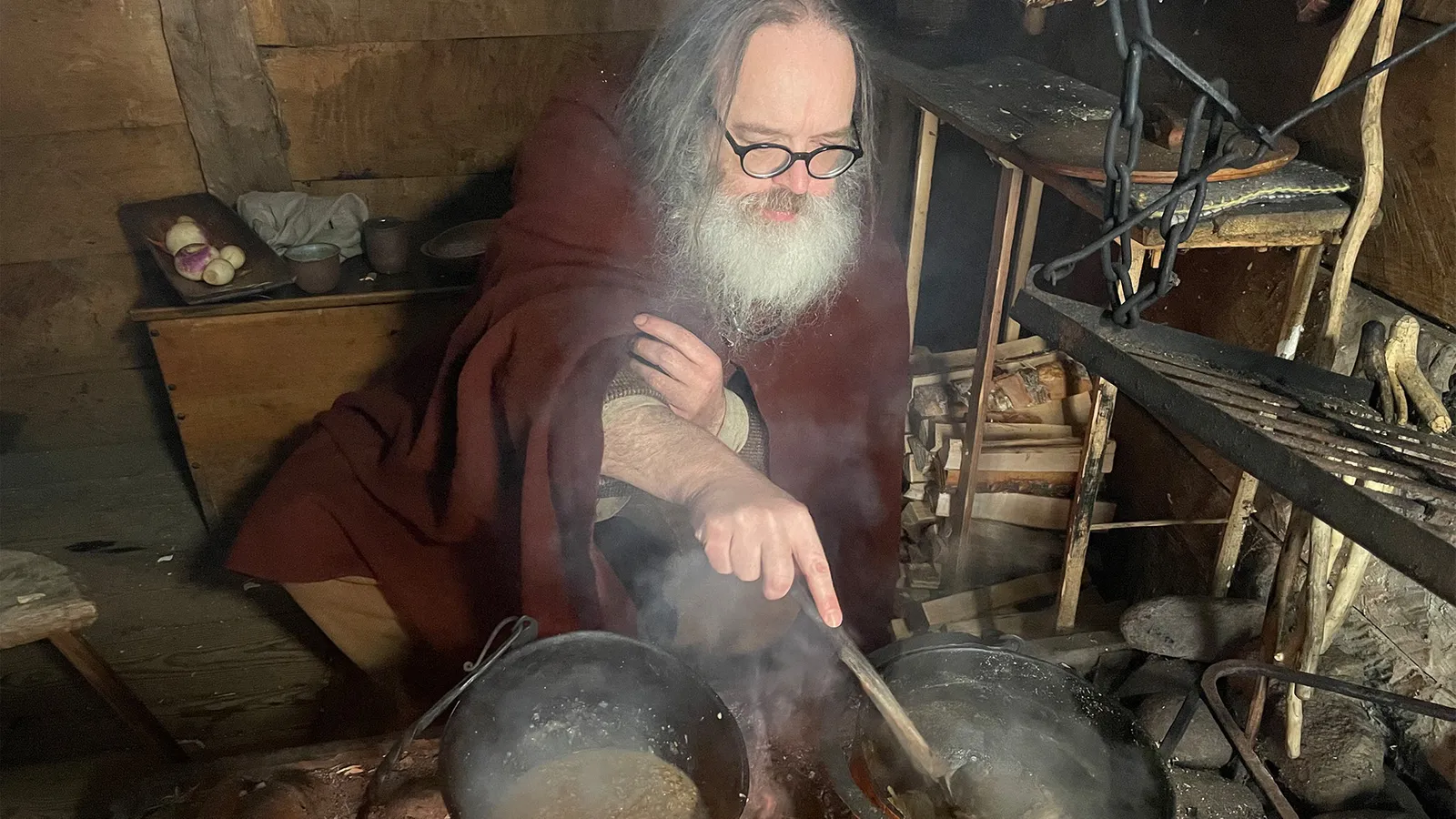
Serra is a culinary archaeologist recreating long-lost Viking recipes (Credit: Maddy Savage)

While the word "Viking" is often used to describe anyone who lived during the Viking era, Serra explained that it should technically only refer to the pirates and pillagers who travelled across northern Europe between the 8th and 11th Centuries. He said that most people during this period weren't bloodthirsty invaders, but worked as farmers, fishermen, crafters or traders, and he's made it his life's mission to research and recreate the kind of dishes that dominated their everyday diets. 

"I like to eat, and I like to eat good food, so I was curious: what did [the Vikings] eat?" said Serra, who initially studied the food of ancient Rome as an archaeology student by recreating dishes from the 1st- to 5th-Century cookbook De Re Coquinaria. He then reconstructed, cooked and tasted his way from the Iron Age to the Middle Ages before focusing on the Viking era during his graduate studies. Today, having established that Vikings were much more farm-to-table locavores than meat-loving hunter gatherers, Serra is now considered one of Scandinavia's leading authorities on the culinary practices of the Vikings. 

Read the rest of this article...

Stone Carved With Viking Ship May Be Oldest Picture Ever Found in Iceland

Photo: Landnámsskáli í Stöð / Facebook

Archaeologists in Iceland have found a sandstone carved with a Viking ship that may be the oldest picture ever found in the country. The stone was found at the archaeological site Stöð in East Iceland in a longhouse that is believed to predate the permanent settlement of the island. RÚV reported first.

Richest longhouse ever excavated in Iceland
The first exploratory digs at Stöð were made in 2015 and archaeologists have returned every summer since to continue excavating the site, where they first focused their efforts on a settlement-era longhouse.  “The longhouse is among the largest found in Iceland, 31.4m [103ft] long. In Scandinavia, only chieftains’ farms had longhouses larger than 28m [92ft]. It is also the richest longhouse ever excavated in Iceland. We have found 92 beads and 29 silver objects, including Roman and Middle Eastern coins,” Bjarni F. Einarsson told Iceland Review for a 2020 article on the archeological site.

Oldest building predates settlement
What makes the site still more significant is that archaeologists discovered an even older longhouse underneath the settlement-era longhouse, estimated to date back to around 800 AD, some 75 years before the permanent settlement of Iceland. The most striking feature of the older structure is the conspicuous absence of the bones of domesticated animals. “My theory is that the older longhouse was a seasonal hunting camp, operated by a Norwegian chief who outfitted voyages to Iceland to gather valuables and bring them back across the sea to Norway,” Bjarni told Iceland Review. One of these valuables may have been walrus ivory: in 2019, DNA analyses and radiocarbon dating confirmed that Iceland was previously inhabited by a North Atlantic subspecies of walrus, now extinct.


Read the rest of this article...

Monday, 12 June 2023

Viking Support Animals

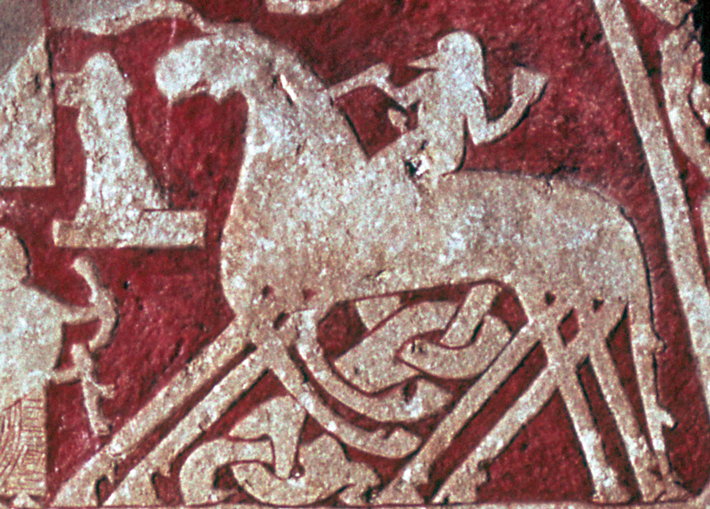
(The Picture Art Collection/Alamy Stock Photo) Stela depicting Odin’s horse Sleipnir

The warriors of the Viking Great Army who campaigned in Britain from A.D. 865 to 878 worshipped gods often associated with animal companions, such as Odin and his eight-legged horse Sleipnir. It seems that some of the army’s leaders may have made the voyage across the North Sea from Scandinavia with their own cherished animals as comrades. A team led by University of Durham archaeologist Tessi Loeffelmann discovered evidence of these travel arrangements while analyzing isotopes of the element strontium in cremated animal bones recovered from Norse burial mounds near the site of the army’s A.D. 873–874 winter camp in Repton.

Read the rest of this article...

The cruelty of the Vikings was legendary. However, the reality was different

[Photo by DAMIANUM CASTRUM from Pexels]

They were famous for their violent nature, sudden attacks and barbarism. But to what extent is the cruelty of the Vikings a fact confirmed by historians?

In June 793, Vikings invaded a monastery on the island of Lindisfarne off the northeast coast of England. The center, which had existed for 150 years, was the spiritual and intellectual center of the region. However, to the pagan aggressors it was nothing more than an undefended object full of riches. Thus began in the history of Europe an era of Vikings that lasted more than 250 years, until the decisive battle of Hastings fought in 1066.

“Never before had there been such a terror in Britain as that which has now arisen through the heathen race. These barbarians poured the blood of the saints around the altar [in St. Cuthbert’s Church] and trampled on the bodies of the saints in the temple of God like dung in the streets.”

These words, still breathing terror today, were written by Alcuin of York in a letter to King Ethelred of Northumbria. This was the name of the land on the coast of which the profaned and devastated monastery and church were located.

Read the rest of this article...

Unusual Discovery Of A Viking Age Phallic Stone In Tystaberga, Sweden


Ellen Lloyd - AncientPages.com - As an archaeologist, you can expect to find some surprises everywhere. That's what happened during recent excavations on a hill in Tystberga outside the city of Norrköping, Sweden, where scientists unearthed something eye-catching.

A new railroad will be constructed, so scientists excavated the site from May to June this year. It's an archaeological site where researchers have previously unearthed more than 60 Viking Age graves and a settlement from the Bronze Age.

In a recent study, scientists found a grave containing two curious stones. An examination of the stones showed one was a grave ord. These stones were common in Scandinavia from the Pre-Roman Iron Age until the Vendel era. Engraved with ornaments, grave orbs were placed on an individual's tomb.  The other stone unearthed in Tystberga was shaped like a penis.

The phallus was a powerful and important symbol throughout the ancient world, but unearthing a Viking Age Phallic stone in Sweden does not happen often.

Read the rest of this article...

Scramasax with preserved wood handle found in Sweden


An archaeological excavation in Skälby on the outskirts of Västerås, southeastern Sweden, has uncovered a scramasax (short sword) with its decorated wooden handle so well-preserved it looks like new even though it’s more than 1100 years old.

About 16 inches long with its unusually decorative grip intact, the scramasax was discovered in 2021 at the bottom of a well, embedded deep in the mud and the waterlogged clay. The anaerobic environment preserved the wooden handle in pristine condition. It is turned to fit the hand and carved with a central enlaced design. Its style dates it to the Vendel Period between the 7th and 9th centuries A.D.

The Skälby site was home to several scattered farming settlements in the Iron Age. Its wells were used for different purposes in different phases, alternating between water sources, garbage pits and places for ritual deposits. Archaeologists believe the short sword was sacrificed, thrown into the well as an offering, as swords like this were extremely valuable objects and not likely to be lost by accident. In fact, they are most frequently found as grave goods, interred with the warrior who wielded it as one of his most prized possessions.

Read the rest of this article...

Friday, 19 May 2023

A Centuries-Old Mystery: Did This Elusive Viking City Exist?

A recreated “Slavs and Viking” settlement, with medieval craft demonstrations, re-enactments and guided tours in Wolin, Poland.Credit...Sergey Ponomarev for The New York Times

Was a “medieval New York” called Jomsborg a literary fantasy or a historical reality? New archaeological discoveries may provide a clue.

After the local government decided to build an observation tower atop a sandy hill on Wolin, an island in the Baltic Sea, a Polish archaeologist was called in to check the site before construction and look for buried artifacts from the spot’s macabre past.

Hangmen’s Hill, a public park, had in earlier times been an execution ground, a cemetery and, some believe, a place for human sacrifices — so who knew what grisly discoveries were in store?

But what the archaeologist, Wojciech Filipowiak, found when he started digging caused more excitement than distaste: charcoaled wood indicating the remains of a 10th-century stronghold that could help solve one of the great riddles of the Viking Age.

Was a fearsome fortress mentioned in ancient texts a literary fantasy or a historical reality?

Read the rest of this article...

Monday, 8 May 2023

Viking Burial Goods: 10 Exotic Items the Vikings Took to Valhalla


According to The Saga of the Ynglings, Odin ordered mortal Vikings to bury the dead accordingly: “He decreed that the dead were all to be cremated along with their possessions and said that everyone should arrive in Valhalla with the riches from his funeral pyre, and with the treasures he had hidden in the earth.”

Harnessing sails and ships, medieval Scandinavians explored the world, amassing treasures from faraway places. These exotic Viking burial goods preserve tales of exploration and adventure.

1. Glass Vessels in Viking Burials

On the island of Björkö in Lake Mälaren, the Vikings built a trading and manufacturing settlement called Birka. Thousands of people were buried at Birka from the late ninth to the tenth centuries. The graves contained an assortment of grave goods.

Archaeologists found glass vessels from the Rhineland, France, and the British Isles inside the Birka graves. Making glass vessels was an expensive and time-consuming process. Vikings did not make their own glass drinking vessels and had to import glass cups from other places in Europe and the Near East. These items were so important to the Vikings that they took glass goblets to the grave just like other treasures of more obvious importance.

Read the rest of this article...

Is There Something Fishy About Radiocarbon Dating?

A map of the route taken by the Viking Great Heathen Army.
Hel-hama, own work, via Wikipedia

The Vikings started out as raiders, but then, in the way of these things, ended up as rulers, and their influence stretched from Greenland to what is now Russia. They first enter English history in 793, with the sacking of the Monastery of Lindisfarne. By the late 9th century, they were colonising Iceland, and serving as mercenaries to the Emperor of Byzantium. In 862, Vikings under Rurik established themselves in Novgorod, forming the nucleus of what would become Kyivan Rus. In 885, Vikings besieged Paris, and although they were beaten back settled in what is now Normandy (Norman, Northmen). In 865, the Viking Great Heathen Army arrived in England, and a year later, under Ivar the Boneless, captured York, which would remain their capital in England until the defeat of Eric Bloodaxe in at 954.

Read the rest of this article...

Thursday, 4 May 2023

Seemingly 'empty' burial mound is hiding a 1,200-year-old Viking ship

The ship-shaped signals from ground-penetrating radar were detected in 2022 during excavations of burial mounds on the island of Karmøy, in southwest Norway.
(Image credit: Theo B. Gill – The Museum of Archaeology, University of Stavanger)

Ground-penetrating radar has revealed the outline of a Viking ship in a mound in southwest Norway that was once thought to be empty.

A Viking Age burial mound in Norway long thought to be empty actually holds an incredible artifact: the remains of a ship burial, according to a ground-penetrating radar analysis.

The remains, which are still underground, indicate that a ship burial took place during the late eighth century A.D., the very start of the Viking Age (A.D. 793 to 1066). If confirmed, it would be the third early Viking ship burial found in the area, on the coast of the island of Karmøy in southwestern Norway, a region that may be the origin of Viking culture.

"This is a very strategic point, where maritime traffic along the Norwegian coast was controlled," Håkon Reiersen(opens in new tab), an archaeologist at the University of Stavanger in Norway, told Live Science. Reiersen works for the university's Museum of Archaeology and led the team that made the discovery last year, near the village of Avaldsnes.

Read the rest of this article...
20-METRE-LONG VIKING SHIP FOUND IN NORWAY

Image Credit : Eva Gjerde - Museum of Archaeology, University of Stavanger

ARCHAEOLOGISTS HAVE DISCOVERED A 20-METRE-LONG VIKING SHIP DURING EXCAVATIONS OF THE SALHUSHAUGEN BURIAL MOUND IN KARMØY, NORWAY.

The mound was first investigated over a century ago by the archaeologist, Haakon Shetelig, however, excavations at the time showed no evidence to indicate that a ship was buried in situ.

“He was incredibly disappointed, and nothing more was done with this mound,” says Håkon Reiersen, an archaeologist at the Museum of Archaeology at the University of Stavanger.

Archaeologists returned to the mound in June 2022 to conduct a ground-penetrating radar survey (GPR), a geophysical method that uses radar pulses to image the subsurface and detect archaeological features.

Read the rest of this article...
Rare, 1,000-year-old Viking Age iron hoard found in basement in Norway

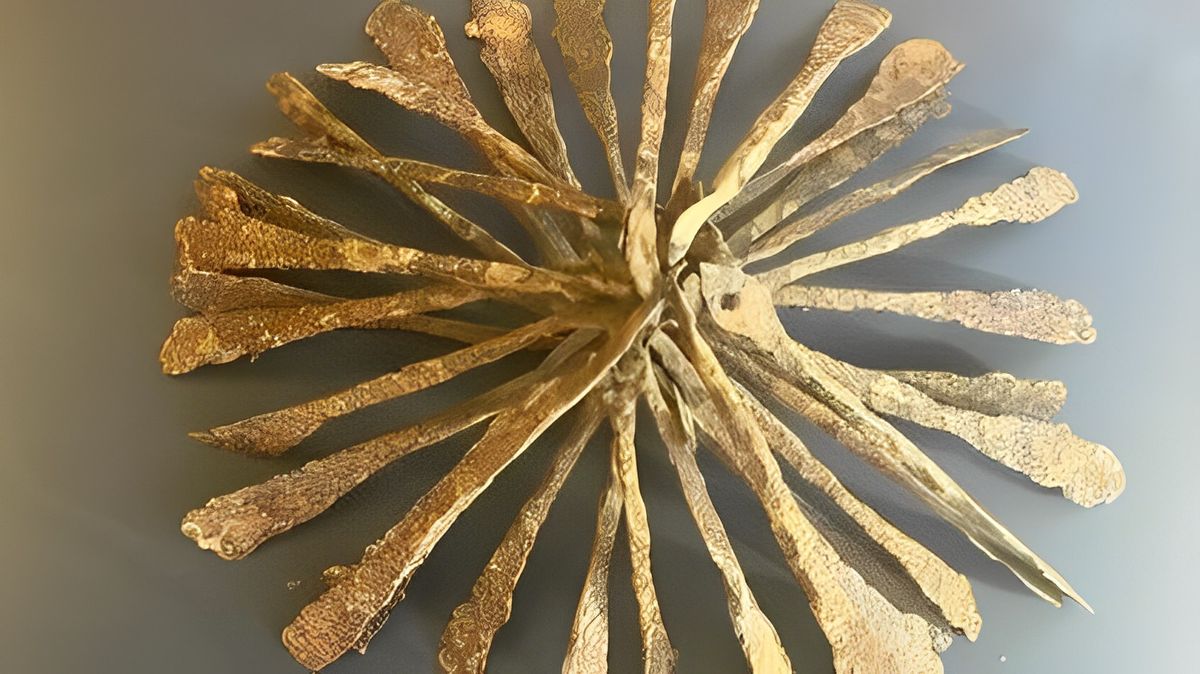
The Viking hoard consists of 32 iron ingots, which are all pierced with a hole on one end and may have been grouped together in a bundle. (Image credit: Mildri Een Eide)

Forty years after her father stored them away, a woman discovered 32 identical iron ingots that Vikings may have used as a form of currency

A rare stash of 1,000-year-old ironwork, which sat for 40 years in a family's basement in Norway, is now seeing the light of day after a woman discovered the hoard during some spring cleaning. 

The hoard consists of 32 iron ingots that look like small spatulas and date back to the Viking Age (A.D. 793 to 1066) or high Middle Ages (1066 to 1350). The rods are identical and weigh about 1.8 ounces (50 grams) each, prompting archeologists to think they may have been used as a form of currency and that someone probably buried them with the intention of coming back for the treasure later.

Read the rest of this article...

How Accurate Are the Viking Sagas?


The Viking sagas are deeply compelling mythologies, but epics like the Volsunga saga also preserve some elements of historical fact.

Almost a thousand years after stories of the Germanic Burgundians were first told, an unknown Icelandic scribe wrote down an accurate description of the events and personages of the 5th century CE, based only on the legends of his people. This incredible feat of oral history was powerful — and to understand its implications, we have to get inside the heads of the Christian Icelanders who looked to their pagan past for a proud literary tradition. Here, we shall attempt to do just that, examining just how accurate the Viking sagas really are.

What Are the Viking Sagas?

At their simplest, the Viking sagas are a body of literature that was mostly written by Icelanders in the 13th century CE. Saga is an Old Norse word meaning “a thing that is said” — it’s roughly analogous to the ancient Greek muthon (“things that are said”, from where we get our word myth), as opposed to ergon (“things that are done”). Thus, we can broadly conceive of the sagas as oral tales about a central figure or figures that recount the deeds of characters from Viking mythology and history. As we shall see, debate still rages as to whether the Norse themselves made a meaningful distinction between these two modern categories — myth and history.

Read the rest of this article...
How Were Viking Ships Built and Buried?


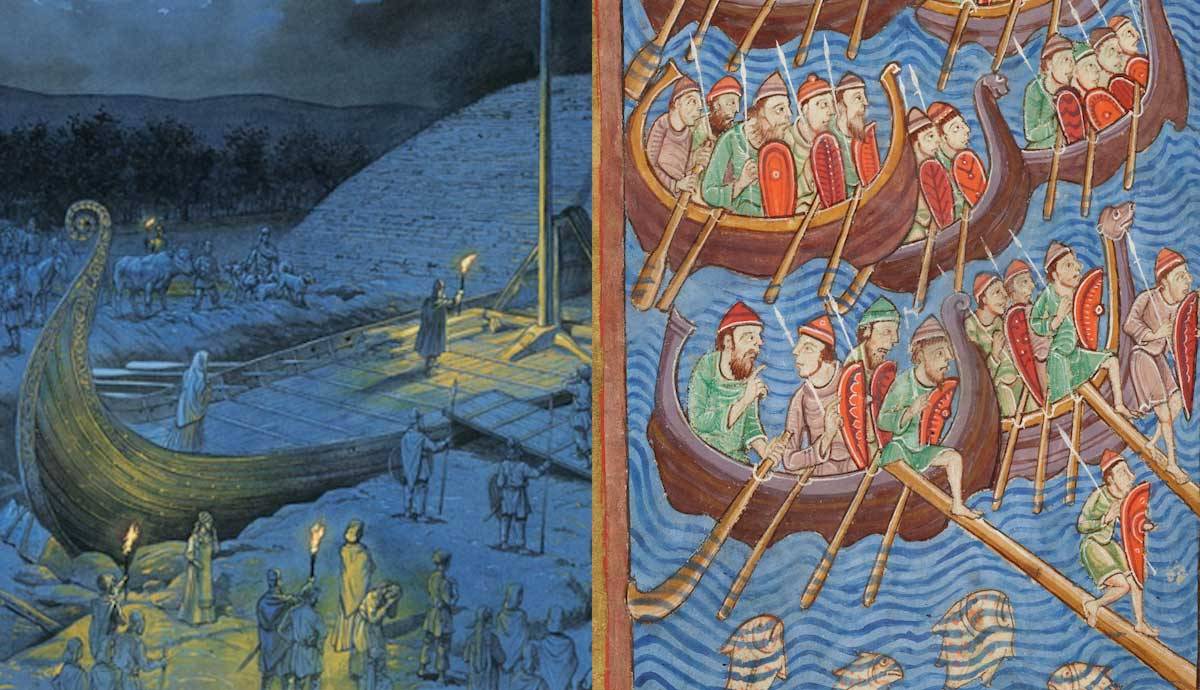
In 793, the monks of Lindisfarne watched in horror as men invaded their holy place. They were under attack. There had been rumors of pirates in nearby Kent, but this was the first time the monks at Lindisfarne had come face-to-face with the raiders. The strangers plundered the monastery of everything valuable and left the edifice covered in the blood of the priests. Then the invaders returned to their ships and sailed away.

Their fine vessels would take the Vikings through Europe, the Baltic, and the Near East, allowing the Norse to establish trading ports and conquer foreign kingdoms. The ships would also allow the Vikings to colonize Greenland and Iceland. Always the ship carried the Vikings onward. Viking ships represented technical innovation and became monuments to honored leaders, ensuring the iconic legacy of the Vikings.

Read the rest of this article...

Tuesday, 2 May 2023

Video – Viking Age fortresses on the North Frisian islands

The Borgsumburg on the North Frisian island Föhr.

The recording of April’s research seminar, featuring Dr Martin Segschneider on the Viking Age fortifications in Germany’s North Frisian Islands.

The two well-preserved, circular ramparts Borgsumburg and Tinnumburg were something of an enigma for decades as little was known about their structure, role and archaeological context.

But recent rescue excavations, aerial photography and geophysical survey have remedied the situation dramatically, leading to a research project focusing on Viking Age merchant sites in the vicinity of the fortifications and a second focusing on the ramparts themselves.

Read the rest of this article...
Beowulf was connected to King Cnut, study finds


When King Cnut sailed to Denmark in 1019, did he bring a copy of Beowulf with him? That is the theory put forward in a new article on why the famous Old English poem was written in the early years of the 11th century.

Beowulf is only found in one copy: the Nowell Codex, which is now kept at the British Library. In his article, “Behold the Front Page: Cnut and the Scyldings in Beowulf,” the historian Richard North argues that this manuscript was at least partially written after Cnut became King of England in 1016. Moreover, the Norse leader and his entourage took a keen interest in the story, using it to develop a claim to the throne of Denmark.

Set hundreds of years in the past, Beowulf tells the story of a hero arriving to help Hrothgar, the king of the Danes, defeat the monster Grendel. Beowulf slays Grendel, then Grendel’s mother, before returning home to Geatland and becoming King of the Geats. Many years later, Beowulf also defeats a dragon, but at the cost of his own life.

Read the rest of this article...

Stolen coins reveals King Alfred had help from ally to stop Vikings ruling England

Alfred was the king of Wessex and then later king of the Anglo-Saxons, and his grandson Æthelstan was the first 'King of the English' (Image: HampshireLive - Grahame Larter)

Alfred, who is widely regarded as the first person to be king of the English, may have been assisted by fellow leader Ceolwulf in his struggle against Viking marauders

Alfred the Great was helped on his way to legendary status by a fellow leader he refused to give credit to and allowed to be written out of history, experts now believe.

Images on medieval coins found in a stolen haul suggest King of Wessex Alfred, who stopped the Vikings in their tracks and paved the way for the formation of England, was in a years-long alliance with Ceolwulff II, King of Mercia.

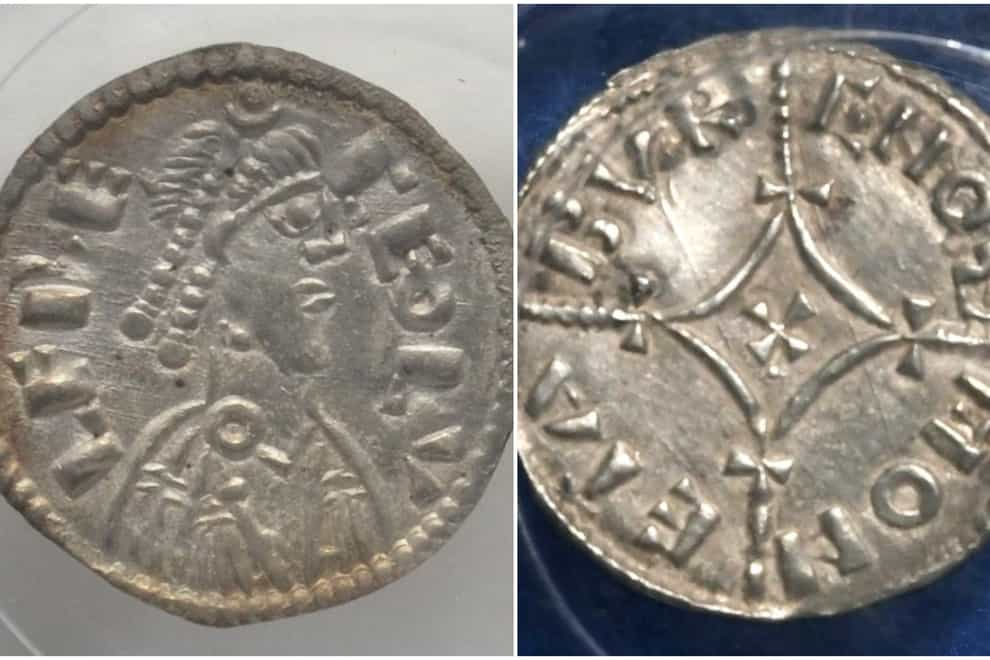
A silver ‘Two Emperor’ penny from 870 AD shows the pair together, suggesting they were strong allies.

But Ceolwulf was later mocked by scribes loyal to Alfred as being a puppet of the Vikings.

Read the rest of this article...

Double hoard of Viking treasure discovered near Harald Bluetooth's fort in Denmark

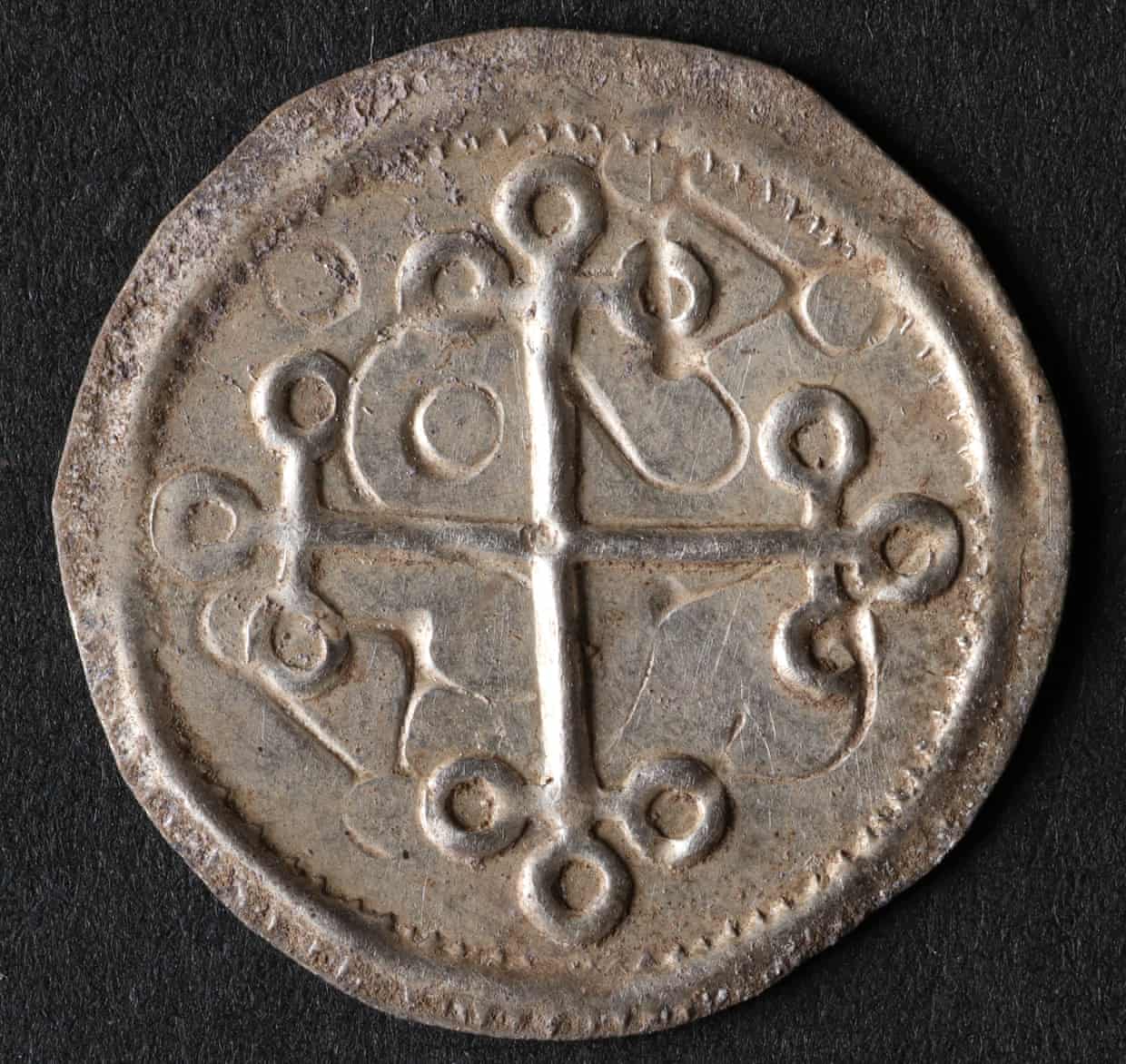
 Archaeologists say Harald Bluetooth paid his men and the Danish aristocracy with "cross coins" and thereby spread knowledge of the new Christian religion throughout the region. On this side of the silver coin there are several runes. (Image credit: Nordjyske Museer, Denmark)

Silver coins and jewelry unearthed from a field on the Jutland peninsula in Denmark are revealing new insight into the reign and religious ambitions of the powerful Viking king Harald Bluetooth, according to archaeologists.

The objects — around 300 pieces of silver, including about 50 coins and cut-up jewelry — were discovered late last year by a local archaeology group surveying a farm northeast of the town of Hobro and near Fyrkat, a ring fort built by Harald Bluetooth in about A.D. 980. 

Excavations show that the valuables were originally buried in two hoards about 100 feet (30 meters) apart, probably beneath two now long-gone buildings. Since then, these hoards have been spread around by farm machinery.

Read the rest of this article...

Friday, 28 April 2023

Collectors guilty of illegal plot to sell historic Anglo-Saxon coins abroad


Two metal detectorists have been found guilty of hatching an illegal plot to sell Anglo-Saxon coins of “immense historical significance” abroad.

Craig Best, 46, and Roger Pilling, 75, were convicted of conspiring to sell criminal property worth £766,000, namely ninth century coins believed to have been buried by a Viking and which have never been declared as Treasure, and have not been handed to the Crown.

Following a trial at Durham Crown Court, the defendants were also convicted of separate charges of possessing the criminal property, which was thought to be part of a larger, undeclared find known as the Herefordshire Hoard.

Best, of South View, Bishop Auckland, was arrested with three coins at a Durham hotel in May 2019 in a police sting operation.

Read the rest of this article...

Monday, 24 April 2023

Vikings in Greenland Imported Wood From Europe – and Canada

Christian Krohg's painting of Viking explorer Leif Erikson discovering America.
Credit: National Gallery of Norway

The Vikings built homes and ships from wood, but Greenland has no forests to speak of. Now a new analysis sheds light on how they survived for centuries on the frigid island

Greenland is on many minds because its glaciers are melting faster than expected, and are ultimately expected to raise global sea level by over 7 meters (23 feet). But though warming, the Arctic tundra was and remains inhospitable. That explains why early migrants to the island died out, leaving no descendants. Over thousands of years, one culture succeeded another.

Among the cultures that came and ultimately died or beat a retreat were Vikings, though their communities did manage to persist for centuries. The question is exactly how they did so.

Read the rest of this article...

Luck of the Vikings: Their Arrival Reversed Ireland's Decline, Say Archaeologists


Study debunks notion that Ireland had been populous when the Nordic migrants arrived in the 10th century: The island had been in decline for 200 years by then

Medieval Ireland's population had been shrinking for 300 years by the time the Vikings arrived in the 10th century C.E., a new study published in the Journal of Archaeological Science contends. The conclusion contradicts the widespread assumption that the island had been in a state of growing expansion and progression ahead of the Vikings' arrival.

The research, led by Rowan McLaughlin at Queen’s University Belfast, began from census records, genetic analyses of the Irish and the historic record – including the Norse settlement of the island in the 9th and 10th centuries C.E. It sought archaeological data to back the findings. To this day, as previous studies have found, the Irish have a small component of Viking ancestry.

Read the rest of this article...

Sunday, 23 April 2023

Hoard of 1,000-year-old Viking coins unearthed in Denmark

The silver coins were found about 5 miles from the Fyrkat Viking ringfort, near the town of Hobro. Photograph: North Jutland Museum
Archaeology
Hoard of 1,000-year-old Viking coins unearthed in Denmark
Artefacts believed to date back to 980s found by girl metal-detecting in cornfield last autumn

Nearly 300 silver coins believed to be more than 1,000 years old have been discovered near a Viking fortress site in north-west Denmark, a museum has said.

The trove – lying in two spots not far apart – was unearthed by a girl who was metal-detecting in a cornfield last autumn.

“A hoard like this is very rare,” Lars Christian Norbach, the director of the North Jutland Museum, where the artefacts will go on display, told Agence France-Presse.

The silver coins were found about 5 miles (8km) from the Fyrkat Viking ringfort, near the town of Hobro. From their inscriptions, they are believed to date back to the 980s.

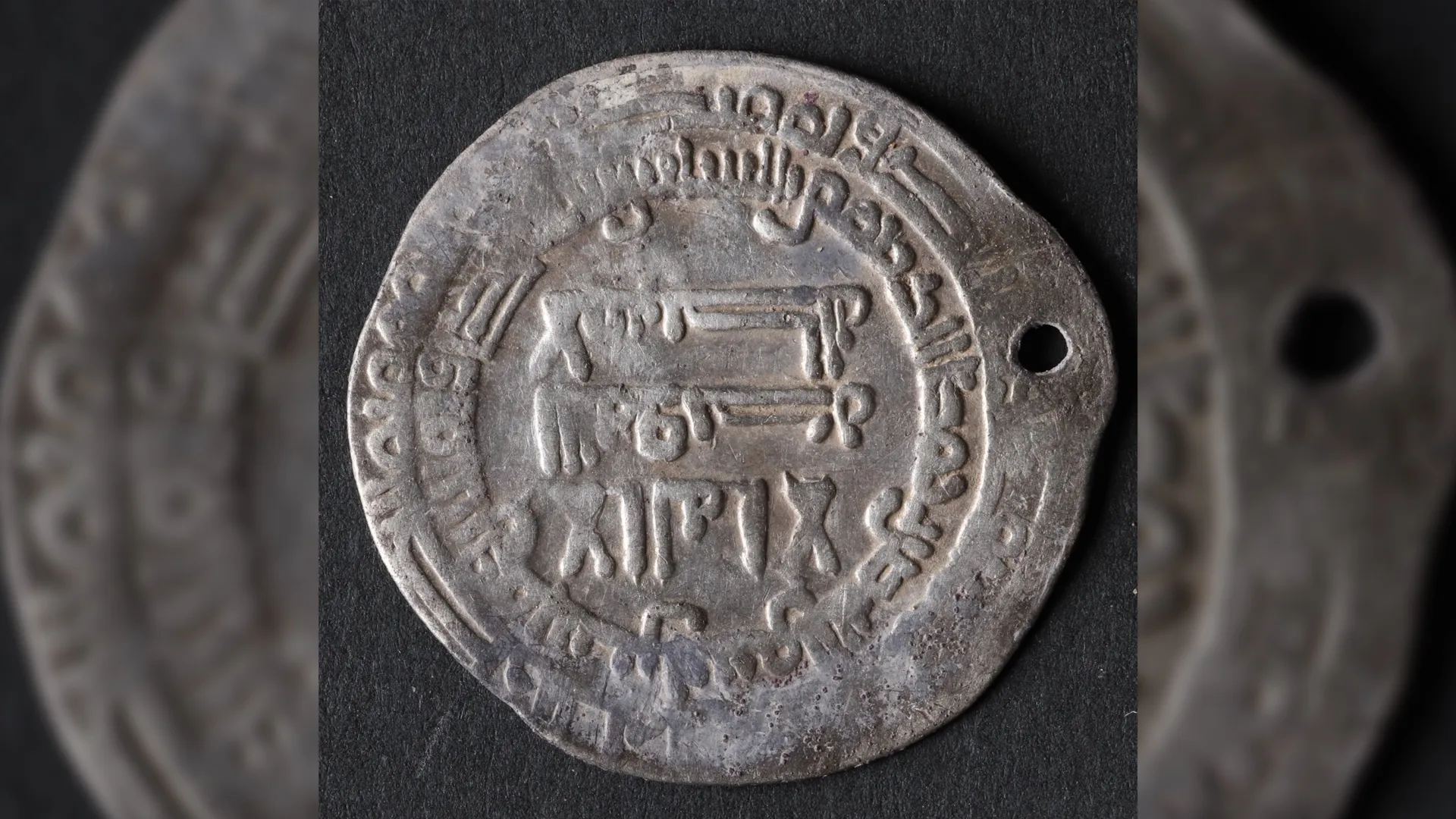
The trove includes Danish, Arab and Germanic coins as well as pieces of jewellery originating from Scotland or Ireland, according to archaeologists. Norbach said the finds were from the same period as the fort, built by King Harald Bluetooth, and would offer a greater insight into the history of the Vikings.

Read the rest of this article...
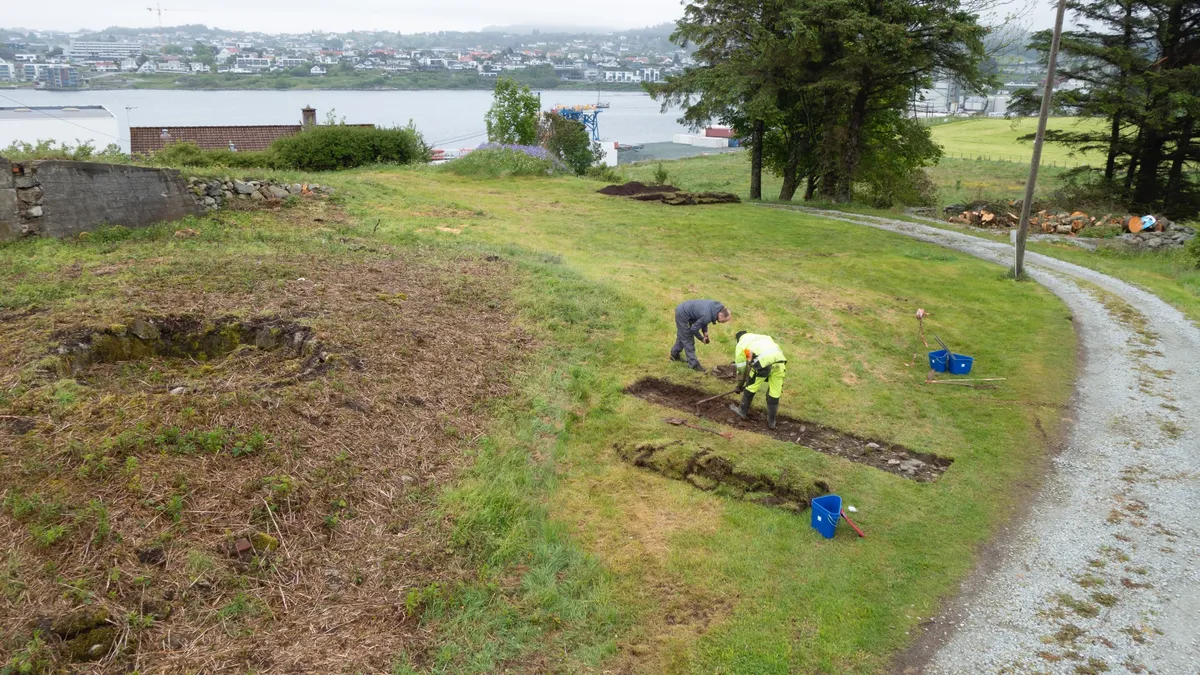
Huge Viking Treasure Hoard Found At Fyrkat Ring Castle By Metal Detectorists


Aerial view of the Fyrkat Viking ring castle ruins. Credit: Adobe Stock - Cavan

A group of metal detectorists examining a field near the Viking castle Fyrkat have discovered two remarkable treasures. The two Viking treasures were buried a few meters apart, and both contained many small silver coins and cut-up silver jewelry, which probably served as a means of payment by weight. Altogether, the two treasures include up to 300 pieces of silver, of which approximately 50 are whole coins.

Fyrkat is a former Viking ring castle in Denmark, dating from c. 980 AD.  About 1,000 years ago, legendary King Harald Bluetooth built several impressive Viking fortresses.

Finding Viking treasures in Denmark is not unusual, but finding two so close to Fyrkat is amazing. The metal detectors who are members of Nordjysk Detektorforening were lucky because due to modern ploughing, harrowing, and sowing, the hoards have been disturbed and spread over a larger area.

Read the rest of this article...

Wednesday, 19 April 2023

Evidence Norse Greenlanders Imported Timber From North America


he native trees of Greenland are unsuitable for larger construction projects or shipbuilding. Instead, the Norse colonists (AD 985–1450) relied on driftwood and imported timber. 

To study timber origins and distribution on Greenland, Lísabet Guðmundsdóttir from the University of Iceland examined the wood assemblages from five Norse sites in western Greenland, of which four were medium-sized farms and one a high-status episcopal manor.

All sites were occupied between AD 1000 and 1400 and dated by radiocarbon dating and associated artifact types.

A microscopic examination of the cellular structure of the wood previously found by archaeologists on these sites enabled the identification of tree genus or species.

The results show that just 0.27% of the wood examined were unambiguous imports, including oak, beech, hemlock, and Jack pine. Another 25% of the total wood studied could be either imported or driftwood, including larch, spruce, Scots pine and fir.

Because hemlock and Jack pine were not present in Northern Europe during the early second millennium AD, the pieces identified from the medieval contexts in Greenland must have come from North America.

Read the rest of this article...
Tuesday, 18 April 2023

Sea-level rise in Southwest Greenland as a contributor to Viking abandonment


Vikings occupied Greenland from 985 CE to the mid-15th century. Hypotheses regarding their disappearance include combinations of environmental change, social unrest, and economic disruption. Occupation coincided with a transition from the Medieval Warm Period to the Little Ice Age and Southern Greenland Ice Sheet advance. We demonstrate using geophysical modeling that this advance would have (counterintuitively) driven local sea-level rise of ~3 m (when combined with a long-term regional trend) and inundation of 204 km2. This largely overlooked process led to the abandonment of some sites and pervasive flooding. Progressive sea-level rise impacted the entire settlement and may have acted in tandem with social and environmental factors to drive Viking abandonment of Greenland.

Read the rest of this article...

Rising Sea Level Caused Vikings To Abandon Greenland – New Study


Vikings occupied Greenland from roughly 985 to 1450, farming and building communities before abandoning their settlements and mysteriously vanishing. Why they disappeared has long been a puzzle, but a new paper from the Harvard University Department of Earth and Planetary Sciences (EPS) determines that one factor—rising sea level—likely played a major role.

"There are many theories as to what exactly happened," to drive the Vikings from their settlements in Greenland, said Marisa J. Borreggine, lead author of the "Sea-Level Rise in Southwest Greenland as a Contributor to Viking Abandonment," which published this week [April 17] in Proceedings of the National Academy of Sciences (PNAS).

"There's been a shift in the narrative away from the idea that the Vikings completely failed to adapt to the environment and toward arguments that they were faced with a myriad of challenges, ranging from social unrest, economic turmoil, political issues, and environmental change," said Borreggine, a doctoral candidate in the Harvard Griffin GSAS in EPS.

"The changing landscape would've proven to be yet another factor that challenged the Viking way of life. Alongside these other challenges," said Borreggine, who works in the Mitrovica Group led by Frank B. Baird, Jr. Professor of Science Jerry X. Mitrovica. This likely led "to a tipping point before they abandoned the settlement."

Read the rest of this article...
Vikings left Greenland after growing ice sheet caused sea level rise

The settlement of Qassiarsuk in Greenland was once probably the site of Brattahlid, the home of Viking Leif Erikson, whose statue watches over the area
Cindy Hopkins/Alamy

The sea level around Greenland rose more than 3.3 metres from AD 1000 to 1450, contributing to the woes of Viking settlers and to their eventual abandonment of the island, researchers have found.

In AD 985, Erik the Red established a colony in Greenland after being exiled from Iceland. At the time, the North Atlantic region was unusually warm – the so-called medieval warm period – but after a massive volcanic eruption in Indonesia in 1257, conditions became much colder for several centuries, a period known as the little ice age.

That led to the expansion of the Greenland ice sheet, say Marisa Borreggine at Harvard University and their colleagues, causing the land adjacent to the ice sheet to subside because of the increased weight. The bigger ice sheet also had a greater mass and so exerted a stronger gravitational pull on the waters around Greenland. These two factors had roughly equal effects on sea level there.

Read the rest of this article...

Norse colonists imported timber from North America to Greenland


A microscopic analysis has revealed that Norse colonists imported timber from Northern Europe and North America to Greenland.

Greenland, or Grœnland in Old Norse, was settled by Norwegian and Icelandic explorers in AD 985 or 986. The settlers established two colonies on the southwest coast: The Eastern Settlement or Eystribyggð, in what is now Qaqortoq, and the Western Settlement or Vestribygð, close to present-day Nuuk.

In a study published in the journal Antiquity, archaeologists from the University of Iceland have conducted a wood taxa analysis on pieces of timber found in 11th to 14th century AD Norse farmsteads.
 
The purpose of the study is to differentiate between native wood, imported wood, and driftwood, revealing that 0.27% of the wood was unambiguous imports, including oak, beech, hemlock and Jack pine. Another 25% of the total wood was either imported or driftwood, including larch, spruce, Scots pine and fir

Read the rest of this article...
People were decapitated in Anglo-Saxon England crudely, study finds


If just being executed in Anglo-Saxon England was not bad enough, it seems that those unlucky victims of beheading would also have to deal with an executioner that was not very good at his job. These are some of the findings from a recent article that examined the archaeological evidence of executions in the early Middle Ages.

The study, led by Alyxandra Mattison with colleagues from the United Kingdom and South Africa, was published in Bioarchaeology of Injuries and Violence in Early Medieval Europe. It examines research on ten so-called ‘execution cemeteries’ from Anglo-Saxon England. By the seventh century there is evidence that special unconsecrated burial grounds are being used – these differ from traditional cemeteries in that the bodies are often buried in careless ways, with sometimes multiple people in a single grave or obvious signs of execution. Not all people buried there would have been executed, but these sites offer a chance to understand how executions were carried out.

Read the rest of this article...

Monday, 17 April 2023

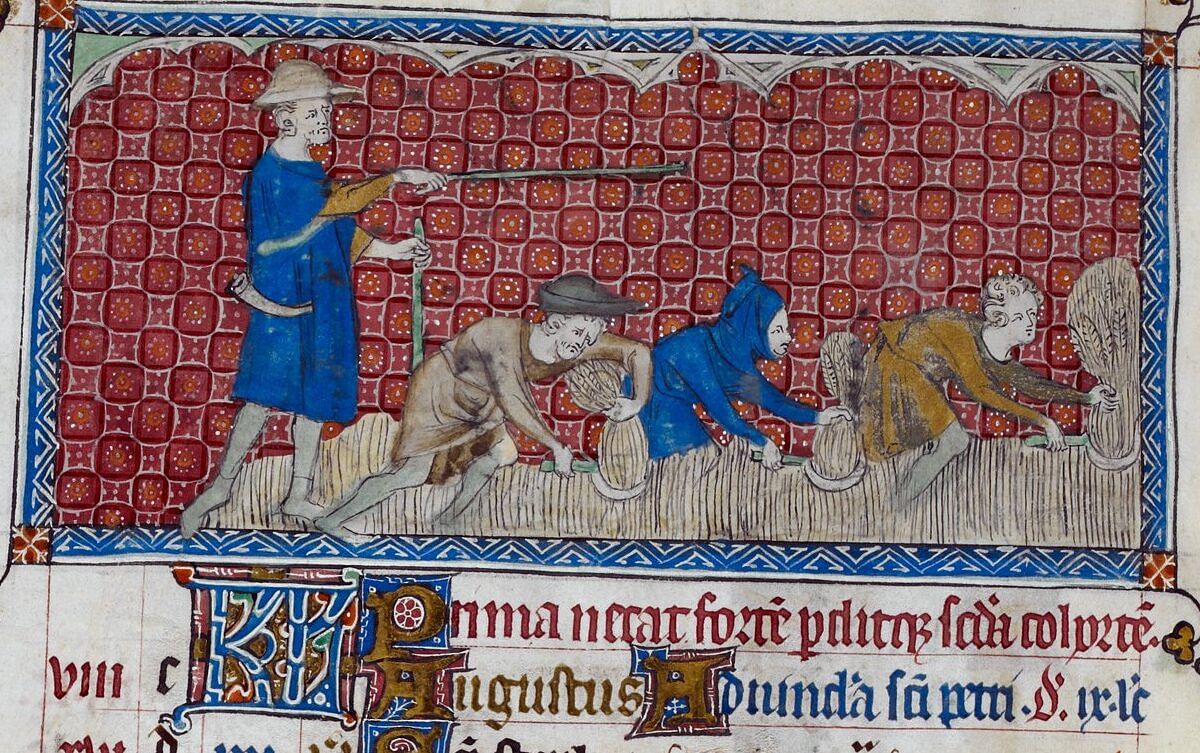
The Medieval Agricultural Revolution: New Evidence


The Medieval Agricultural Revolution: New Evidence

Lecture by Helena Hamerow

Given at Gresham College on March 23, 2023

Abstract: During the medieval ‘agricultural revolution’, new forms of cereal farming fuelled the exceptionally rapid growth of towns, markets and populations across much of Europe. The use of the mouldboard plough and systematic crop rotation were key developments and led to open-field farming, one of the transformative changes of the Middle Ages. Using new evidence from plant and animal remains from archaeological excavations in England, this lecture links these to wider developments in medieval society, notably growing social and wealth inequalities.

Helena Hamerow is Professor of Early Medieval Archaeology at the University of Oxford, a Fellow of St Cross College, Oxford and an Honorary Fellow of Lincoln College, Oxford.

Watch the video...

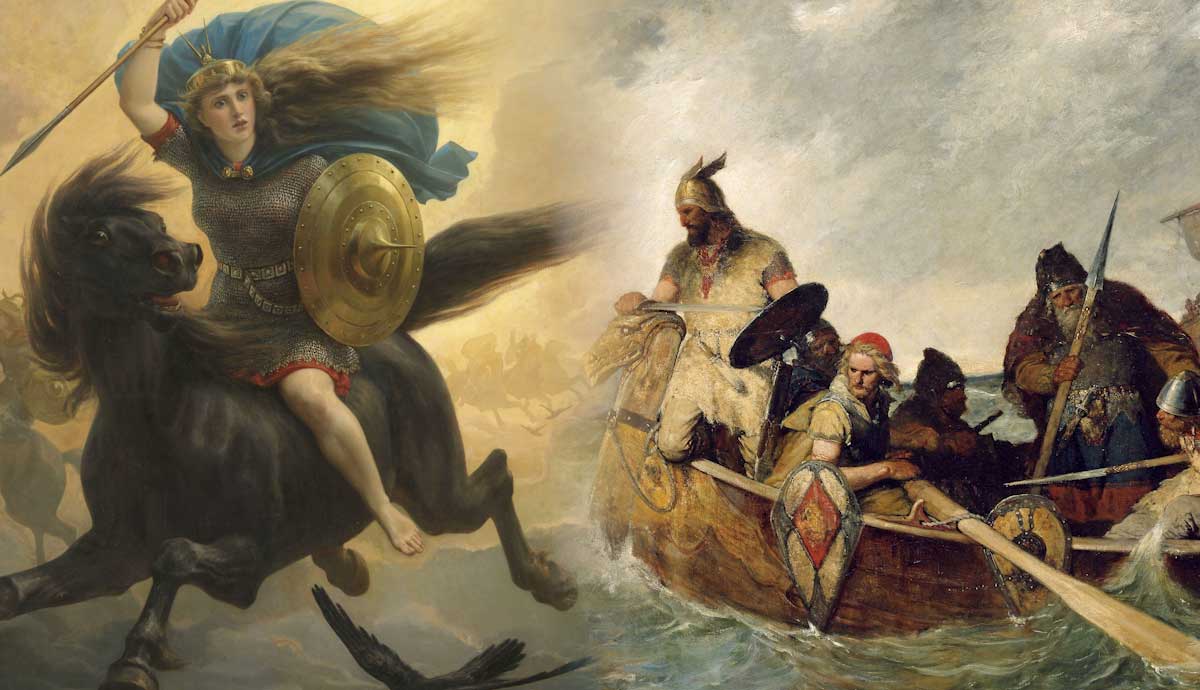
Viking Shieldmaidens & Berserkers: Fact vs. Fiction


Did Viking Shieldmaidens and Berserkers really exist? How accurately are they portrayed in popular media?

Viking berserkers and shieldmaidens are fascinating aspects of a conglomerated culture that gave way to myth and legend. Today, popular media have romanticized and dramatized these ancient warriors to suit the wants of modern audiences. While berserkers and shieldmaidens did assuredly exist in one form or another, it is hard to decipher the Viking sagas and poems and separate the facts from the fiction.

Berserkers: What Are the Facts?

The word ‘berserk’ is often associated with blind fury and rage. While the etymology of the anglicized term ‘berserk’ is often debated, most agree it was used to describe warriors that were more fearless and extreme than ‘regular’ Vikings. Adding confusion to the topic, the word ‘berserk’ may have variable representations. It may mean “bare-sark,” or “bare of shirt” referring to the habit of going unarmored or even unclothed into battle. The Icelandic historian Snorri Sturluson (1179–1241) recounts of this tradition in his Ynglinga Saga: 

Read the rest of this article...
Vikings: Raiders, Traders and Settlers (Online)


Vikings: Raiders, Traders and Settlers (Online)

Wed 03 May 2023 - Fri 14 Jul 2023

Online course offered by The University of Oxford

Using a specially-designed virtual learning environment (VLE), this online course guides students through weekly pathways of directed readings and learning activities. Students interact with their tutor through tutor-guided, text-based forum discussions. There are no 'live-time' video meetings, meaning you can study flexibly whenever it suits you under the direct tuition of an expert.

Further information...

Thursday, 13 April 2023

Viking King – How Was He Elected And What Was Expected From Him?


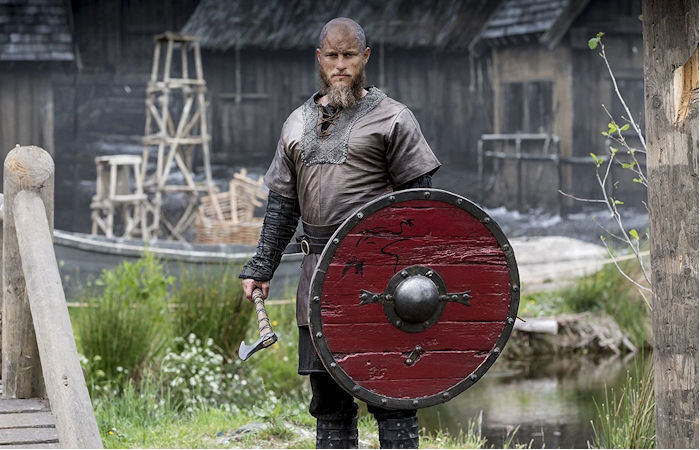
Travis Fimmel as Ragnar Lothbrok in the TV series Vikings. Credit: History Channel 
Copyright, fair use.

Ragnar Lodbrok claimed to be a direct descendant of the god Odin, but most Viking leaders were "ordinary" people, and they were viewed as exceptionally commanding men.

A man must have certain qualities and attitudes to become a great Viking leader.

It brings us to questions such as – Who could become a Viking king? Who was considered a worthy leader in the Viking society?

Kings Appeared At The End Of The Viking Age

It's important to remember that there were no Viking kings during the early Viking Age. The Viking society was divided into three social classes -  the nobles or jarls, the middle class or karls, and the slaves or thralls.

Read the rest of this article...
Wednesday, 12 April 2023

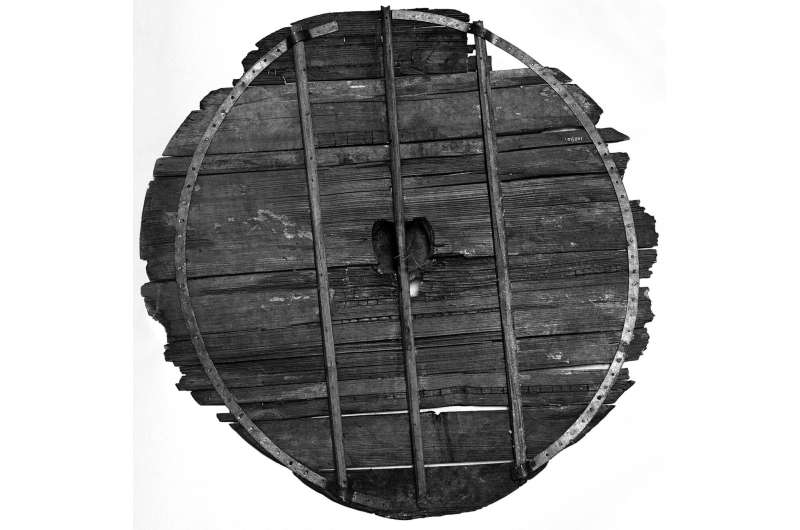
Viking Age ceremonial burial shields found to be combat ready

Shield 'reconstruction' cobbled together in the late 19th–early 20th century. 

Rolf Fabricius Warming from the Department of Archaeology and Classical Studies at Stockholm University in Sweden and founding director of the Society for Combat Archaeology is challenging previous interpretations of ceremonial shields found in a Viking Age longship burial mound. His research is published in the journal Arms & Armour. 

About 1,100 years ago, at Gokstad in Vestfold, Norway, an important man was laid to rest in a 78-foot-long longship. The Gokstad ship was buried along with a few luxury possessions, including gold-embroidered tapestries, a sleigh, a saddle, 12 horses, eight dogs, two peacocks, six beds and 64 round shields as well as three smaller boats on the deck. The ship and the grave goods remained undisturbed under a mound of earth until it was discovered in 1880. Warming notes that while the longship and many artifacts now rest in a museum in Norway, some of the grave goods had not been subjected to any substantial examination since their initial discovery. 

Read the rest of this article...

Monday, 3 April 2023

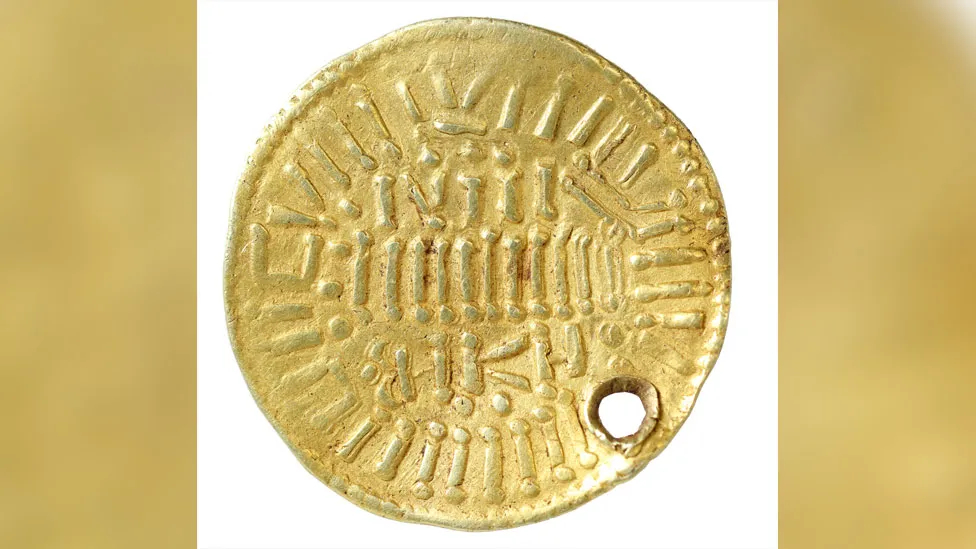
Vikings may have made Morston fake gold Arabic dinar, says expert


A "spectacular" 9th Century fake Arabic dinar discovered by a metal detectorist could have been made by a Viking, a university professor said.

The gold coin was discovered near Morston, Norfolk, in April 2021 and has been declared treasure by a coroner.

Rory Naismith said "the Vikings had a lot of contact with the Muslim world" so it was "plausible" they could have struck imitation dinars.

"It's very unusual to find such a thing and it's completely unique," he added.

The imitation coin has a hole punched into it suggesting it was designed to be worn.

Prof Naismith, from Cambridge University, said some gold dinars from the Anglo-Saxon period have been found in England, probably arriving via Italy.

"While there are few other imitations that we know of, this one is a bit ropey," he said.

"It looks like it's made by someone who knows the generalities of what a dinar looks like, but is not handling them enough to get the Arabic right."

Read the rest of this article...

Monday, 20 March 2023

Did Vikings Have Tattoos? Real Norse Body Art Is Filled With Mystery

The Vikings were seafaring people originally from Scandinavia who raised hell across Europe and beyond from the late eighth to the late 11th centuries.
Image credit: DanieleGay/Shutterstock.com

Viking-inspired tattoos with Norse imagery and runes have become somewhat in vogue in the era of Pinterest-inspired body art, but did the Vikings actually have tattoos? There’s no solid archaeological evidence that tattoos were common in the Viking age since it's rare for skin to remain intact for centuries. Nevertheless, we know from written sources that some Norsemen may have been fans of body art. 

What did Viking tattoos look like?
One of the best accounts of inked-up Norsemen comes from Ahmad ibn Fadlan, a 10th-century Muslim traveler who was sent from Baghdad to make contact with the king of the Volga Bulgars, an area of modern-day western Russia and Ukraine. Around this time, the area was home to a group of people known as the Volga Vikings, conquerors and traders who had settled in the area from Scandinavia. 

In his description one of of these tribes, known as the Rus, Fadlan wrote:

"Each man has an axe, a sword, and a knife and keeps each by him at all times. The swords are broad and grooved, of Frankish sort. Every man is tattooed from fingernails to neck with dark green (or green or blue-black) trees, figures, etc."

Read the rest of this article...
Jomsvikings: legendary Viking mercenaries or men of myth?


Who were the Jomsvikings?

According to the sagas, the Jomsvikings were a band of Norse warriors based in Jomsborg, which means ‘Jom Fortress’. It was called after its location on the island Jom, somewhere on the southern coast of the Baltic Sea in Pomerania (either modern-day Germany or Poland), described as ‘Wendland’ in Old Norse sources.

The Jomsvikings were originally from Denmark, and Jomsborg was a sort of Danish colony, which makes sense since the distance between the two is short by sea, but Vikings from all over Scandinavia and the North Sea eventually joined in.

The sagas agree that Jomsborg was the base of a fearsome Viking army, but one saga in particular – the Saga of the Jomsvikings (Jómsvíkinga saga) – depicts it as a highly selective warrior band which subscribed to a more stringent set of rules than other groups.

Read the rest of this article...

Friday, 10 March 2023

The Norse Myths That Shape the Way We Think

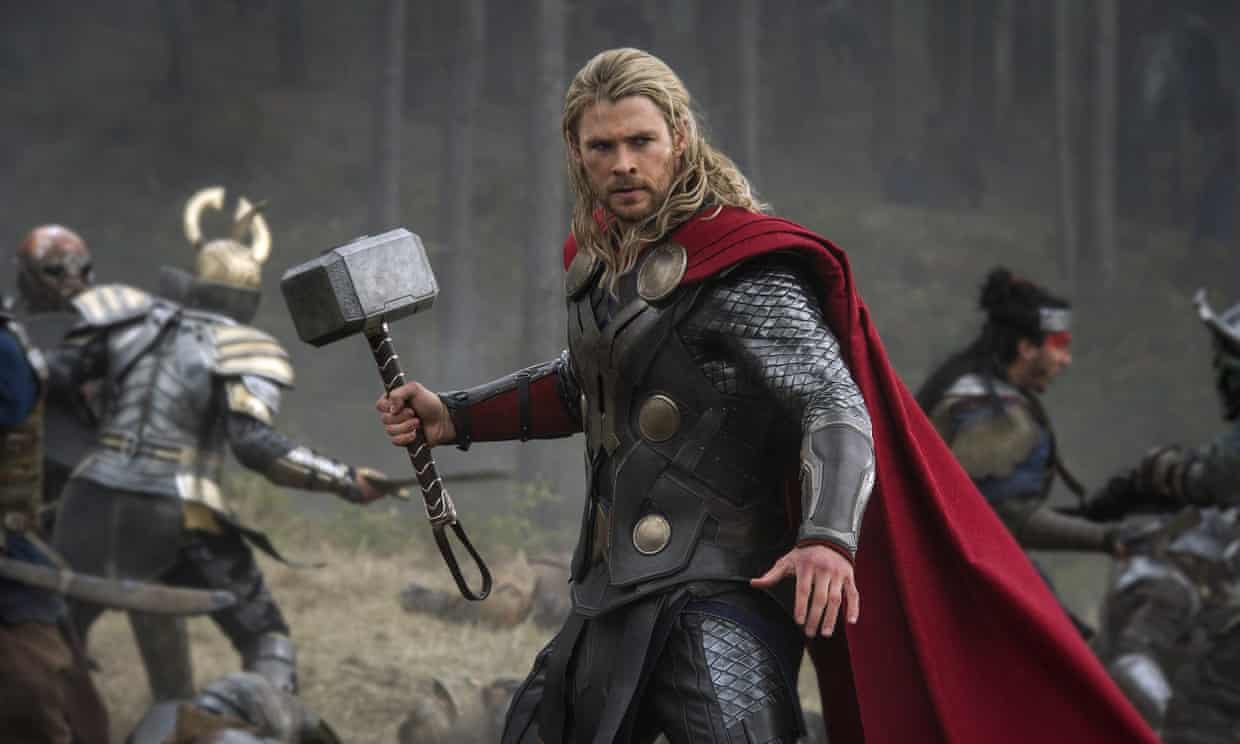
Chris Hemsworth plays Thor in the Marvel Cinematic Universe.
Photograph: Marvel Studios/Sportsphoto/Allstar

In the lands of the north, where the black rocks stand guard against the cold sea, in the dark night that is very long, the men of the Northlands sit by their great log fires and they tell a tale … ” So began each episode of the 1950s and 1960s children’s TV programme The Saga of Noggin the Nog – one of countless iterations of old Norse myths that have filtered down to us, from the early 13th-century versions written down by the Icelandic scholar Snorri Sturluson all the way to the Marvel Cinematic Universe, via Jacob Grimm, Richard Wagner, JRR Tolkien, Narnia, video games and death metal.

Greek myths may be having a moment in modern fiction, but The Norse Myths That Shape the Way We Think reminds us that Thor, Asgard, Valhalla and the Valkyries are as much a part of western literature and legend as are Athena and Achilles. As a professor of medieval European literature at the University of Oxford and a translator of Snorri’s texts, author Carolyne Larrington is an expert guide to the origins of the stories and an opinionated interpreter of their modern descendants. She explains how an incorrect translation of “drinking horns”, via Latin, resulted in the “madly impractical” idea that Vikings drank mead from their enemies’ skulls, and fulminates about HBO’s decision to have the villainous Euron Greyjoy slay a dragon in Game of Thrones: “An outrageously subversive recasting of the greatest of heroic achievements.”

Larrington takes the myths a theme at a time. Main characters such as Odin and Thor have a chapter to themselves, explaining how depictions of them have evolved from original sources into modern retellings such as Neil Gaiman’s American Gods. Loki and his monstrous children get another, which celebrates their recent starring roles in books by Joanne Harris, Francesca Simon and others, and explains quite convincingly how Loki’s current reputation as a gender nonconforming queer icon is rooted in the early texts.

Read the rest of this article...

Thursday, 9 March 2023

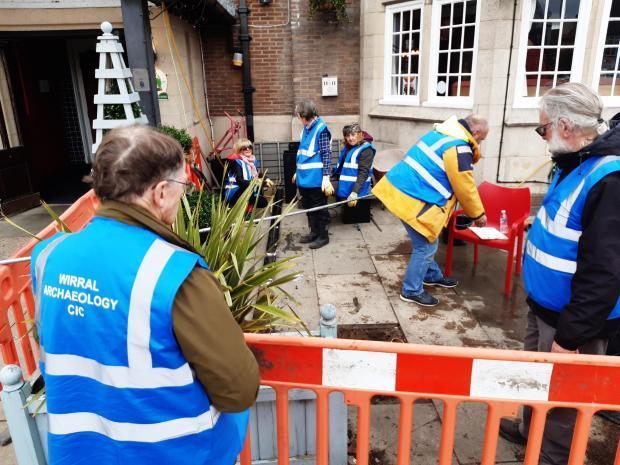
'Viking boat' dig under pub awaits results as samples taken

The team from Wirral Archaeology CIC at work on investigation into what lies beneath The Railway pub in Meols (Image: Craig Manning / Newsquest)

THE results of an archaeological dig to determine whether a Viking boat's remains lie beneath a Wirral pub car park won't be known until later this year.

It has long been believed that a Nordic boat is buried beneath the site at the Railway Inn in Meols after remains were allegedly unearthed by workmen digging the foundations of the pub back in 1938.

The story goes that the workmen were told to cover up their discovery and rebury their find but one of them drew a map of the boat's whereabouts which survives to this day.

Read the rest of this article...

Wednesday, 8 March 2023

Vindelev Treasure Re-Writes Ancient History – World’s Oldest Runic Inscription Of God Odin Found On Ancient Gold Pendants


The oldest example we have so far of humans writing the word 'Odin'. This suggests that the Nordic god was already a central part of the cult in the fourth century.
Credit Photo: Arnold Mikkelsen, National Museum, Denmark

The Vindelev treasure was discovered where there had been a farm consisting of several longhouses and fences. For this reason, it is assumed the treasure belonged to a local chieftain or perhaps king, who buried it inside or near the house. In the 4th and 5th centuries, wealthy individuals wore gold medallions to show their status and wealth.

Studies of two 1,600-year-old gold medallions that are part of the treasure led to the discovery of very long runic inscriptions in which the name of the supreme god of the Aesir, Odin, appears.

Runologist and script researcher Lisbeth Imer and linguist Krister Vasshus from the National Museum in Denmark made this incredible discovery.

On the gold medallion, there is also a portrait of an unknown king or great man, who may have had the (nick)name "Jaga" or "Jagaz," and it is precisely here that Odin's name comes into play. Next to him, it says that he is "Odin's man."

Read the rest of this article...

Tuesday, 7 March 2023

Rare Viking Boat Burial At Kiloran Bay In Colonsay, Scotland Remains A Fascinating Find

Scales and elaborately decorated weights were found in the Viking grave.
Credit: National Museum of Scotland

Ellen Lloyd - AncientPages.com - Generally speaking, one must say that all Viking boat burials are rare because most of the notable burial finds throughout the Viking world are cremations. Archaeologists have unearthed Viking ship burials, but not in large numbers. Most unearthed Viking boat burials have been reported from Scandinavia and occasionally UK islands. Viking funeral traditions were complex, but based on archaeological evidence, it seems that the funeral boat or wagon was a practice that was reserved for the wealthy.

What makes the Viking boat burial at Kiloran Bay in the Inner Hebrides exceptionally unique is that it remains Scotland's single richest male Viking burial site to be found so far.

The Viking boat burial on the coastal meadow, called machair, at Kiloran Bay in Colonsay was discovered in 1882 "after rabbits, digging in the soft machair, scooped up some boat rivets." 1

Based on the large number of Viking graves in Colonsay, it is evident the region was important to Norse warriors.

Read the rest of this article...

Who were the Vikings, the warriors who raided Europe and explored the New World?


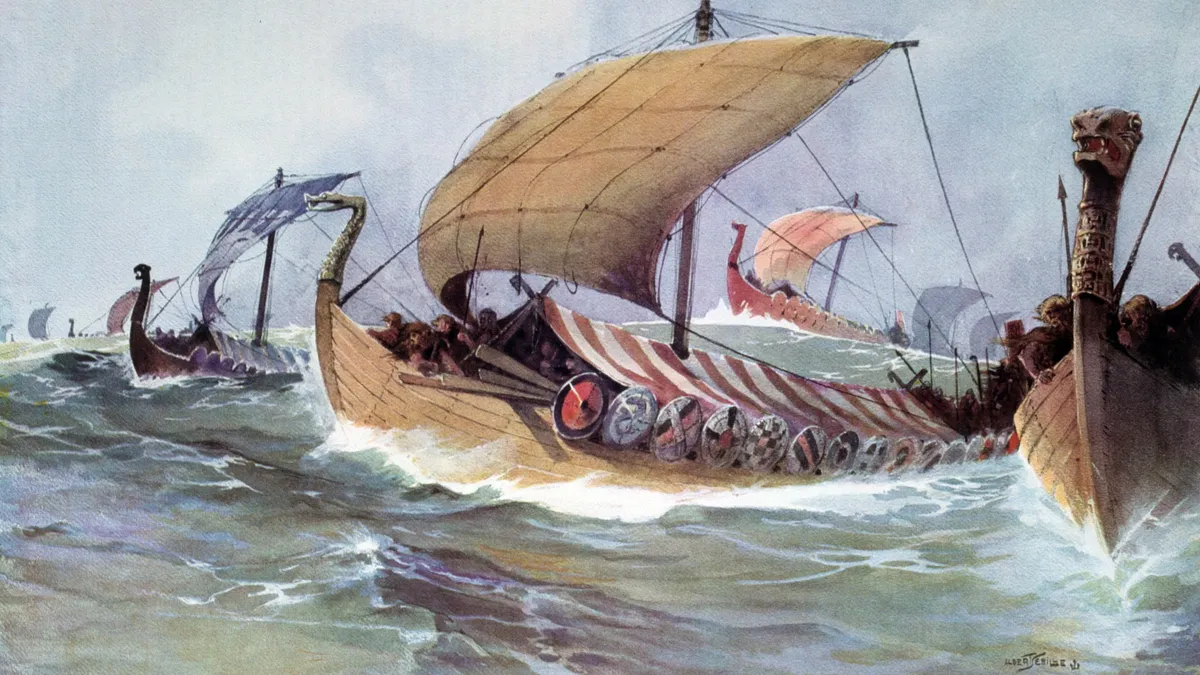
Painting of a fleet of Viking ships crossing the sea by Albert Sebille c1930.
(Image credit: Chris Hellier via Alamy Stock Photo)

The Vikings explored, raided and traded across a vast area stretching from North America to the Middle East between roughly the late eighth and mid-11th centuries. 

In Old Norse, the language the Vikings spoke, "a Viking was a sea-borne raider, and to go-a-viking was to undertake sea-borne raiding," Angus Somerville and Russell Andrew McDonald(opens in new tab), both professors at Brock University in Canada, wrote in their book "The Vikings and Their Age(opens in new tab)" (University of Toronto Press, 2013). "The word is a job description but it applied only to a small minority of the population," as many people in Scandinavia would not have taken part in raids. 

Among those who did raid, "being a Viking was a part-time job since Viking expeditions were undertaken seasonally by small farmers, fishermen, merchants, chieftains, and aristocrats as a means of supplementing their income and winning fame," Somerville and McDonald wrote. 

Read the rest of this article...

Monday, 6 March 2023

Medieval king’s wharf found in Oslo


An excavation in the waterfront Bjørvika neighborhood of Oslo has unearthed the remains of a long section of a wharf believed to have been built by a medieval king of Norway. More than 26 feet of the foundations of the pier have survived in excellent condition under the thick clay of the Oslofjord seabed.
The wharf foundation was built by interlacing massive logs into bulwarks that were then embedded into the seabed. Impressions of barnacles and mussels on the logs indicate they were left exposed in the water. The structures built on top of the foundations over time pressed them deeper into the clay where they were preserved even when the surface structures were lost.

A small mystery is that inside the bulwark there are several layers of dung, food waste, fish bones and sodden peat.