Wednesday, 5 February 2025

Strange carvings at Norwegian grave site reveal what language was like before Vikings


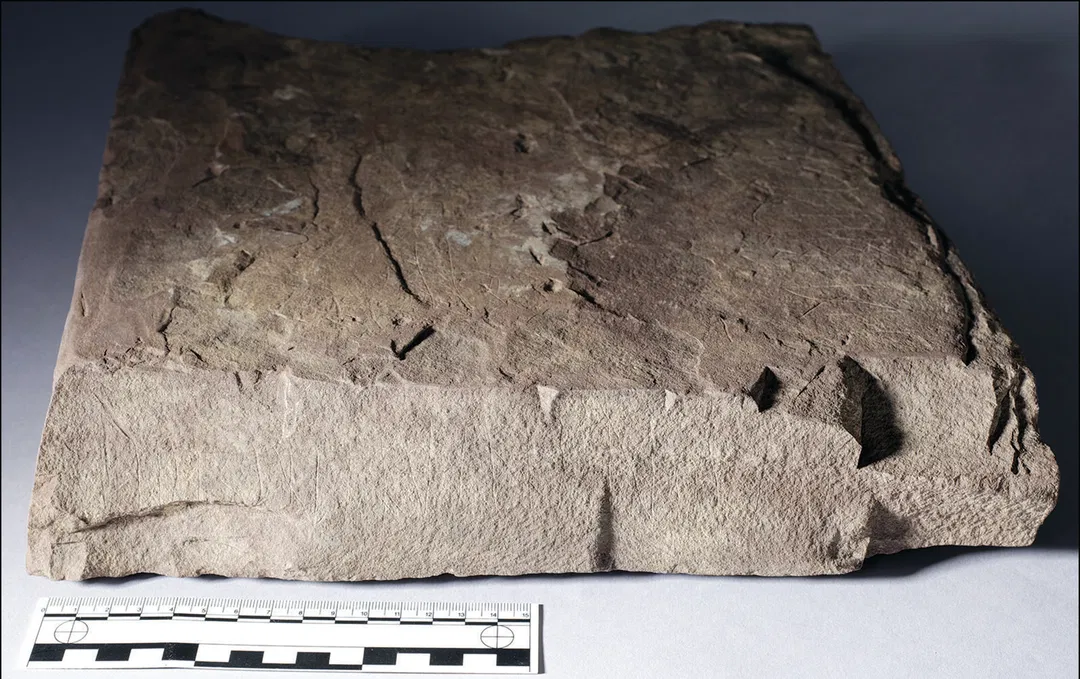
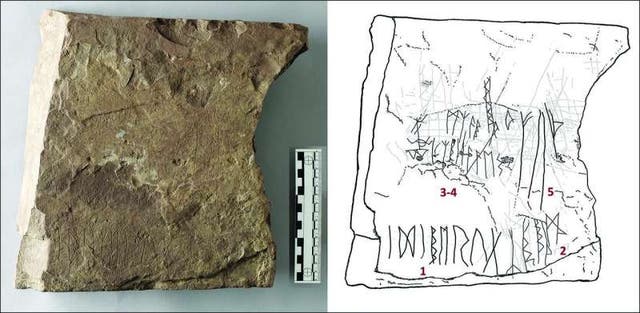
Archaeologists have pieced together the earliest stone fragments containing inscriptions of Germanic letters, revealing what the Norse language was like before the Viking era.

Researchers from the University of Oslo found that the ancient fragments fit together “like a jigsaw puzzle” suggesting that the writing may have been “separated intentionally”.

Read the rest of this article...

Earliest Known Rune-Stone Discovered in Norway


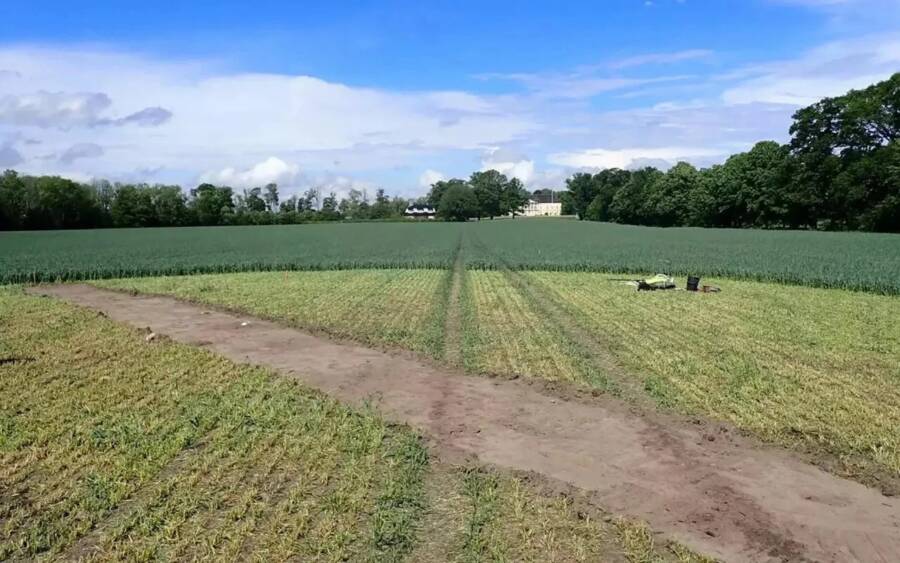
Archaeologists in Norway have pieced together fragments of what is now the world’s earliest known rune-stone, dating back to as early as 50 BC. The discovery at the Svingerud grave field offers new insights into the origins of runic writing, a script long associated with the medieval period but now revealed to have a much older history.

Read the rest of this article...

Wednesday, 11 December 2024

What Do Vikings Mean to You? New Global Survey Seeks Answers


The University of Oslo’s Museum of Cultural History has launched a global study to uncover how people around the world perceive Viking warriors and the enduring legacy of the Viking Age. The Great Viking Survey invites individuals to share their thoughts on these iconic medieval figures and their influence in modern culture.

The survey, part of the Making a Warrior research project, aims to map the ways contemporary media and academia shape public perceptions of the Viking Age. Led by a pan-Nordic network of scholars, the project explores the concept of Viking “warriorhood” and its representation throughout histor

Read the rest of this article...

Who Was the Man in the Well?


“Remarkable historical find at Sverresborg. Skeleton at the bottom of the old well. Could it be the Baglers’ victim, thrown into the well in 1197, as the saga claims?”

This was the headline in Adresseavisen on December 2, 1938. The manager of Sverresborg Folk Museum, Sigurd Tiller, and architect and self-taught archaeologist Gerhard Fischer found the skeleton while investigating the castle ruins. Three doctors were called in to confirm it was indeed a human skeleton. Despite the uproar caused by the discovery, Tiller was cautious with the press.

“Thorough and lengthy investigations are required before science can provide definitive insights into the find’s true significance.”

Read the rest of this article...

Wednesday, 4 December 2024

Book review: Muslims on the Volga during the Viking Age


A compilation of essays may not necessarily be your first choice when you reach for a book on a library shelf or conduct a quick search on Amazon. 

For many of us non-academics, essays are something that brings back pubescent horrors from schooldays. The type of thing that, as soon as you graduated from high school, you'd pledge to avoid for the remainder of your life... until you went to college or university. 

Yet one must, as Voltaire's Candide quips, "tend to one's garden," and part of this tending is surely reading both for pleasure and for a purpose. 

Muslims on the Volga during the Viking Age, thankfully, for a collection of essays, combines both pleasure and purpose as a series of famed historians and academics cast their gaze upon the multicultural interactions that took place on the Volga River during the 10th century CE.

Read the rest of this article...

Archeologists share new findings from the Viking graves at Tvååker, Sweden


The Viking burial ground at Tvååker revealed 139 graves, including ship-formed stone settings and a ship-formed mound. Photo: Arkeologerna

Ship made of oak and stone 

The latter appears to be the remains of a wooden ship burial that may have been relatively common in the local area. 

"Scientists in the 1950s discovered a characteristic local grave type in Halland County known as 'oblong mounds,'" Nordin and Kjellin tell The Viking Herald. 

"These have been interpreted to be the remains of a cremation in a ship site. The cremation here appears to have taken place in the ship." 

Read the rest of this article...

Sunday, 1 December 2024

Rare Viking-age treasure begins international tour


The Galloway hoard is set to be on display in Adelaide in Australia next year

One of the UK's most important archaeological finds this century is set to go on show for the first time outside the UK early next year, as it begins its international tour.

The Viking-age Galloway Hoard - buried about AD 900 - was unearthed in a south of Scotland field by metal detectorist Derek McLennan in 2014.

It contains a variety of objects and materials, including a rare Anglo-Saxon cross, pendants, brooches, bracelets and relics.

Read the rest of this article...

140-year-old message in a bottle found in Viking burial mound in Norway


Archaeologists excavated the Myklebust ship mound and found a 140-year-old message in a bottle left by the site’s discoverer, photos show. Photo from the University of Bergen

When researchers began reexcavating a Viking burial mound in Norway, they knew they were following the footsteps of an influential archaeologist. What they didn’t know was that he’d left them a note 140 years ago. The Myklebust Ship is the one of the largest Viking ships ever found in Norway, reaching about 100 feet long in its original form. Archaeologist Anders Lorange unearthed the burnt ship in a large burial mound in Nordfjordeid in 1874, according to the Sagastad Viking Center dedicated to the find. The massive treasure-filled grave — likely belonging to a Viking king — was “only halfway excavated” before being filled in, the museum said.

Monday, 28 October 2024

Portage: Will archeologists find proof of Viking ship-hauling in Scotland?


When, in season four of the hit television series Vikings, Ragnar Lothbrok exhorts his fellow Norsemen to pull their ships out of the water and over the hills to attack Paris, it seems like an impossible feat – made for TV. 

Certain written records, however, suggest that the act of dragging a ship across land – known as portage – is not so outlandish. 

Both the 10th-century Byzantine text De Administrando Imperio and the 12th-century Rus text Nestor Chronicle describe instances of Vikings hauling ships over land. Now, a study taking place in Scotland could be about to provide further confirmation of this seemingly remarkable feat. 

Read the rest of this article...

Gjellestad Viking ship in danger of disappearing


Sindre Martinsen-Evje, the mayor of Østfold County Municipality in Norway, has called for urgent action to help preserve the Gjellestad Viking ship burial site. 

Although the site was only excavated in 2020 and 2021, time is already ticking as archeologists seek to save the remnants of the first Viking ship burial to be found in Norway in over a century. 

Will it be gone forever? 
With the help of ground-penetrating radar, Gjellestad was discovered more than 100 years after the Oseberg ship was excavated in 1904. 

The Gjellestad dig, which took place near the town of Østfold on the Viksletta Plain, revealed the remains of both a large Viking ship burial and several other interesting finds, including horse teeth, a large amber bead, and a Viking axe. 

Read the rest of this article...

Sunday, 27 October 2024

That 800-Year-Old Corpse in the Well? Early Biological Warfare


The Well Man was little more than a myth until 1938, when archaeologists excavated an abandoned well in the ruins of Sverresborg, outside Trondheim in central Norway.
Credit...Norwegian Institute for Cultural Heritage Research

In the dying days of the 12th century, with Norway in the grip of civil wars, the Baglers, a faction aligned with the archbishop, laid siege to Sverresborg, the castle stronghold of King Sverre Sigurdsson. The monarch was away, so the besiegers pillaged the castle, burned down houses and poisoned the water supply by heaving the corpse of one of the king’s men headfirst down the well and filling the shaft with stones.

This early biological warfare is recorded in “Sverris Saga,” a contemporaneous biography of the king, who reigned over much of Norway from 1184 to 1202. Scholars have long debated the chronicle’s reliability as a historical document, but a study published Friday in the journal iScience recounts how researchers unearthed the body of the “Well Man” and, with the help of ancient DNA, have provided fresh details about who he was.

Read the rest of this article...

Monday, 21 October 2024

What archaeologists are learning from the discovery of 50 extremely rare Viking skulls

Skeletons and skulls sit in graves at an excavation site of a 10th century Viking burial ground in Aasum, Denmark (Copyright 2024 The Associated Press. All rights reserved)

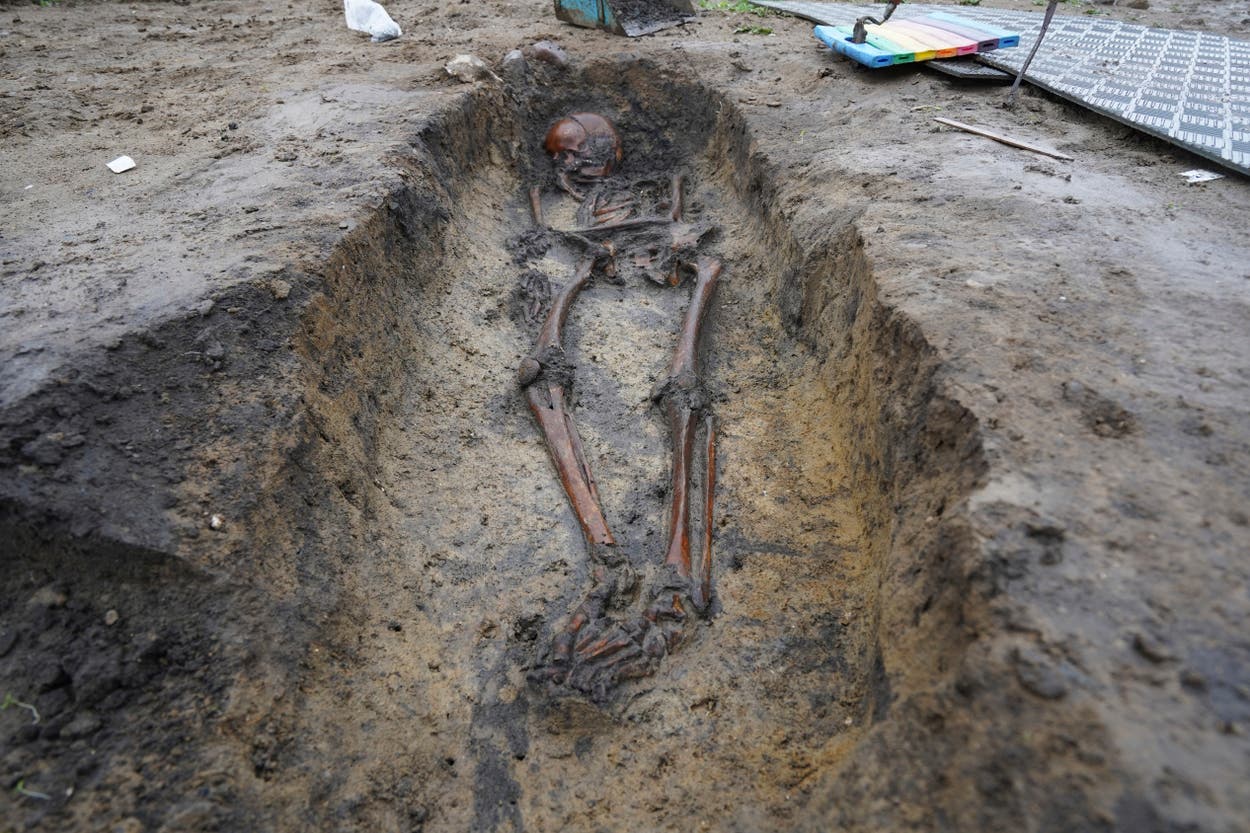
The discovery of 50 “exceptionally well-preserved” skeletons in a village in central Denmark could hold important clues to the Viking era.

Archaeologists made the landmark discovery that included a burial ground and the skeletons.

Experts hope to conduct DNA analyses and possibly reconstruct detailed life histories, as well as looking into social patterns in Viking Age, such as kinship, migration patterns and more.

“This is such an exciting find because we found these skeletons that are so very, very well preserved,” said archeologist Michael Borre Lundø, who led the six-month dig. “Normally, we would be lucky to find a few teeth in the graves, but here we have entire skeletons.”

Read the rest of this article...

Monday, 30 September 2024

Archaeologists Reveal Viking Treasure Left Buried for 1,000 Years: 'Unique'

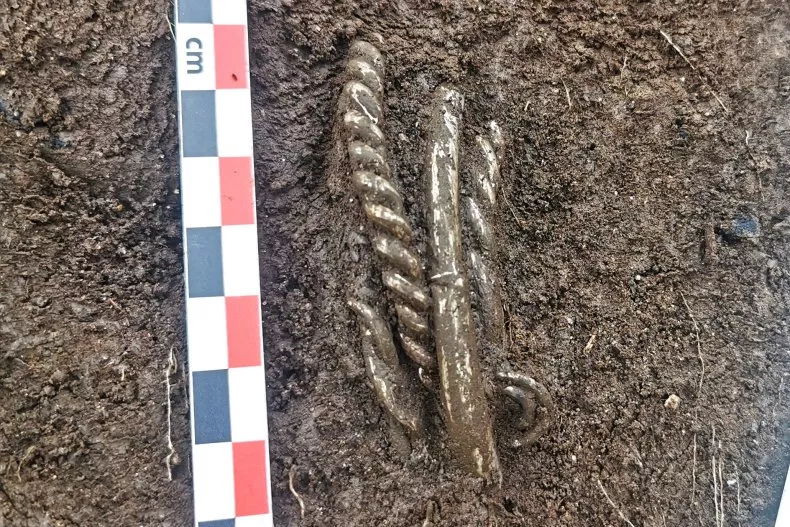
The Viking treasure discovered in Årdal, Norway. The hoard consists of silver bracelets that are thought to be more than 1,000 years old.
Volker Demuth/Museum of Archaeology, University of Stavanger

"This is undoubtedly the most significant event of my career," Demuth told ScienceNorway.

The treasure was first spotted by UiS field archaeologists Mari Krogstad Samuelsen and Ola Tengesdal Lygre. The researchers were part of a team, alongside Demuth, who were brought in to survey the site before the construction of a tractor road on the mountainside by a local farmer, who owns the land.

"At first I thought it was a question of some twisted copper wires that you can often find in agricultural land, but when I saw that there were several lying next to each other and that they were not copper at all, but silver, I realized that we had found something exciting," Lygre said in the press release.

Read the rest of this article...

Sunday, 29 September 2024

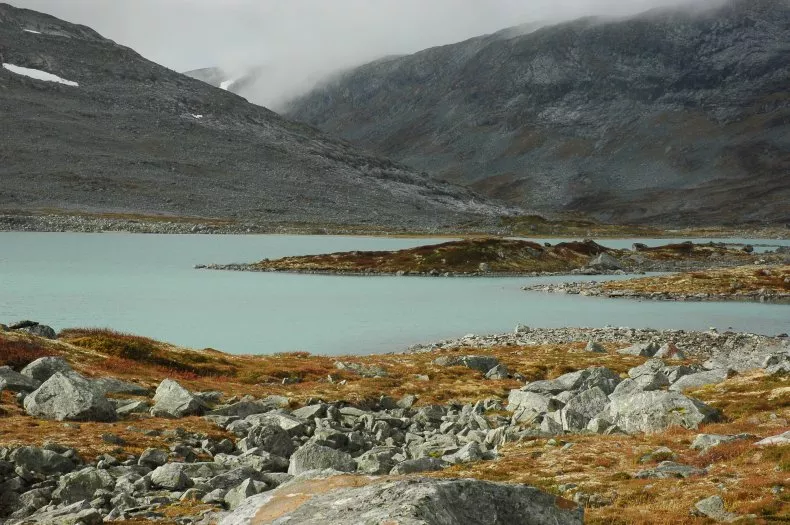
Remote Ancient Mountain Shelter Used by Viking Age Travelers Found

A lake in Hardangervidda National Park, Norway. The shelter used during the Viking Age was found in the Hardanger Plateau, much of which is protected as part of the park.
Pascal Goetzinger/iStock/Getty Images Plus

Archaeologists have found a remote mountain shelter used by travelers during the Viking Age.

The team identified the rock cabin along an ancient transport route across the Hardanger Plateau, a mountain plateau in central southern Norway, ScienceNorway reported.

The historic transport route, known as the Nordmannslepa, was long used to move goods and animals between eastern and western Norway.

In this mountainous landscape, weather conditions are harsh, making it difficult for ancient travelers to find shelter. As a result, people in ancient times constructed stone huts at suitable distances so that travelers could seek shelter and rest after a long day's journey.

Read the rest of this article...

Saturday, 28 September 2024

Danish archaeologists unearth 50 Viking skeletons


The excavation of a large Viking-era burial site in Denmark has unearthed 50 unusually well-preserved skeletons that archaeologists expect will help shed light on the lives of the Nordic people best known for their seafaring exploits in the Middle Ages

Read the rest of this article...

Sunday, 11 August 2024

L’Anse aux Meadows: The Viking Settlement of North America


In the 1960s, Anne and Helge Ingstad discovered an 11th-century Viking settlement in L’Anse aux Meadows, Canada, proving that the Vikings made it to North America.

For years, people passed on their legends orally before eventually writing them down. The Greenlanders’ Saga and The Saga of Erik the Red immortalized the tales of the Vikings’ westward voyages featuring Leif Erikson. Leif, born around 970 CE in Iceland to Erik the Red and Thorhild, led the expeditions. According to the sagas, Erik the Red discovered Greenland, setting the stage for Leif’s own explorations. He assembled a team of thirty men and embarked on the journey. Discovering an environmental paradise with lush meadows, forests, a serene lake, and abundant salmon, Erikson and his crew chose to settle there. They established camp and made it their home. Centuries before Christopher Columbus, the Vikings had reached a New World, if the sagas were accurate. Finally, evidence confirming their arrival was discovered at L’Anse aux Meadows, Canada.

Read the rest of this article...

Tuesday, 25 June 2024

A Massive Viking Ship That May Have Been Part Of A Royal Burial Has Been Discovered At Norway’s Jarlsberg Manor

The flat fields surrounding Jarlsberg Manor contain numerous boat burials
Museum of Cultural History / University of Oslo

In 2018, a metal detector survey started turning up rivets at Jarlsberg Manor, the historic seat of the Wedel-Jarlsberg family and the Count and Countess of Jarlsberg, who led the County of Jarlsberg. Archaeologists quickly realized that the metal detectors were finding hundreds — if not thousands — of rivets, suggesting that a Viking ship was buried there.

Ship burials are an important part of Viking funerary traditions, and archaeologists suspect that this site could contain the remains of a Viking king named Bjørn Farmann.

After the initial metal detector survey in 2018, archaeologists arrived to thoroughly investigate the site at Jarlsberg Manor. After two weeks of digging, they knew exactly what lay beneath the rolling green fields.

“We’ve found a place for a ship burial,” excavation leader Christian Løchsen Rødsrud told Science Norway. “We can now say for certain that yes, here lie the remains of a Viking ship. This discovery adds a new landmark to the map, once a significant site during the Viking Age.”

The archaeologists uncovered 70 rivets during their dig, but the metal detector pinged so often that they believe that the grounds contain hundreds, if not thousands, of rivets. These rivets would have been capable of holding together planks that were about an inch thick, which suggests that they were part of a large ship — a Viking ship.

Read the rest of this article...
Wednesday, 5 June 2024

Viking sword with 'very rare' inscription discovered on family farm in Norway

A farmer in Norway's southwestern Rogaland district found the clay-encrusted remains of the Viking Age sword in a field he was clearing. (Image credit: Rogaland County Council)

While clearing a field on his farm, a Norwegian man discovered a rare Viking Age sword that's thought to be 1,000 years old.

"We were about to start sowing grass on a field that has not been plowed for many years," Øyvind Tveitane Lovra, who found the weapon, said in a translated statement. 

When a piece of old iron turned up, he was about to throw it away. But a closer inspection revealed that it was most of a centuries-old sword, so he contacted archaeologists with the local government, as Norwegian law requires.

"I quickly realized that this was not an everyday find," said Lovra, who is a part-time farmer, ferry engineer and local politician in the Suldal municipality of Norway's southwest Rogaland county. "It's about our history, and it's nice to know what has been here before."

Read the rest of this article...

Tuesday, 9 April 2024

Trove Of Coins Dating Back To The 1100s Found On Visingsö, Sweden


A large trove of coins dating back to the formation of Sweden in the 1100s has been discovered at Brahe Church on Visingsö, the island with rich history and many treasures related to Swedish history.

At that time, this island was a key battleground between the Houses of Sverker and Erik - the two strongest royal dynasties. Experts believe that the coins could potentially be among the oldest ever minted in Sweden.

A bracteate (from the Latin word 'bractea') means a thin metal piece, ands refers to a slim, one-sided gold medal. This piece of jewelry was primarily manufactured in Northern Europe during the Germanic Iron Age's Migration Period, including Sweden's Vendel era. It was typically worn as an adornment.

Read the rest of this article...

Mystery Of The Haraldskærkvinnan (Haraldskærwoman) – Bog Body Of A Viking Queen?


Scientists have long tried to unravel the mystery of the bog body today known as Haraldskærkvinnan (Haraldskærwoman). With the help of historical records, archaeological investigations, and modern technology, it has been possible to shed a more comprehensive picture of events that took place more than 2,000 years ago.

The Discovery Of The Haraldskærkvinnan

Everything started on October 30, 1835, when two ditch diggers discovered a well-preserved preserved female body in muddy water in Haraldskær bog, just outside Vejle, Denmark. Tree hooks and branches held the naked, dead body under the water. A furrow around the neck may indicate that she was strangled before being placed in the bog.

Read the rest of this article...