Saturday, 18 February 2023

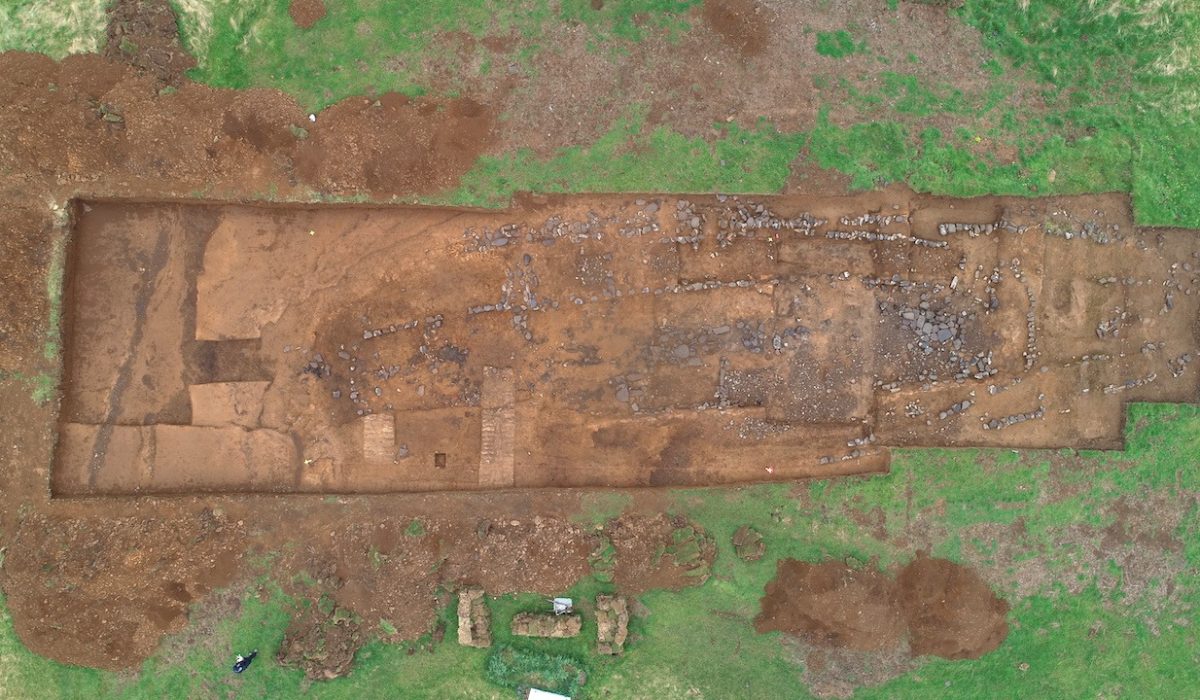
Could there be a Viking boat buried underneath a Wirral pub carpark?

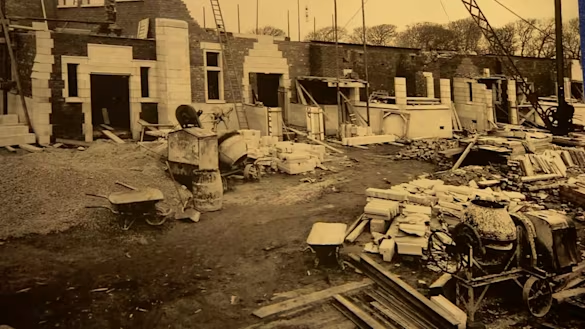
80 years ago when the pub was built, workers made a discovery which is thought could be a Viking boat

Dominga Dett, Chair of Wirral Archaeology said: "There has been intense local interest in this buried object for many years.

"It has been thought that the boat dates from the Viking era but no professional investigation has ever been carried out to establish the truth, so everyone is really delighted at the prospect of what we might discover."

Lisa Jones, General Manager at The Railway, said: "Team Railway is very happy to be part of this historic moment and supports the work of the archelogy group.

"There is a buzz and excitement around this and we look forward to finding out more about what is buried beneath the car park.

Read the rest of this article...

Standing Swords

(Arkeologerna Statens historiska museer)Upright swords, Köping, Sweden

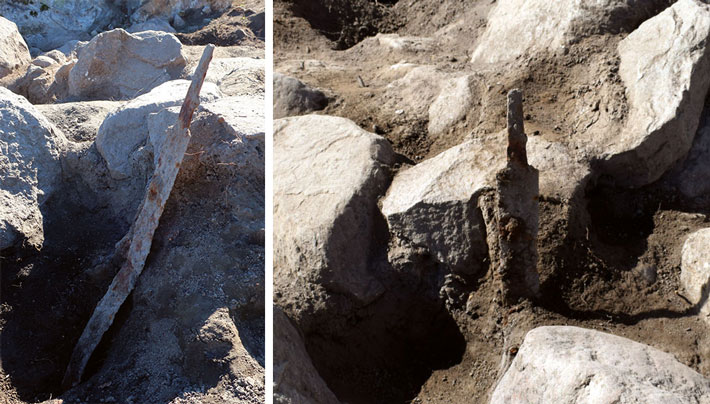
While excavating a Viking cemetery near the Swedish town of Köping, archaeologists discovered a pair of sword hilts protruding curiously from the earth. After further investigation, they determined that the handles belonged to Viking swords that had been thrust into the earth above two burials and had remained upright for 1,200 years. “Viking Age graves containing swords are very rare,” says Anton Seiler, an archaeologist working with Sweden’s National Historical Museums. “Graves where swords were set in a vertical position are even rarer.”

Because it would have taken a great amount of force to hammer the weapons through the soil and large stones that covered the burials, researchers do not believe the blades were in this position by chance. “It was clearly a conscious action,” Seiler says, though he is not certain why the swords were arranged in this unusual way. Perhaps, he says, it was a gesture meant to aid the deceased warriors’ journey to Valhalla. It also may have been a way of commemorating the dead. Family members visiting the graves would have been able to touch the sword handles, thereby maintaining a close connection with the departed.

Read the rest of this article...

ARCHAEOLOGISTS INVESTIGATE ANCIENT BOAT BURIED BENEATH CAR PARK


ARCHAEOLOGISTS FROM THE UNIVERSITY OF NOTTINGHAM ARE INVESTIGATING AN ANCIENT BOAT BURIED BENEATH A PUB CAR PARK IN WIRRAL, ENGLAND.

The boat was first discovered in 1938 by workmen, who partially exposed the vessel at the Railway Inn pub in Meols. The workmen reburied the boat after making several notes and sketches, with no further archaeological studies conducted until now.

A closer study of the sketches suggest that the boat is a clinker design (overlapping planks), technique that developed in the Nordic shipbuilding tradition, and was commonly used by the Anglo-Saxons, Frisians and Scandinavians.

Read the rest of this article...

Thursday, 16 February 2023

How medieval monasteries survived Viking raids

Lyminge Archaeology | Twitter | Fair Use

Archaeologists now claim that English monasteries were more resilient to Viking attacks than previously thought.

The monastery of Lyminge is known for being an Anglo-Saxon royal monastery. Archaeological research demonstrates that Lyminge is one of the best preserved monastic sites in Kent – a region where Christianity first gained a foothold in Anglo-Saxon England. Because of its importance, it was repeatedly attacked by Vikings, until Alfred the Great won a decisive victory in the Battle of Edington (878) and made an agreement with the Vikings, dividing England between Anglo-Saxon territories and the Viking-ruled Danelaw. Alfred also oversaw the conversion of the Danish Viking warlord Guthrum to Christianity, and soon became the dominant ruler in England, even taking London back from its Viking occupants.

Read the rest of this article...

Monday, 13 February 2023

The world's oldest rune stone was found sticking out of the ground. Here’s how researchers figured out how old it is

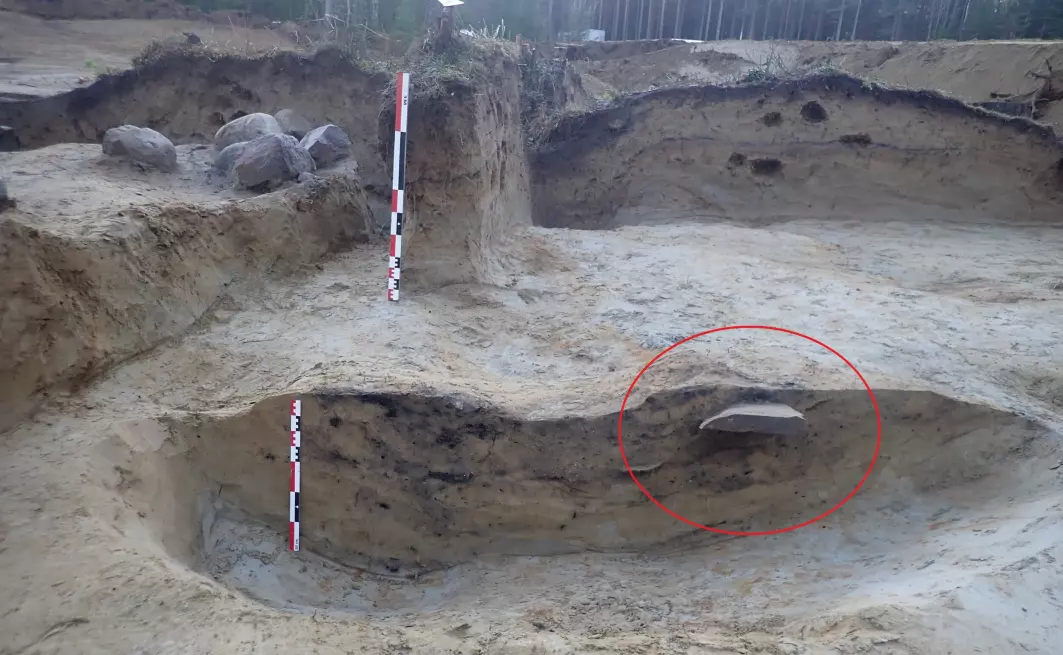
 The Svingerud stone is marked in this photo with a red ring. The photograph shows the way it stuck out in the excavation field. (Photo: KHM)

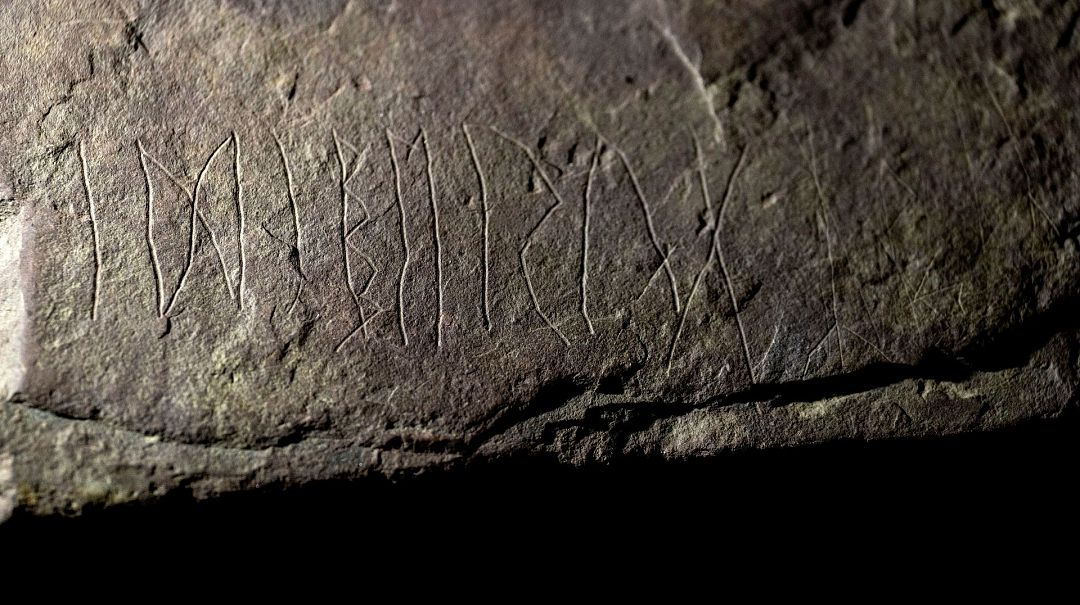
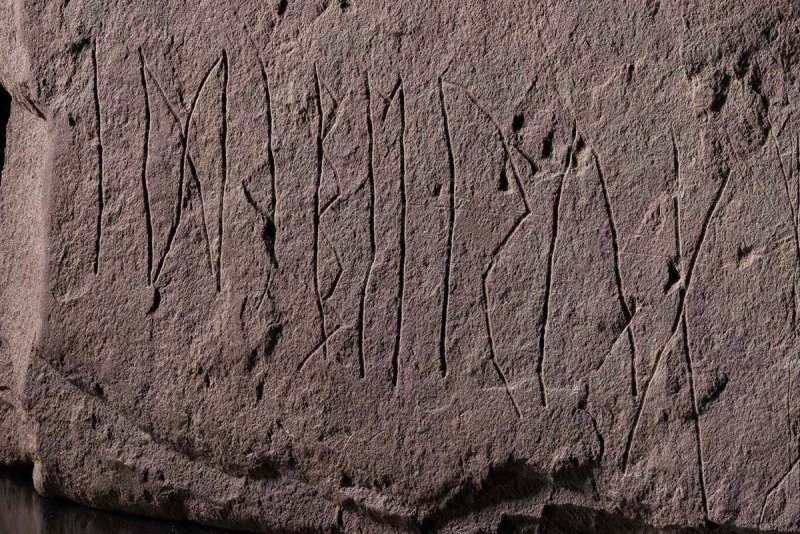
The Museum of Cultural History in Oslo recently announced that they had found the world's oldest rune stone during an excavation in 2021.

The roughly 1,800-2,000-year-old stone is called the Svingerud stone, and was found during an excavation of several grave fields near Tyrifjord, west of Oslo. The stone's name comes from this location.

The archaeologists were not aware of what they had found until the stone was examined later. The Svingerud stone is about the size of a large book, and someone has neatly carved runes into the stone.

“It is surprising that there are so many inscriptions on such an old stone, and there are also traces of shallow inscriptions in the Svingerud stone,” said Kristel Zilmer to sciencenorway.no. Zilmer is Professor of Written Culture and Iconography at the Museum of Cultural History (KHM).

Read the rest of this article...

Saturday, 11 February 2023

Viking Games: 9 Nordic Ways to Pass the Time


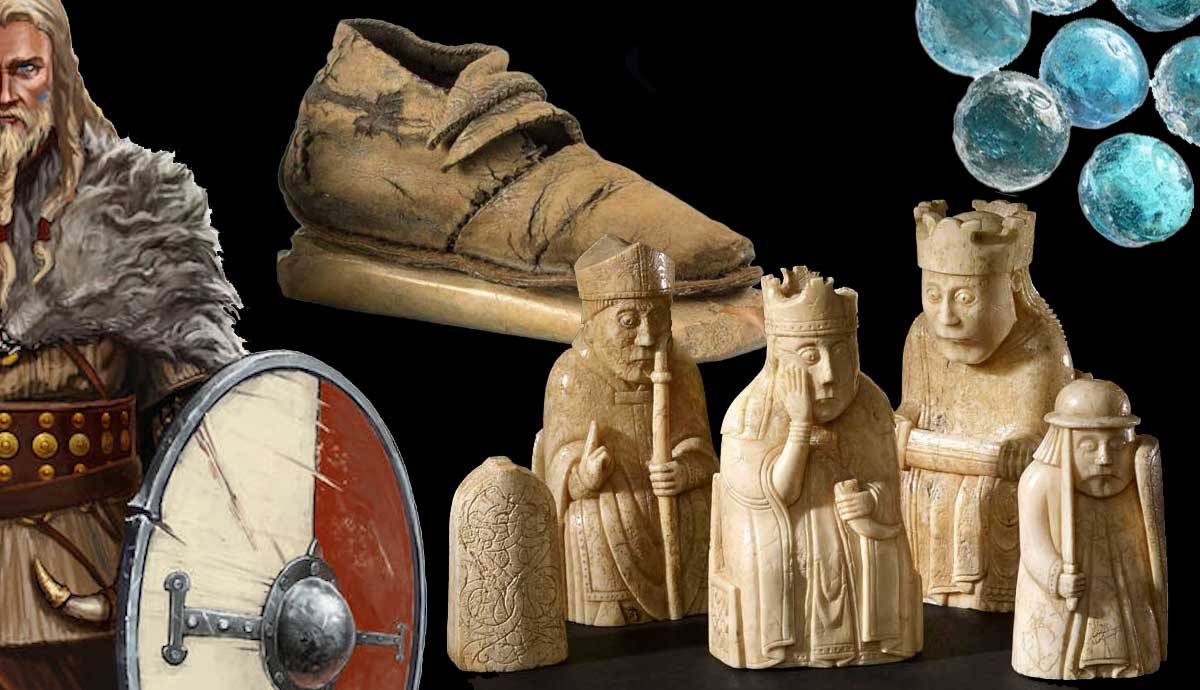
In the twelfth century CE, a young Norwegian Kali Kolsson ventured to Orkney. Eager to prove his worth, he listed his nine skills: “I am quick at playing chess…I hardly forget runes, I am often at either a book or craftsmanship. I am able to glide on skis, I shoot and row so it makes a difference, I understand both the playing of the harp and poetry.” Kolsson’s skills share similarities with the traditional pastimes of the Viking Age (c. 793-1066 CE). As demonstrated by Kolsson, Viking games served as more than just a good time, they offered training in strategy in a volatile medieval world.

1. Medieval Board Games: Unique Viking Games

The Old Norse word tafl figures prominently in Viking lore. Tafl translates to table and often refers to table-based games or board games. Various game boards and pieces have been found throughout the Viking world. These games seem to have been strategy games, but the rules have yet to be found. Game boards seem to have been typically made of wood, but their sizes varied considerably. Vikings marked many game boards with squares like a checkers or chess board while others had round peg holes.

Read the rest of this article...

Friday, 10 February 2023


The Vikings, masters of the seas and terror of medieval Europe, made and amassed thousands of viking beads that reveal surprising insights into their priorities and ambitions.

The Vikings are known for many things — raiding, trading, sailing, stealing, and fighting — but not beads. Yet, viking beads dominate the archaeological record in excavations of the Viking world. Easily overshadowed by the Vikings’ grand ships and (historically inaccurate) horned helmets, beads traveled with the Vikings around the world. Viking beads retain insights about the Norse world and what it meant to be a marauding trader, thief, and explorer in the volatile medieval world.

1. Viking Beads Show a Mastery of Craft

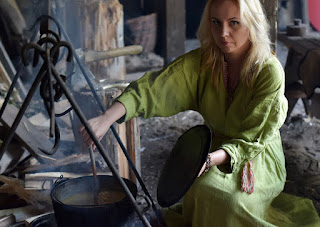
She was a witch! Maybe. Archaeologists discovered a woman buried in a cist grave on the Isle of Man in 1984. They named her the “Pagan Lady of Peel,” after discovering an iron rod wrapped in a goose wing and herbs placed beside her. At first, they called the rod a cooking spit. After further reflection, archaeologists suggested that the cooking spit might be a ritual staff. The Pagan Lady of Peel quickly gained renown as a Viking sorceress, though her true identity remains a mystery.

Read the rest of this article...

Tuesday, 7 February 2023

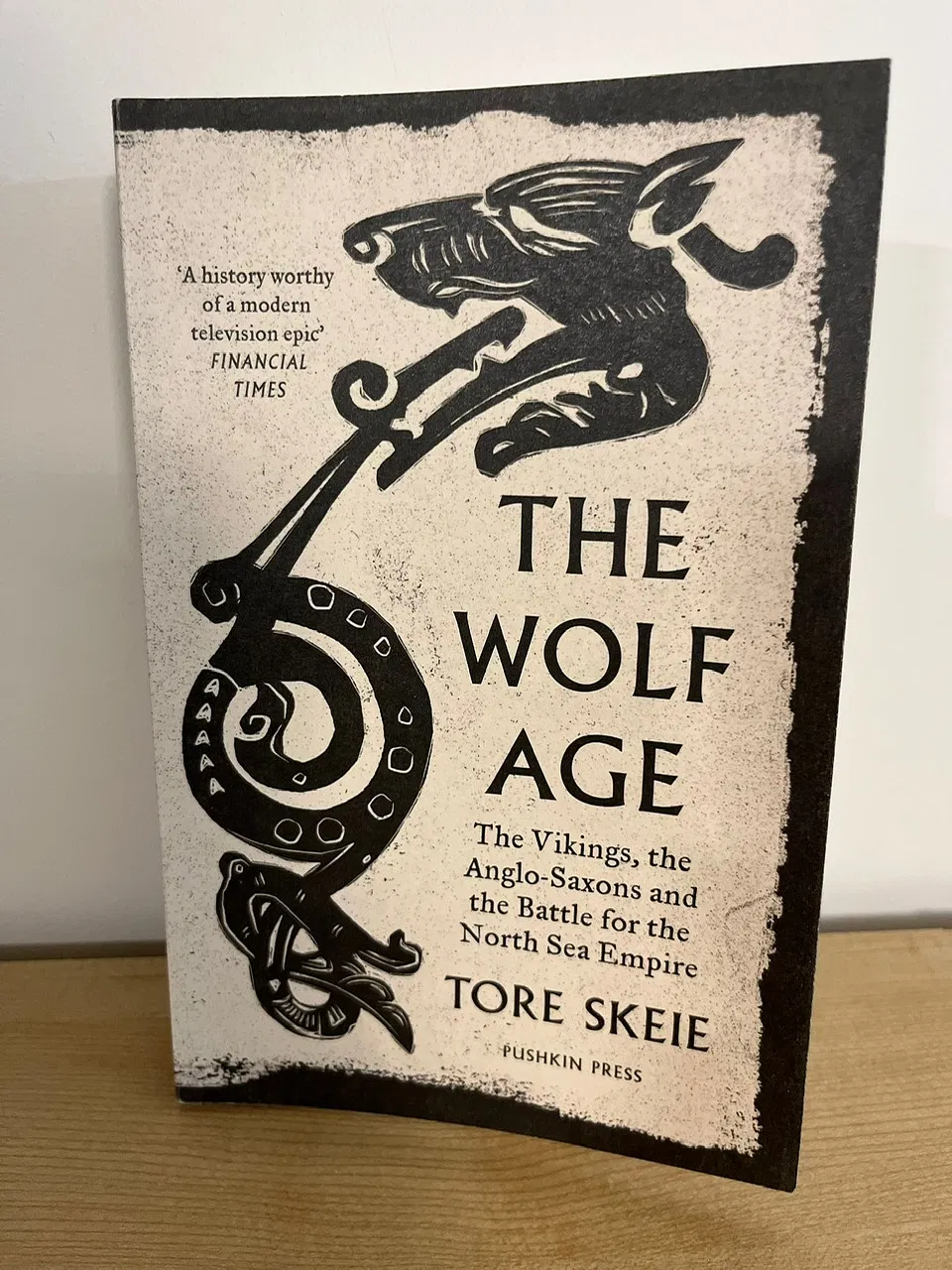
The Wolf Age: The Vikings, the Anglo-Saxons and the Battle for the North Sea Empire


The Wolf Age: The Vikings, the Anglo-Saxons and the Battle for the North Sea Empire

By Tore Skeie

Pushkin Press
ISBN: 978-1-78227-835-1

This book focuses on the Norse history in England from the mid-10th to mid-11th centuries. Scandinavia, Normandy and other lands also appear in its pages, but the main story details the campaigns and battles of various Viking leaders in Britain, ultimately leading to the reign of Cnut as King of England.

Read the rest of this article...

Is there any evidence that Iceland had human habitation prior to the arrival of Europeans?

BJARNI F. EINARSSON

The conventional date given for the settlement of Iceland is 874, plus or minus a couple of years. In terms of evidence of human activity before settlement, yes there may be. But don’t let your imagination run away from you: there are several caveats.

To speak first of historical evidence, there are references in medieval Icelandic literature to people called the “Papar,” an Icelandic name likely referring to the pope.  This name refers to a group of Irish monks who supposedly settled parts of Iceland, including the island of “Papey.” There is no archaeological evidence of their dwellings, only some historical and literary references in the medieval material. In Landnámabók (The Book of Settlements), these mysterious monks were said to have left behind relics like books and croziers, departing the country upon the arrival of the Norse settlers. While there are many examples of Irish monks from the early medieval period looking for isolation in remote environments, some scholars have more recently interpreted the Papar as a literary trope, by which medieval Christian Icelanders tried to re-write Christianity into their pagan past.

Read the rest of this article...

Friday, 3 February 2023

THE FOOD OF THE VIKINGS

Image Credit : Shutterstock

Commonly depicted as being fearless, brutal warriors, Vikings were also accomplished farmers, and fishermen. They grew all types of grains, including wheat, oats, barley and rye, and tended to orchards to provide fresh apples, plums and cherries.

In the family social structure, the man generally worked the farm and fished during the day, while the woman cared for the household, children and animals, and delt with most other aspects of domestic home life.

Mealtime was usually twice a day, the first being in the morning (dagmal) and when the day’s work was done (nattmal). Existing as an agricultural society, the typical Viking diet was well rounded and included an abundance of meat, vegetables, fruits and grains. Reindeer, goat, elk, mutton, poultry and fowl were readily available, but beef, lamb and pork were the preferred choice in a Viking household.

Read the rest of this article...

Thursday, 2 February 2023

Viking warriors sailed the seas with their pets, bone analysis finds

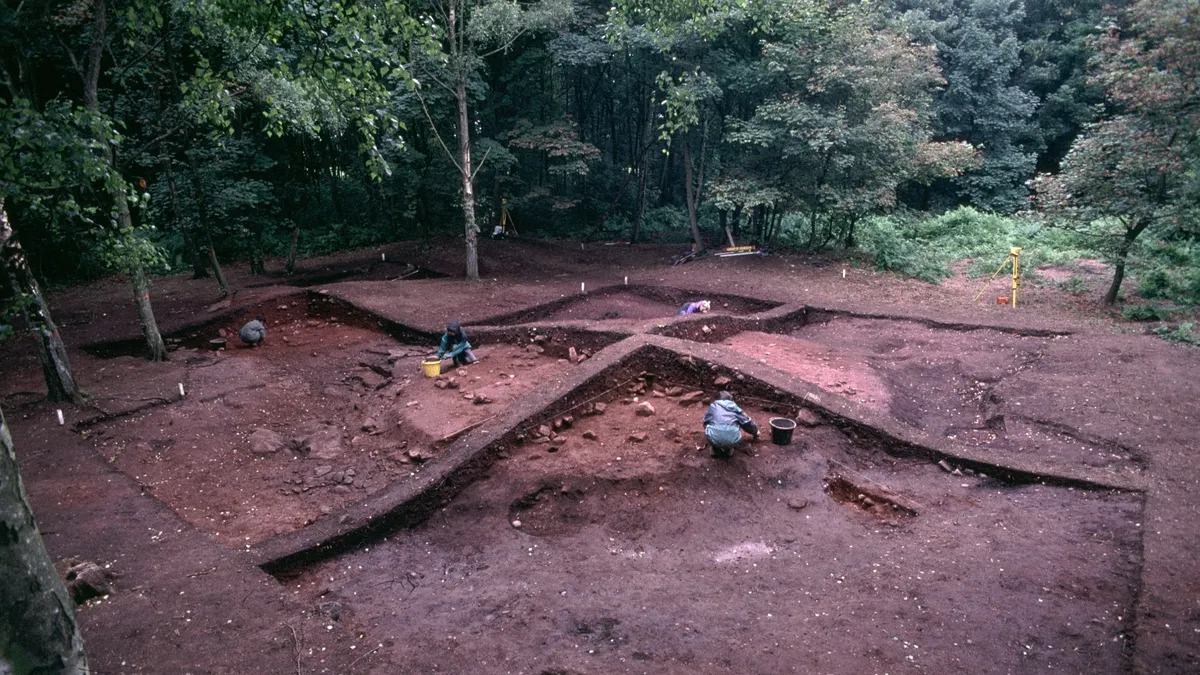
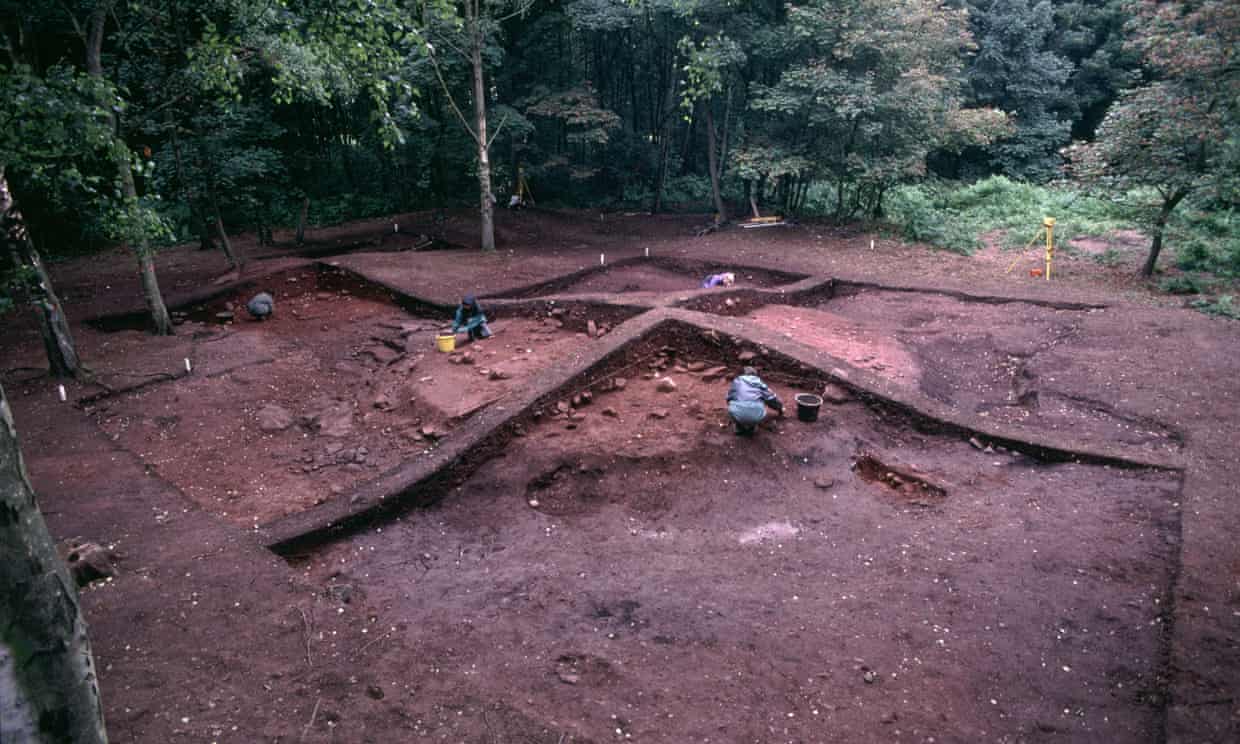
A Viking burial mound at Heath Wood being excavated.
(Image credit: Julian Richards, University of York)

A Viking cemetery in England doesn't just hold the cremated remains of these warriors but also the beloved animals they brought from Scandinavia.

When the Vikings sailed west to England more than a millennium ago, they brought their animal companions with them and even cremated their bodies alongside human ones in a blazing pyre before burying them together, a new study finds. 

These animal and human remains were found in a unique cremation cemetery in central England that has long been assumed to hold the remains of Vikings — in particular, the warriors who sailed west to raid the countryside in the ninth century A.D. However, the new analysis revealed that several of the burial mounds didn't contain just the remains of humans but also those of domesticated animals that the warriors brought with them on their journey.

Read the rest of this article...

In pictures: Shetland's Up Helly Aa Viking fire festival


Shetland's famous Up Helly Aa fire festival - with women and girls in the torchlit procession for the first time - has witnessed the burning of a replica Viking galley light up the Lerwick sky.

Up Helly Aa - the biggest fire festival in Europe - is traditionally held on the last Tuesday in January.

The 142-year-old event sees people celebrate Shetland's Norse heritage.

Females have traditionally been restricted to participating as hostesses - organising the all-night parties that take place in community halls across the Shetland capital.

However, organisers agreed to lift the gender restrictions for the main procession. The decision followed a campaign dating back to the 1980s.

Read the rest of this article...

Viking gods, goddesses & tricksters: 12 figures from Norse mythology


Norse mythology is filled with fascinating figures which hold a mirror up to the societies that created their legends. From Odin, a one-eyed ruler who sought arcane knowledge, to Hel, keeper of the underworld – we take a closer look at the gods and goddesses of Viking lore…

Before the existence of humanity, there was the Ginnungagap, a great chasm which yawned between two realms of legend: the ice of Niflheim and the fiery Muspelheim. When the borders of the two lands of legend clashed in the void, they formed a burning frost, from which were born the first gods of the Vikings.

So held the pagan beliefs of many Norse societies between the eighth and 11th centuries. In the near-millennium that has passed since the end of the Viking age, such myths and stories have evolved and merged to become fixtures of today’s popular culture – from Thor’s mighty hammer to the notion of Valhalla.

Read the rest of this article...

Vikings brought their animals to England, research suggests

Excavations at Heath Wood in Derbyshire, the only known large-scale Viking cremation site in the British Isles. Photograph: Handout

Experts find evidence at Derbyshire cremation site of horses and dogs originating from the Baltic Shield

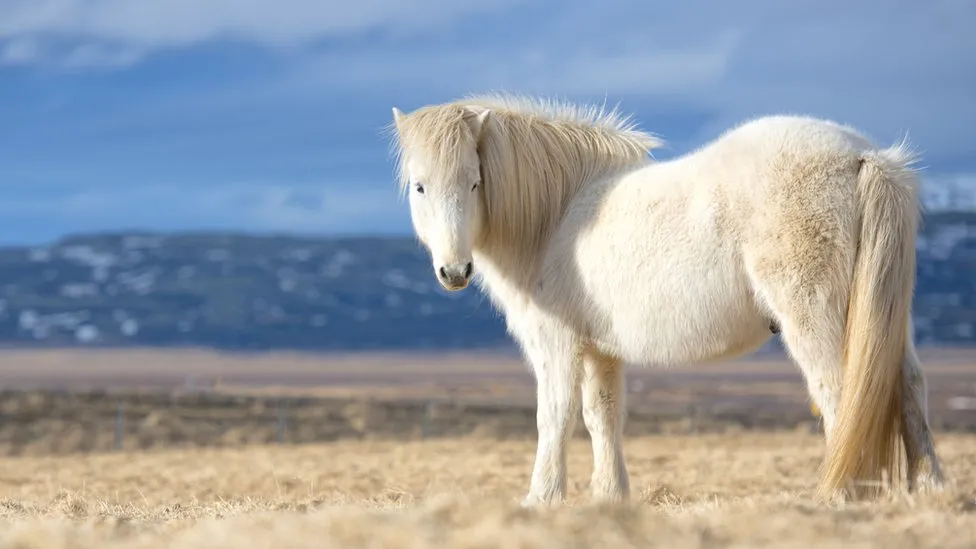
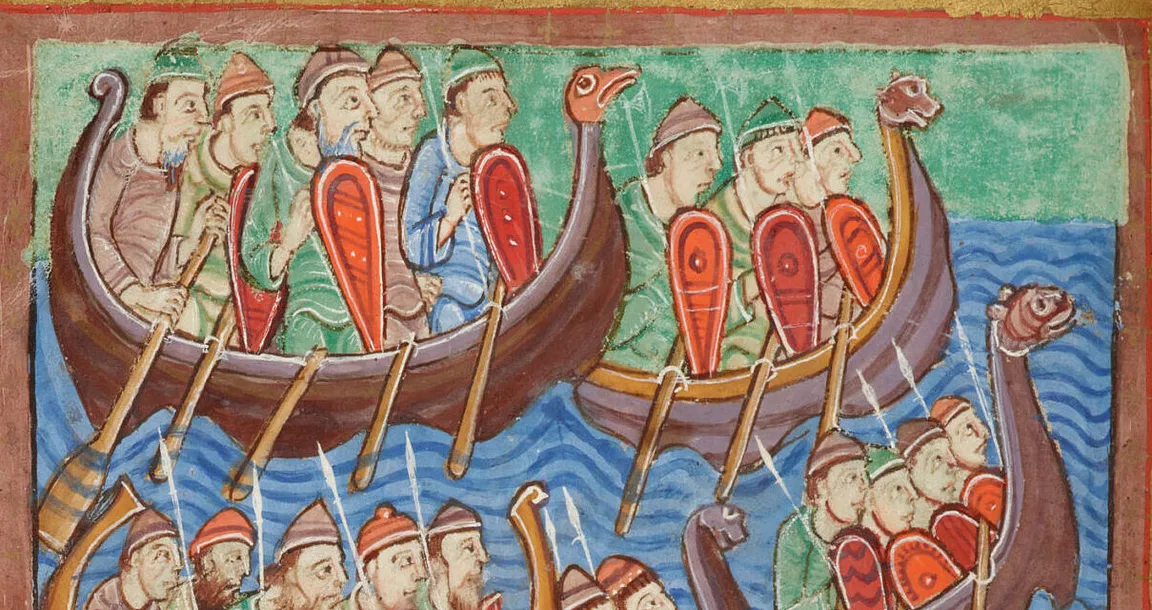
When the Vikings arrived in England they didn’t just bring their helmets, axes and beards –they also brought their horses and dogs, research suggests.

Experts studying cremated remains associated with the Viking great army that invaded England in AD865, say they have found evidence of animals and humans travelling from the Baltic Shield – a geographical area that encompasses Finland and parts of Norway, Sweden and Russia.

“It’s the first scientific proof that the Vikings did bring their animals with them from Scandinavia,” said Prof Julian Richards, co-author of the study from the University of York.

“It’s so nice to have this scientific evidence for something we see later in the Bayeux tapestry with the Normans disembarking the fleet, but this is 200 years earlier.”

Writing in the journal Plos One, Richards and colleagues describe how they analysed the ratio of different strontium isotopes in cremated remains found at the barrow cemetery at Heath Wood, Derbyshire.

Read the rest of this article...

Vikings brought horses and dogs to England, cremated bones confirm

Excavations at Heath Wood in England
Julian Richards, University of York

The first physical proof that Vikings brought horses and dogs to England has been unearthed

Archaeologists have uncovered the first physical evidence that confirms some Vikings shipped their own horses and dogs from Scandinavia to England.

The animal bone evidence comes from a burial mound at the only known Viking cremation cemetery in the British Isles. The Heath Wood cemetery – located in what is now Derbyshire in central England – is believed to be a burial ground for the first large Viking army to travel to the country.

Read the rest of this article...

First Solid Scientific Evidence That Vikings Brought Animals To Britain

Viking burial mound at Heath Wood, Derbyshire, UK, being excavated.
Credit: Julian Richards, University of York.

Archaeologists have found what they say is the first solid scientific evidence suggesting that Vikings crossed the North Sea to Britain with dogs and horses.

Research led by Durham University, UK, and the Vrije Universiteit Brussels, Belgium, examined human and animal remains from Britain's only known Viking cremation cemetery at Heath Wood, in Derbyshire.

Scientists looked at strontium isotopes contained within the remains. Strontium is a natural element found in different ratios across the world and provides a geographical fingerprint for human and animal movements.

Their analysis showed that within the context of the archaeology, one human adult and several animals almost certainly came from the Baltic Shield area of Scandinavia, covering Norway and central and northern Sweden, and died soon after arrival in Britain.

The researchers say this suggests that Vikings were not only stealing animals when they arrived in Britain, as accounts from the time describe, but were also transporting animals from Scandinavia, too.

Read the rest of this article...

Study: Some Vikings Brought Horses and Dogs To Britain

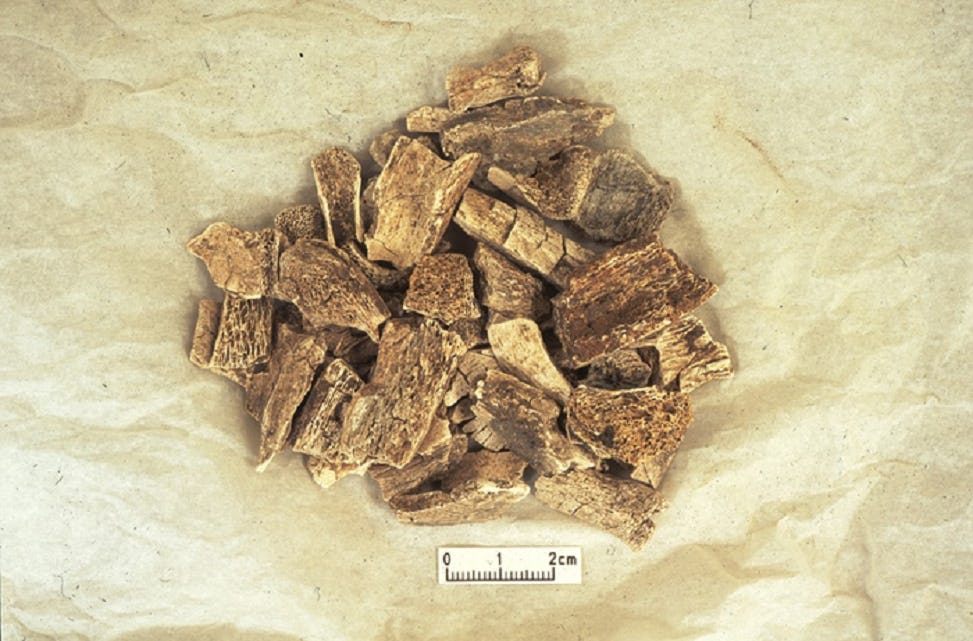
Cremation leaves behind bone fragments like these, which can still reveal information about their geographic origin, if not much else.Julian Richards, University of York

The bones of one dead warrior and their animals may shed new light on the Viking Great Army’s logistics.

When the army of (mostly) Scandinavian warriors landed in East Anglia in 865 CE, they came to plunder — and they were equally happy to fight or to extort the locals. The king of East Anglia, Edmund the Martyr, apparently gave the Viking Great Army horses in return for not having to fight the Vikings, and unleashing them on neighboring, rival kingdoms like Mercia and Wessex. Elsewhere, the Vikings were said to steal horses and whatever else they wanted.

Based on historical descriptions like the Anglo-Saxon Chronicle, it sounds like the Viking Great Army’s approach to logistical planning was “we’ll just steal it when we get there.” But recent archaeological evidence suggests that at least some Vikings brought animals like horses, dogs, and maybe even pigs with them on their campaign to Britain.

Durham University archaeologist Tessi Löffelmann and her colleagues published their findings in a recent paper in the journal PLOS ONE.

What’s new — Wherever you go in the world, the bedrock beneath your feet has a particular ratio of different isotopes of the element strontium. That isotopic ratio gives the place a chemical fingerprint that’s shared by plants that grow in the soil, animals that eat the plants and drink the water, and other animals that eat those animals. Once it’s in the body, strontium can fill in for calcium in your bones, so that if you’ve in a place long enough, its geology becomes part of your bones.

Read the rest of this article...

Horses and dogs sailed with Vikings to Britain, say scientists


Vikings sailing from Scandinavia to England brought horses, dogs and perhaps even pigs with them, according to analysis of bone remains.

Invading Vikings were previously thought to have largely stolen animals from villages in Britain.

The findings also provide evidence Viking leaders had a close relationship with animals and travelled with them, the lead scientist says.

The 9th Century bones were found in burial mounds in Heath Wood, Derbys.

Cremated animal and human remains had been found buried together, suggesting the creatures had special meaning and been burned on the same funeral pyre as humans, doctoral researcher Tessi Löffelmann, from Durham University and Vrije Universiteit Brussels, told BBC News.

Read the rest of this article...

Wednesday, 1 February 2023

Medieval English monasteries found ways to survive Viking attacks, archaeologists find


English monasteries were more resilient to Viking attacks than previously thought, archaeologists have concluded.
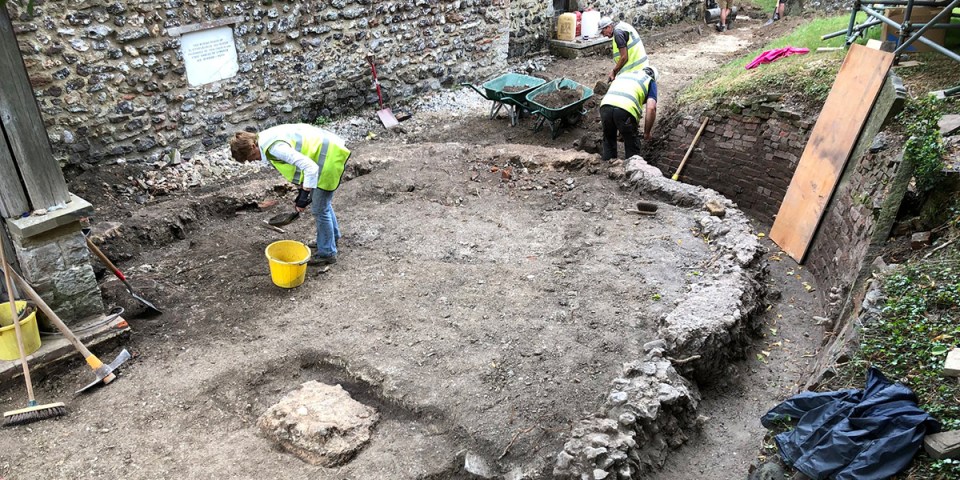
Lyminge, a monastery in Kent, was on the front line of long-running Viking hostility which ended in the victories of Alfred the Great. The monastery endured repeated attacks, but resisted collapse for almost a century, through effective defensive strategies put in place by ecclesiastical and secular rulers of Kent, University of Reading archaeologists say.
The new evidence is presented after a detailed examination of archaeological and historical evidence by Gabor Thomas from the University of Reading. “The image of ruthless Viking raiders slaughtering helpless monks and nuns is based on written records, but a re-examination of the evidence show the monasteries had more resilience than we might expect,” Thomas explains.
Despite being located in a region of Kent which bore the full brunt of Viking raids in the later 8th and early 9th centuries, the evidence suggests that the monastic community at Lyminge not only survived these attacks but recovered more completely than historians previously thought, Dr Thomas concludes in research, published this month in the journal Archaeologia.

Read the rest of this article...

Tuesday, 31 January 2023

New Evidence Vikings Failed To Wipe Out Communities And Anglo-Saxon Monasteries


St Paul's Church, Jarrow. Credit: Adobe Stock - Electric Egg Ltd.

The new evidence is presented after a detailed examination of archaeological and historical evidence by Dr. Gabor Thomas from the Department of Archaeology at the University of Reading.

“The image of ruthless Viking raiders slaughtering helpless monks and nuns is based on written records, but a re-examination of the evidence shows the monasteries had more resilience than we might expect,” Dr. Thomas said.

Despite being located in a region of Kent that bore the full brunt of Viking raids in the later 8th and early 9th centuries, the evidence suggests that the monastic community at Lyminge not only survived these attacks but recovered more completely than historians previously thought, Dr Thomas concludes in research, published today (30 January 2023) in the journal Archaeologia

During archaeological excavations between 2007-15 and 2019, archaeologists uncovered the main elements of the monastery, including the stone chapel at its heart surrounded by a wide swathe of wooden buildings and other structures where the monastic brethren and their dependents lived out their daily lives. Radiocarbon dating of butchered animal bones discarded as rubbish indicates that this occupation persisted for nearly two centuries following the monastery’s establishment in the second half of the 7th century.

Read the rest of this article...

Thursday, 26 January 2023

The Oldest Rune Stones in the World

The Svingerud Stone is the oldest rune stone, created almost two thousand years ago

There are many things that come into mind when thinking of Vikings – horned helmets, which are historically inaccurate, longships that brought terror to Europe, Norse gods that have been turned into Hollywood super heroes and, the subject of this article, their unique way of writing.

The runic alphabet developed among the early Germanic people of Northern Europe almost 2,000 years ago. How it was created it still not fully understood, though it is widely believed that contact with Mediterranean civilisations – Greeks, Etruscans and Romans – influenced the creation of this writing system.

Some of the best preserved examples of this script can be found on rune stones, including the lions-hare located in Sweden. They had many varied purposes ranging from marking territory to memorialising fallen kinsmen. Rune stones used to be highly colourful, though hundreds of years of being out in the open means very little is left for modern observers.

Here were look at some of the oldest rune stones found by archeologists.

Read the rest of this article...

Monday, 23 January 2023

How does the Nordic Cosmic System Depend on the Yggdrasil Tree?


The concept of a world tree is present in many cultures’ legends. Examples of this include the sacred Bodhi fig tree under which the Buddha reached Enlightenment, and the holy Aśvattha tree believed by Hindus to have no beginning or end. Certain trees are still considered to hold power in Scandinavian culture. Thought to bless their caretakers with good luck, farmers still plant warden trees in Norway and Sweden. In Norse mythology, the cosmic tree of life is arguably the most important element of their spiritual world. The Yggdrasil tree is grounded at the center of the universe, with the nine worlds revolving around it, held in place by its branches and roots. Here is an exploration into why this tree is deeply significant in the Norse spiritual cosmos.

Read the rest of this article...

Norwegian archaeologists uncover the world's oldest runestone

The runestone found at Tyrifjorden, Norway, shown at the Museum of Cultural History in Oslo
AP Photo

Runestones, typically raised at gravesites during the Viking era, are stones inscribed with runic letters, the oldest known alphabet in Scandinavia. 


The discovery of this runestone is particularly significant as it predates previously known examples by several hundred years, and could date back to the time of Jesus Christ. 

"We thought that the first runestones in Norway and Sweden appeared in the 300s or 400s, but it turns out that some could be even older than we previously believed," said runologist Kristel Zilmer. "It's a unique discovery," she added.

The inscription on the runestone, which has been retranscribed into the Latin alphabet, is believed to be in honor of the person buried in the grave. The meaning of the word "idiberug" is still a mystery, but researchers are working to uncover its significance. 

“This find will give us a lot of knowledge about the use of runes in the early Iron Age. This may be one of the first attempts to use runes in Norway and Scandinavia on stone,” Kristel Zilmer, a professor at University of Oslo says. The runestone found at Tyrifjorden, Norway, shown at the Museum of Cultural History in OsloAP Photo
Runestones, typically raised at gravesites during the Viking era, are stones inscribed with runic letters, the oldest known alphabet in Scandinavia. 


The discovery of this runestone is particularly significant as it predates previously known examples by several hundred years, and could date back to the time of Jesus Christ. 

"We thought that the first runestones in Norway and Sweden appeared in the 300s or 400s, but it turns out that some could be even older than we previously believed," said runologist Kristel Zilmer. "It's a unique discovery," she added.

The inscription on the runestone, which has been retranscribed into the Latin alphabet, is believed to be in honor of the person buried in the grave. The meaning of the word "idiberug" is still a mystery, but researchers are working to uncover its significance. 

“This find will give us a lot of knowledge about the use of runes in the early Iron Age. This may be one of the first attempts to use runes in Norway and Scandinavia on stone,” Kristel Zilmer, a professor at University of Oslo says. 

Enigmatic Ale’s Stones – Sweden’s Megalithic Ship-Like Formation


Ales stones, Hesten and others (Valleberga 20:1). Image credit: Jorchr - CC BY-SA 4.0

Myths, legends, and mystery surround this fascinating megalithic formation consisting of 58 (59) upright boulders and one vertical (weighing up to 1.8 tons each) - placed in a gigantic ship formation, 67 meters in length and 19 meters wide.

The largest stones are almost 3.5-meter and are called "bow" and "stern." They are directed towards the sunrise at the time of the summer solstice, and the sunset at the time of the winter solstice.

The Ales Stenar - Sweden's largest stone complex dates back to the Bronze or Iron Age. From a bird's eye view, it resembles the shape of a boat. It is not known who and for what purpose built it. Not even experts know why this complex was built.

Read the rest of this article...

Mysterious Svingerud Stone – World’s Oldest Rune Stone With Enigmatic Inscriptions Investigated By Experts – What Does It Say?


These runes were inscribed between the years 1 and 250 AD and date back to the earliest days of the enigmatic history of runic writing. Credit: Photo - Alexis Pantos/KHM, UiO

The story goes back to the autumn of 2021, archaeologists of the Museum of Cultural History investigated a grave field by Tyrifjorden in Ringerike. They discovered a stone with several runic inscriptions in one of the graves. Burnt bones and charcoal from the grave reveal that the runes were inscribed between 1 and 250 AD. This makes it the earliest known rune stone.

The stone has been named after the place of discovery and is now called the Svingerud stone.

Sometime between 1,800 and 2,000 years ago, someone stood near Tyrifjorden and carved runes into the 31x32 cm block of reddish-brown Ringerike sandstone. They spoke an early form of the ancient Nordic language, the ancestor language of modern Nordic languages in Scandinavia today.

Read the rest of this article...

Norway reveals stone tablet providing clues to origins of Western writing

The ancient rune stone found by Norwegian researchers is believed to be between 1,800 and 2,000 years old. It was found buried beneath a later grave.
Photo courtesy of Museum of Cultural History

Norway is set to unveil an ancient rune stone found in the east of the country dating back as much as 2,000 years that is providing the missing pieces to the puzzle of the origins of writing in northern Europe.

Researchers from the University of Oslo's Museum of Cultural History found the block of sandstone on an Iron Age grave site dig near Tyrifjorden, northwest of Oslo, in late 2021. They now believe it is the world's oldest rune stone and that the characters on the stone are one of the earliest examples of writing in Scandinavia because radiocarbon dating shows the grave dates back to 1-250 CE.

The stone, which is creating a stir internationally among runologists and archaeologists, is going on display to the public as the centerpiece of a new exhibition opening on Saturday at the Historical Museum in Oslo.

Read the rest of this article...

Wednesday, 18 January 2023

Found the world's oldest rune stone

Photo: Alexis Pantos/KHM, UiO.

During the first few centuries of the Common Era, during the period that archaeologists call the Roman Iron Age, Scandinavians came into contact with Roman society by trading goods and through their encounters with the Roman army. Archaeological material testifies to the fact that this is how they acquired knowledge about new customs and forms of organisation, and not least a written culture. 

Inspired by the classical alphabets, such as the Roman alphabet, the Germanic peoples created their own characters – runes. But exactly how old is the runic alphabet, and when were the first rune stones made? These are questions that researchers have been seeking to answer for many years. 

A new archaeological find is attracting international attention among runic scholars and archaeologists: the world's oldest dated rune stone was discovered during the autumn of 2021 when archaeologists at the Museum of Cultural History, University of Oslo, investigated a grave field in Hole near Tyrifjorden, Eastern Norway. Radiocarbon dates show that the age of the grave and thus the inscriptions on the stone probably date back to 1-250 CE. This rune stone is thus one of the very earliest examples of words recorded in writing in Scandinavia, and the inscriptions provide new insights into the development and use of runic writing during the early Iron Age. 

Read the rest of this article...

Norway reveals stone tablet providing clues to origins of Western writing

The ancient rune stone found by Norwegian researchers is believed to be between 1,800 and 2,000 years old. It was found buried beneath a later grave.
Photo courtesy of Museum of Cultural History

Jan. 17 (UPI) -- Norway is set to unveil an ancient rune stone found in the east of the country dating back as much as 2,000 years that is providing the missing pieces to the puzzle of the origins of writing in northern Europe.

Researchers from the University of Oslo's Museum of Cultural History found the block of sandstone on an Iron Age grave site dig near Tyrifjorden, northwest of Oslo, in late 2021. They now believe it is the world's oldest rune stone and that the characters on the stone are one of the earliest examples of writing in Scandinavia because radiocarbon dating shows the grave dates back to 1-250 CE.

The stone, which is creating a stir internationally among runologists and archaeologists, is going on display to the public as the centerpiece of a new exhibition opening on Saturday at the Historical Museum in Oslo.

Read the rest of this article...

Tuesday, 17 January 2023

The Viking Age

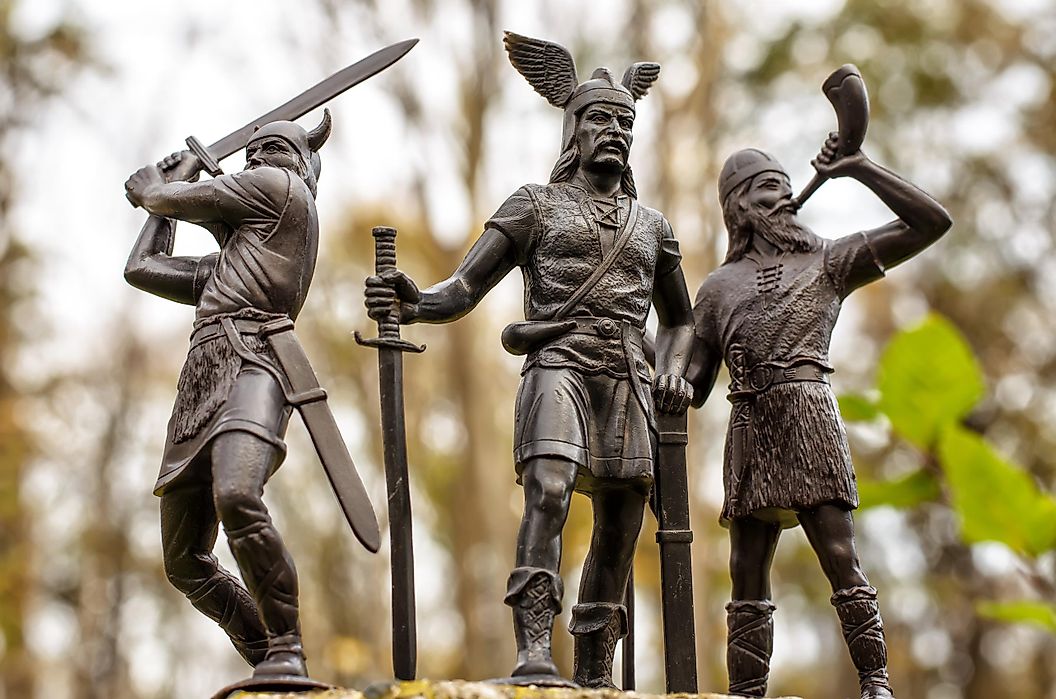
Statue of Scandinavian God Odin with two Vikings.
Editorial credit: drumdredd777 / Shutterstock.com

The stereotype of a Viking is usually that of a bloodthirsty brute hellbent on the destruction of the civilized world. While this image is often exaggerated to the point of parody in modern television and film, this over-the-top representation is still based on some truth.

The Vikings did not keep records like the Christian kingdoms of Dark Ages Europe. So, we do not really have a good idea of how the Vikings viewed themselves or the many peoples with whom they came in contact. The only surviving historical records are mainly written by the people who were often victimized by Viking raids and invasions. As you can imagine, these Medieval chroniclers' opinions of the Vikings are far from favorable.  

The first recorded Viking raid occurred on Lindisfarne island in modern-day England. Lindisfarne was home to an isolated monastery filled with a small population of monks and townsfolk. Churches and other religious buildings at that time would have been among the few places where wealth and valuables would have been stored. An island filled with riches, being defended by unarmed monks and peasants, meaning that just about anyone could have come and taken what they wanted. And that is exactly what the Vikings did in 793 AD. Much of the remote settlement was destroyed, and its population was either killed in the raid or enslaved.

Read the rest of this article...

Vikings in North America? Here's what we really know


Anyone standing today by the wind-swept shore of Epaves Bay at the northern tip of Newfoundland might find it hard to comprehend the enormity of the modest archaeological site that extends around them. Here, at L’Anse aux Meadows—the name is probably a garbled reference to an old French naval vessel—lies what is still the only known Norse settlement in North America. A few humps and bumps in the grass, a replica building, and a fine museum mark the point of first contact between human populations across the Atlantic. It is an astonishing place, but its significance was only recognised in relatively recent decades.

Until as late as the 1960s, the Viking adventure in North America was known only second-hand from the Icelandic sagas, the great epic tales that form one of the jewels of northern medieval literature. These stories mostly concern the Viking age of roughly A.D. 750-1050, but they were written down hundreds of years later, primarily in the 13th century. The degree to which they preserve genuine memories of the saga-writers’ ancestors, or whether they are more a form of historical fiction, still divides scholars today. The entire narrative of Norse voyages to North America is contained in just two of these texts, the Saga of the Greenlanders (Grænlendinga saga) and the Saga of Erik the Red (Eiríks saga rauða).

Read the rest of this article...

Monday, 19 December 2022

700-Year-Old Viking Shipwreck Found at the Bottom of Norwegian Lake

A shipwreck at the bottom of Norway's largest lake, Mjøsa
AARØNÆS, LARS, VIA DEFENCE FACEBOOK POST.

During a government research mission researchers stumbled upon what they believe to be a 700-year-old shipwreck at the bottom of Norway’s largest lake, Mjøsa, reported Live Science.

The Norwegian Defence Research Establishment launched Mission Mjøsa after officials discovered unexploded bombs from World War II in the lake. They quickly drew up a plan to carefully map the lake bed to track the presence of these bombs and study their potential health effects on the water, as the lake provides 100,000 people with potable water.

Though previous research missions have turned up 20 shipwrecks in this lake, this was the first time that the deepest parts of the lake—some 1,350 feet deep—were explored with sonar technology.

Tuesday, 13 December 2022

Vikings: Raiders, Traders and Settlers


The University of Oxford online course: Vikings: Raiders, Traders and Settlers is currently enroling for Trinity Term when the course will begin on 25 January.

Find out more about this course...

Monday, 12 December 2022

Great Viking Fortresses Built By King Harald Bluetooth

Aerial view of the Viking ring fortress of Aggersborg. The similarity in design with Trelleborg near Slagelse, is clearly evident. Image credit: View author information - CC BY 2.0

About 1,000 years ago, legendary King Harald Bluetooth built several impressive Viking fortresses. Today, there is not much left of these once powerful ancient buildings, but re-constructions give us a unique glimpse of what life was like inside the circular ringforts.

Harald Bluetooth was the Viking king of Denmark between 958 and 970.

King Harald was famous for uniting parts of Denmark and Norway into one nation and converting the Danes to Christianity.

The impressive remains of one of the Vikings’ great ring fortresses were originally constructed around AD 980 by King Harald Bluetooth, and the museum at Trelleborg has models, archaeological finds, and reconstructions that hekp to experience some of  Trelleborg’s history, its inhabitants and the function of the fortress in the distant past.

Read the rest of this article...

Revisiting one of Scotland's rarest Viking burials


One hundred and forty years ago Victorian antiquarians excavated a rare Viking boat grave in the Inner Hebrides.

What they uncovered on the coastal meadow, called machair, at Kiloran Bay in Colonsay remains Scotland's single richest male Viking burial site to be found so far.

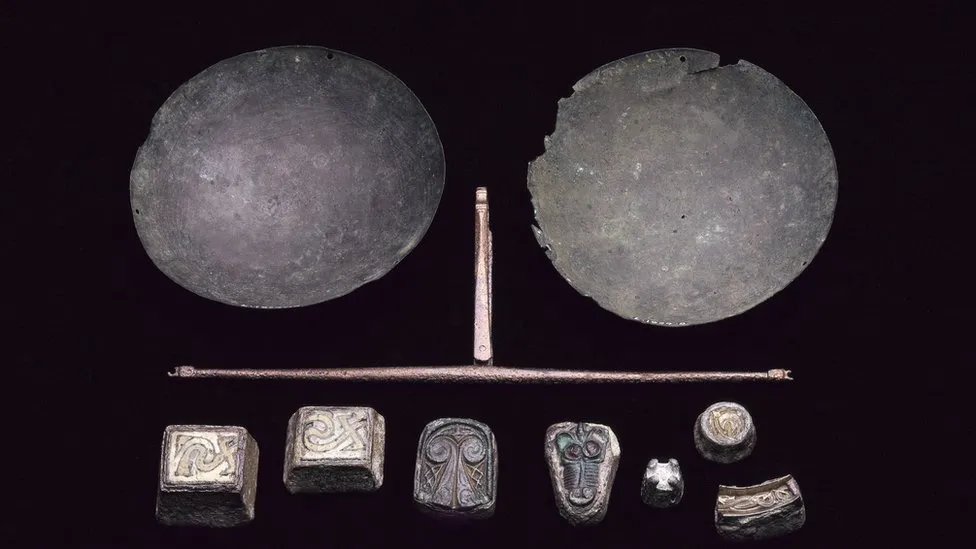
The finds included weapons, a silver dress pin and a set of scales and elaborately decorated weights for trading.

A boat had been placed over the top of the man's grave chamber and buried next to it was his horse, which had been sacrificed. There was also possible evidence of a human sacrifice having taken place.

"The grave was discovered after rabbits, digging in the soft machair, scooped up some boat rivets," says Prof James Graham-Campbell, an expert on pagan Norse graves of Scotland.

Read the rest of this article...

Monday, 28 November 2022

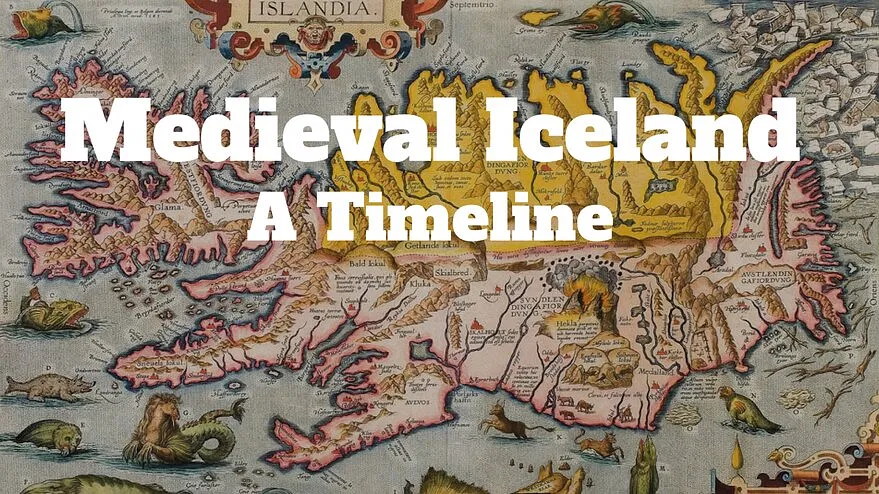
Medieval Iceland: A Timeline


A look at the events and history of Iceland between the ninth and fifteenth centuries.

Iceland’s history begins with its exploration and settlement, with a unique type of nation forming. By the mid-thirteenth century it would suffer its own civil war and then come under the control of Norway (and later Denmark). During the later Middle Ages, Iceland would be hit hard by natural disasters and plague.

Early-ninth century – a few Irish monks are the only inhabitants of Iceland

860 – a Norse sailor named Naddoðr gets lost while sailing to the Faroe Islands. He lands in Iceland and explores the territory for a short time before sailing back to the Faroes. He names the land Snæland (Snowland).

Read the rest of this article...

Monday, 21 November 2022

The ancient golden treasure rewriting Danish history


A chance discovery is shedding new light on early Norse history, after two old school-friends, armed only with a metal detector stumbled across a gold treasure trove.

More than 20 gold artefacts, weighing almost a kilo, were found buried in a field in the Danish village of Vindelev. Hidden for almost 1,500 years, the treasure includes Roman medallions and ornate pendants called 'bracteates' - some as large as a saucer.

There are mysterious inscriptions and never-seen-before runes, which researchers think are some of the earliest references to Norse gods.

Read the rest of this article...


Wednesday, 16 November 2022

The Viking Axe

A ‘Danish’ Axe discovered in the Thames River. it dates from the 11th century.
Photo by Medievalists.net

Few weapons were so feared or as evocative as the axe used by the Vikings in their feuds and in battle, as well as on their raids throughout Europe in the eighth and ninth centuries and beyond. With its long shaft, wielded in both hands, its iron head and sharp edge, it was formidable indeed – cleaving heads and bodies at a single blow. But what was it really like?

Read the rest of this article...

Wednesday, 9 November 2022

Archaeologists Unearth Trove of Viking Age Jewelry in Sweden

All of the jewelry archaeologists unearthed from a Viking Age site north of Stockholm 
Courtesy of Acta Konserveringscentrum

Archaeologists in Sweden have unearthed a once-in-a-lifetime trove of jewelry dating back an estimated 1,000 years to the Viking Age. Despite their age, the pieces are in near-pristine condition and look like they’re “almost completely new,” says Maria Lingström, one of the archaeologists who made the find, in a statement.

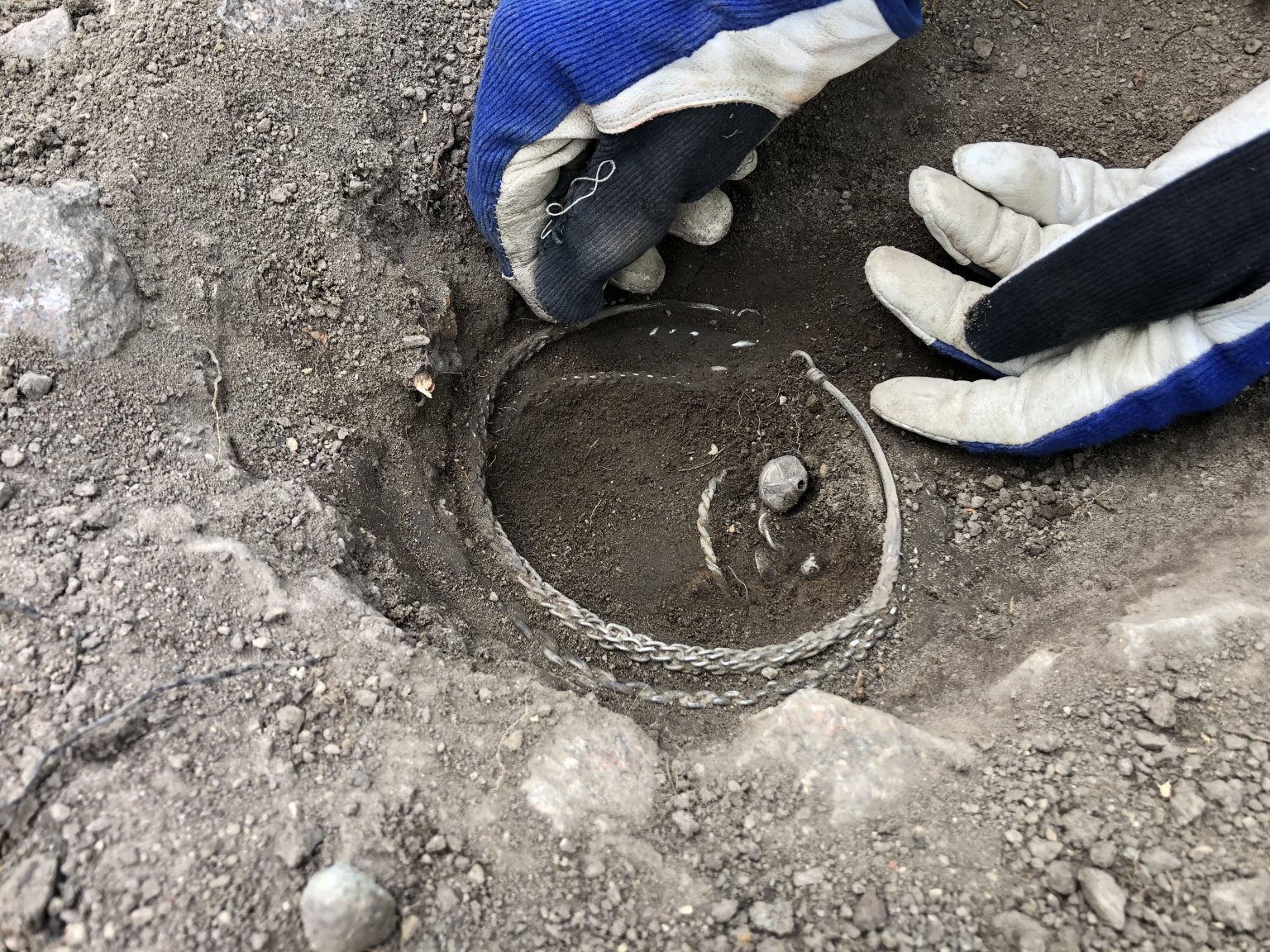
Researchers with the National Historical Museums in Sweden were digging at a Viking Age settlement in Viggbyholm, a neighborhood north of Stockholm, when they stumbled upon a small ceramic pot tucked beneath the remnants of a building’s wooden floors. Inside, they found eight torque-style neck rings, one finger ring, two pearls and two arm rings. They also found a linen pouch that contained 12 coin pendants (which are coins used as jewelry).

Read the rest of this article...

Thursday, 3 November 2022

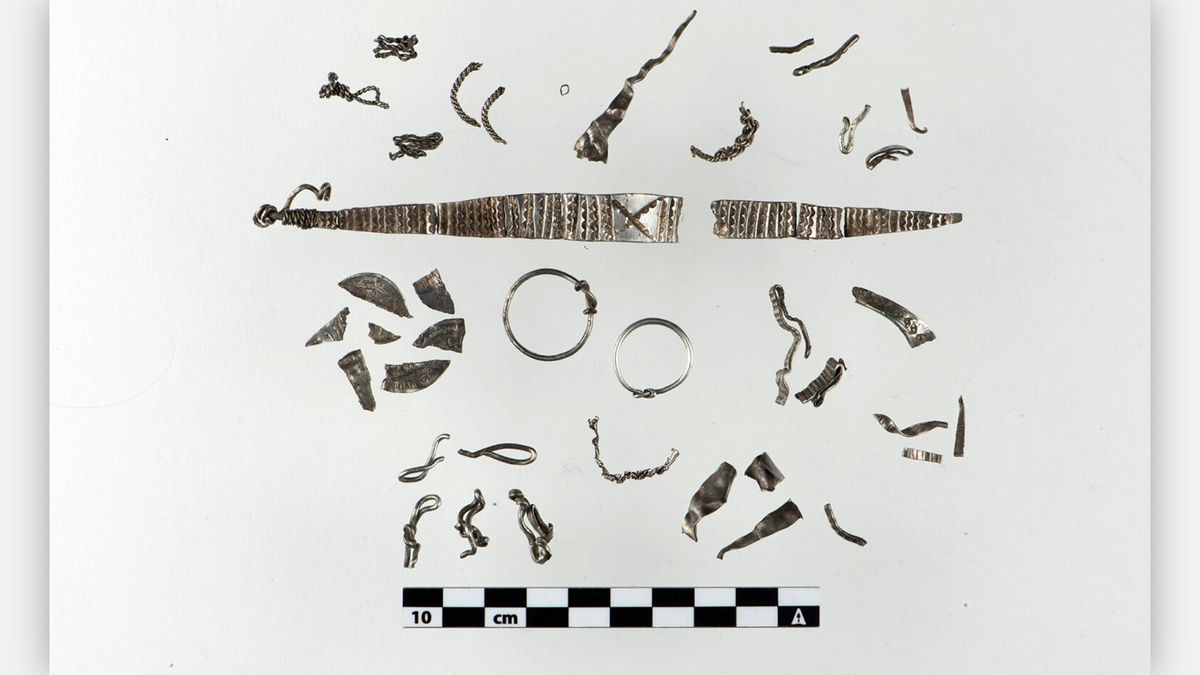
Metal detectorist stumbles across Viking treasure hoard in Norway

In the ninth century A.D., this treasure might have bought half a cow. 
(Image credit: Brigit Maixner)

Using a metal detector in a field, a Norwegian man stumbled upon a number of silver pieces dating back to the Viking Age.

Many people dream of finding buried treasure, but very few people actually do. For one man in central Norway that dream became a reality just before Christmas last year, when he took his metal detector for a stroll in a field near his home and unearthed a hoard of silver fragments from the Viking Age.

At first, Pawel Bednarski wasn't sure of the value of the fragments he'd found buried under just a couple of inches of soil. There were a pair of rings, what looked like chopped-up Arabic coins and fragments of a silver bracelet, among other pieces. But when he reached out to local historians and archaeologists, the truth became clear: This was a significant find.

Tuesday, 1 November 2022

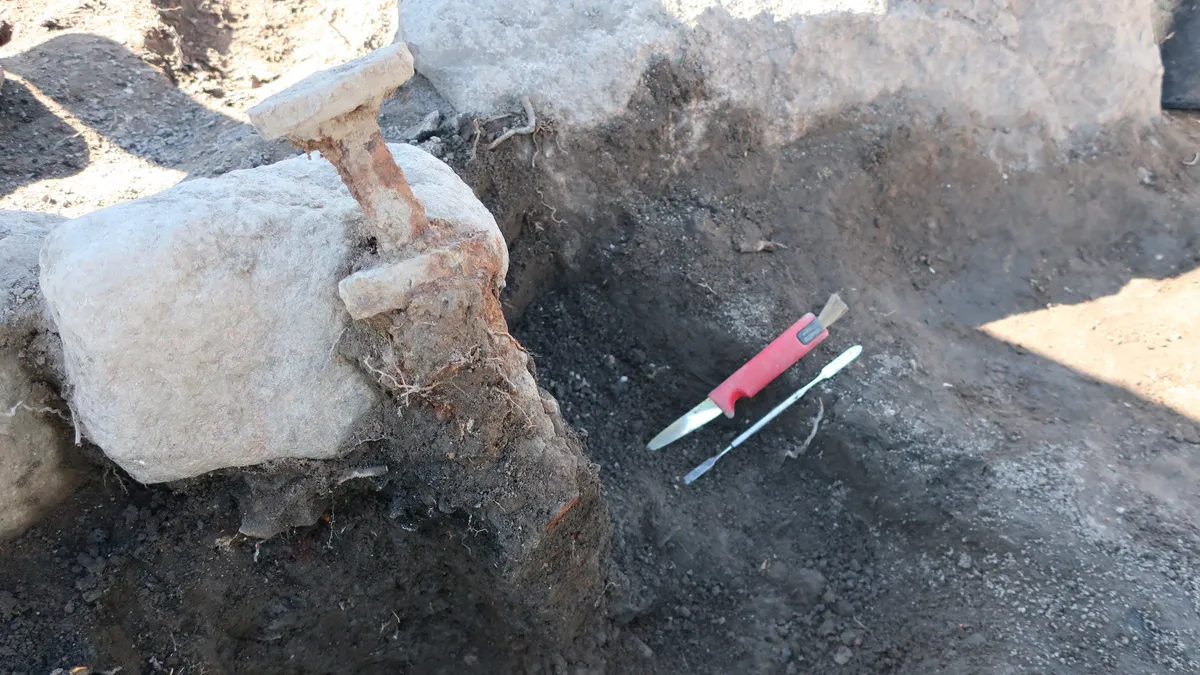
2 Viking swords buried upright might have connected the dead to Odin and Valhalla

This sword has a preserved pommel (a knob at the end of the handle) with a "button" on top.
(Image credit: The Archaeologists/National Historical Museums, CC BY)

Archaeologists in Sweden excavating a Viking grave field have uncovered two burials containing swords standing upright.

Archaeologists in Sweden have unearthed two Viking swords in neighboring graves that were buried upright, as if they were standing on their points.

Whoever installed the iron swords perpendicular to the surface about 1,200 years ago clearly did so on purpose, as it would have taken a lot of effort — possibly involving a rock or hammer — to wedge the weapons roughly 16 inches (40 centimeters) into the ground, archaeologists told Live Science. 

"The placement of the swords reflects an action with a lot of symbolism," Anton Seiler(opens in new tab), Fredrik Larsson(opens in new tab) and Katarina Appelgren(opens in new tab), archaeologists at Arkeologerna, an archaeology firm in Sweden that is part of the government agency National Historical Museums, told Live Science in an email. "When you find swords in graves — which you don't do very often — they often lie beside the buried individual, as a faithful companion on the voyage to the next world."


Read the rest of this article...

The mysterious Viking runes found in a landlocked US state


Did Vikings find their way to a remote part of Oklahoma? Some in a small community believe so, thanks to controversial runic carvings found in the area.

"[Farley] spent the majority of her adult life researching the stone," said Amanda Garcia, Heavener Runestone Park manager. "She travelled all around the US, went to Egypt and went to different places looking at different markings."

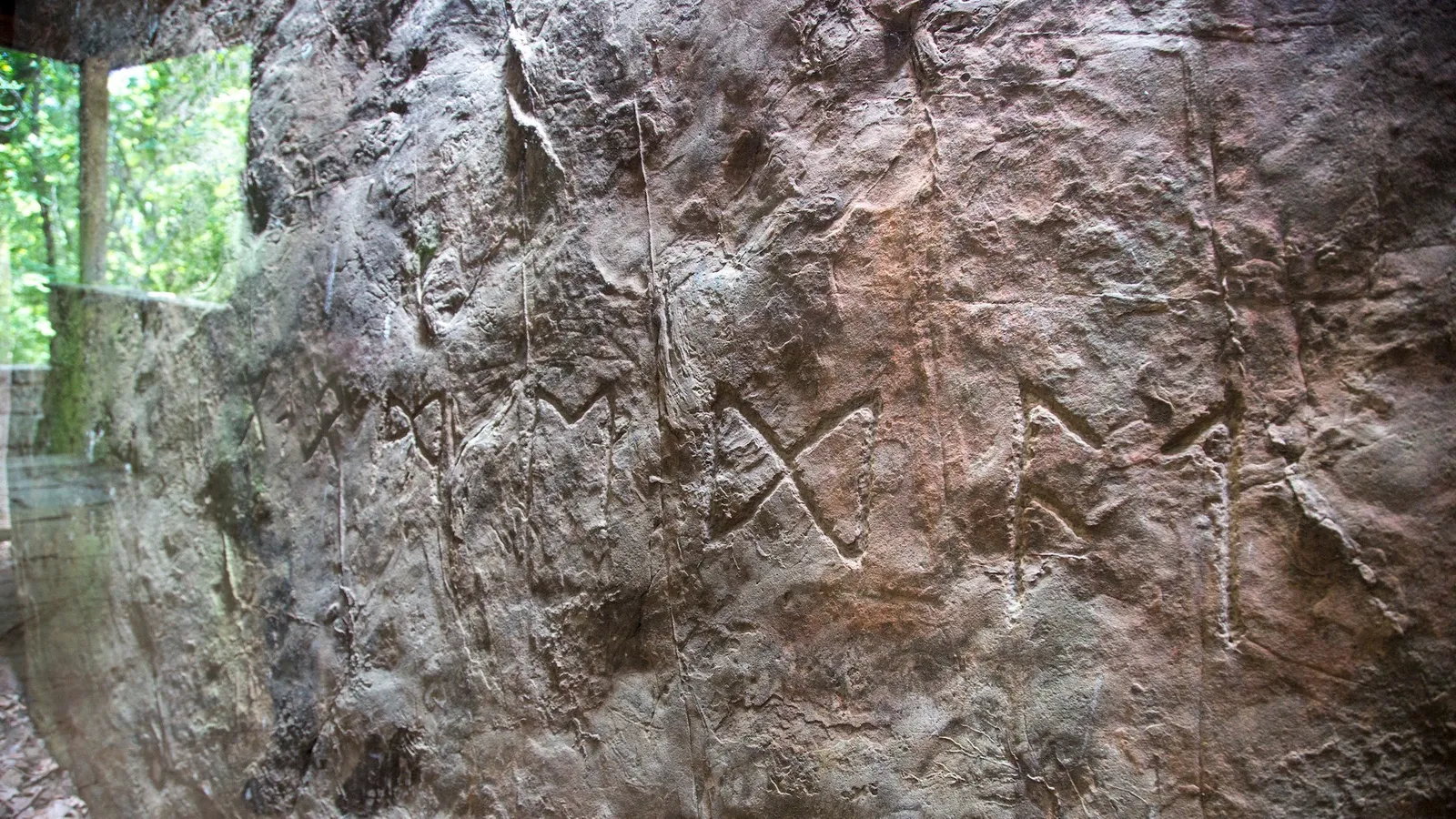
Faith Rogers, an environmental-science intern and volunteer at the Heavener Runestone Park, led me down a cobblestone path toward one of the 55-acre woodland's biggest attractions – which is also one of the US' biggest historical mysteries. We were deep in the rolling, scrub-forest foothills of the Ouachita Mountains in far eastern Oklahoma, and we were on our way to view a slab of ancient sandstone that still has experts scratching their heads and debating about the eight symbols engraved on its face. 

Some believe that these cryptic inscriptions are runes (ancient alphabetical characters) carved into the towering stone circa 1000 CE by Norse explorers who travelled up the Arkansas River to this remote part of landlocked America.

Read the rest of this article...

Sunday, 30 October 2022

Harald Hardrada: King of Norway


Coming back to Norway meant that Harald Hardrada had two relatives to deal with – Sweyn and Magnus. It would make for an interesting path to the Norwegian throne. 

By 1043 the wheel of fortune had turned once more, and the family of Harald Hardrada was triumphant. While Harald had busied himself in his exile waging war across the wine-dark sea in the employ of the empire of the Romans, his nephew Magnus, the illegitimate son of Harald’s half-brother King Olaf II, had become the figurehead of a powerful bloc of Norwegian aristocrats disaffected by the burdens and excesses of Danish overlordship. With their support and after a decade of warfare, Magnus was able to not only secure his hold on Norway, doing much to establish and disseminate notions of royal authority, but also capture the throne of Denmark. Their traditional enemies and tormentors had all fallen by the wayside or been bent to purpose. Cnut the Great and his sons, their power fragmented by internecine rivalries and squabbles, all fell victim to illness and tragedy while the Norwegian aristocrats who had overthrown and then slain Olaf II had all reconciled themselves to Magnus and the notion of Norwegian kingship.

Magnus, whose role in the political unification of Norway and establishment of the kingdom has all too often been overlooked and undervalued, is known to history as Magnus the Good. He earnt this epithet we are told by the 13th-century saga material because rather than seek revenge against his father’s killers and perpetuate a destructive blood feud, Magnus chose to forgive them and work together in challenging Danish hegemony over Norway. Of course, Magnus was only eleven when he was first proclaimed king in 1035, therefore despite the support of several powerful advocates, such as his stepmother Queen Astrid and her brother King Arnud Jacob of Sweden, the extent to which he could have struck back against his aristocratic sponsors is highly questionable. Harald’s epithet of Hardrada on the other hand translates into English into something along the lines of the severe or stern. Wars fought between those famed for their decency and gentleness of heart and those known for their severe and forceful nature seldom last long.

And it was to be war, for Harald arrived in Scandinavia intent upon seizing the throne of Norway for himself. Perhaps he felt like he had come too far, seen too much and served too many simply to present himself to his nephew as just another poor relation, a potential military proxy and advisor in a royal court already replete with vested interests and aristocratic affinities. Harald had departed Constantinople with considerable haste with a meagre handful of ships and a few hundred diehard followers at the most. Yet he was a force to be reckoned with.

Read the rest of this article...

Saturday, 29 October 2022

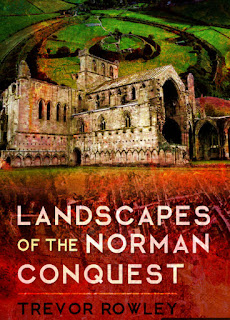
Landscapes of the Norman Conquest


An exciting new book “Landscapes of the Norman Conquest” by Trevor Rowley has now been published.

For a long time, the Norman Conquest has been viewed as a turning point in English history; an event which transformed English identity, sovereignty, kingship, and culture. The years between 1066 and 1086 saw the largest transfer of property ever seen in English History, comparable in scale, if not greater, than the revolutions in France in 1789 and Russia in 1917. This transfer and the means to achieve it had a profound effect upon the English and Welsh landscape, an impact that is clearly visible almost 1,000 years afterwards.

Although there have been numerous books examining different aspects of the British landscape, this is the first to look specifically at the way in which the Normans shaped our towns and countryside.

The castles, abbeys, churches and cathedrals built in the new Norman Romanesque style after 1066 represent the most obvious legacy of what was effectively a colonial take-over of England. Such phenomena furnished a broader landscape that was fashioned to intimidate and demonstrate the Norman dominance of towns and villages.

The devastation that followed the Conquest, characterised by the ‘Harrying of the North’, had a long-term impact in the form of new planned settlements and agriculture. The imposition of Forest Laws, restricting hunting to the Norman king and the establishment of a military landscape in areas such as the Welsh Marches, had a similar impact on the countryside.

You can find further details here…

Viking beadmakers’ secrets revealed in new study


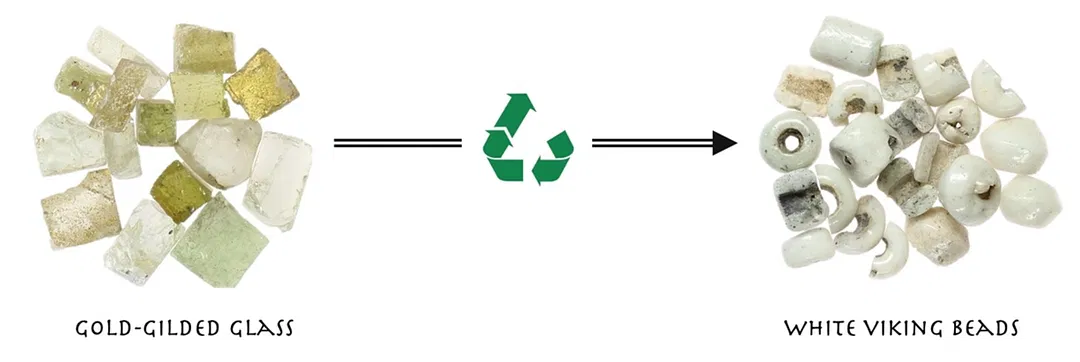
The Viking Age bead makers were more advanced than previously believed. New research shows that craftsmen in Denmark around the year 700 used sophisticated and sustainable methods when they gave old Roman glass mosaics new life as glass beads.

Ribe was an important trading town in the Viking Age. At the beginning of the 8th century, a trading place was established on the north side of the river Ribe, to which traders and craftsmen flocked from far and wide to manufacture and sell goods such as brooches, suit buckles, combs and coloured glass beads.

When glass became a scarce commodity in the Early Medieval period, coloured glass cubes – so-called tesserae – were torn down from mosaics in abandoned Roman and Byzantine temples, palaces and baths, transported North and traded at emporia towns such as Ribe, where the beadmakers melted them down in large vessels and shaped them into beads.

Read the rest of this article...

Viking silver treasure uncovered in Täby in Stockholm

 
A unique treasure hoard dating from the Viking Age has been uncovered in Täby, Stockholm. Consisting of arm rings, coins and eight torque-style neck rings. Photo: The Archaeologists

A 1000-year-old silver hoard containing several beautiful torque-style neck rings, arm rings and coins has been discovered in Viggbyholm, Täby, outside Stockholm. “This is something you probably only experience once in a lifetime”, says Maria Lingström at The Archaeologists, National Historical Museums in Sweden.

The treasure was found during an archeological excavation of a Viking Age settlement in Täby outside Stockholm, an area thought to have been inhabited for several hundred years. The archeologists have found more than 20 houses and buildings, the earliest dating from around 400 AD, continuing into the Viking Age (800–1050 AD) and early Middle Ages. The treasure was buried under what was once a wooden floor in a building. The coins were deposited in a pouch made of linen, which together with the jewellery had been put into a small ceramic pot.

Read the rest of this article...

Viking unhacked silver hoard found in Sweden


Sweden sees Norway’s Viking hack silver hoard and raises with a Viking hoard of silver jewelry and coins in pristine unhacked condition. The hoard was discovered in an excavation of the Viking settlement of Täby, outside Stockholm. It was cached under the wooden floor of one of the Viking Age (800-1050 A.D.) houses about 1,000 years ago.

Read the rest of this article...

Saturday, 22 October 2022

Secrets Of Iron Age Power Center Uppåkra Revealed By Archaeologists


New excavations in Uppåkra are at the forefront of cutting edge archaeological techniques. By combining big data, data modeling and DNA sequencing, researchers are currently solving significant parts of a historical puzzle. Perhaps we will learn whether the Justinianic Plague, the forerunner of the Black Death, reached Uppåkra. Until now, this has been uncertain.

Torbjörn Ahlström, professor of Historical Osteology at Lund University stands on a hill outside Lund. His gaze falls on the fertile soil that has served people in the area for centuries.

Read the rest of this article...

Thor’s hammer amulet found in Sweden


Archaeologists have discovered a lead Thor’s hammer amulet dating to the late 10th century in Ysby in southwestern Sweden’s Halland province. The hammer was unearthed at the site of future housing construction. Previous investigations at the site revealed archaeological remains from the Neolithic and Iron Age, but this is the first artifact from the Viking era discovered there. It’s also the first Thor’s hammer amulet found in Halland.

The amulet is 3 centimeters (1.18 inches) long and cast in lead in the stylized shape that represents Thor’s dwarf-crafted hammer Mjölnir. It has a hole in the shaft where a string or a tie of some sort was threaded through so it could be worn as a pendant. One side of the hammer’s head is engraved with an interlacing pattern.

Read the rest of this article...

Wednesday, 5 October 2022

10 of the Best Viking Museums in Europe

 
Image Credit: Tim Graham / Alamy Stock Photo

Get in touch with your inner Norseman and discover the greatest Viking museums across Europe.

The Viking Age is undeniably a fascinating period in history, inspiring countless books, films, television shows and somewhat questionable Halloween costumes. Characters such as Ragnar Lothbrok and Leif Erikson have become household names, while Norse Gods are not only subjects of old legends but modern blockbusters. Viking Museums help shed some light on this period which is often misunderstood, debunking many famous myths while showing a multifaceted view of early medieval Scandinavian life.

Here are ten of the best Viking museums across Europe, ranging from open-air museums where history is re-enacted to Viking ships and buildings that survived the elements.

Read the rest of this article...