Friday, 26 July 2013

Viking Jewelry Unearthed in Denmark

A copper alloy piece of jewelry found at a Viking-age site in Denmark shows an animal figure with a beadlike chain around its neck.

Several pieces of Viking jewelry, some of which contain gold, have been uncovered at a farm site in Denmark that dates as far back as 1,300 years.

Although the Vikings have a popular reputation as being raiders, they were also farmers, traders and explorers, and the craftsmanship seen in this jewelry demonstrates their artistic skills.

Archaeologists working with volunteers used metal detectors to find the jewelry in different spots throughout a farmstead on Zealand, the largest island in Denmark. The remains of the site, which is now called Vestervang, date from the late seventh to the early 11th centuries.

Read the rest of this article...

Friday, 19 July 2013

Viking legends to retell stories of old at Jorvik Centre

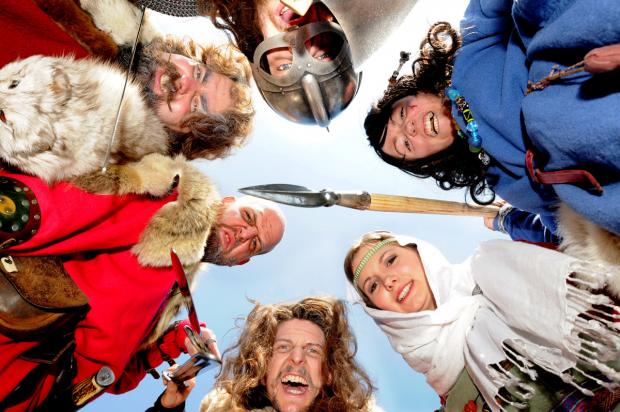
The gathering of legendary Viking heroes at the Jorvik Centre, clockwise from top, Eric Bloodaxe, warrior woman Lathgertha, Aud the Deep Minded, King Cnut the Great, King Harald Bluetooth and King Orry of Man
NINE heroes and a skeleton will take up residence at the Jorvik Viking Centre to give visitors an insight into the great deeds and battles of the past.
Legendary warrior and campaigner Eric Bloodaxe, warrior woman Lathgerda, warrior man Sweyn Forkbeard, adventurer Harald Hardrada, explorer Leif the Lucky and King Harald Bluetooth of Denmark are among nine big names from Viking and pre-Norman English history who will be among the star attractions of the centre’s Heroes exhibition.
They will answer questions from visitors and talk to them in between taking over its Twitter feed.
The exhibition will also include items to illustrate the lifestyle of a Viking hero, including a skeleton unearthed at Fishergate which may belong to a warrior killed at the Battle of Fulford in 1066 and several tenth century stones that may have covered a grave of a fallen hero or rich patron.
Read the rest of this article...

Wednesday, 17 July 2013

A tantalizing hint of an ancient trading town


When archaeologists Geir Grønnesby and Ellen Grav Ellingsen found these and other artefacts during a dig in mid-Norway, they realized they had intriguing evidence of a Viking-age trading area mentioned in the Norse Sagas.
The finds came from two separate boat graves in an area in Nord-Trøndelag County called Lø, a farm in part of Steinkjer. The archaeologists, who both work at the Norwegian University of Science and Technology's University Museum, were there to conduct a routine investigation required because of an upgrade to Norway's main national highway, the E6.
But instead of a simple highway dig, the researchers found themselves with a potential answer to an unsolved puzzle about a mysterious Viking trading place that is named in ancient sagas, but that has never before been located.
Read the rest of this article...

Tuesday, 16 July 2013

Vikings held political summits across Europe

Fancy clothes, gifts and weapons acted as important status symbols in political negotiations in the Viking Age. (Photo: Asbjørn Mølgaard Sørensen)

What do Angela Merkel and Harald Bluetooth, the Viking King of the Danes, have in common? Merkel is probably guilty of less pillaging than old Harald, but she participates in numerous political meetings throughout Europe – and so did Harald and the other Viking kings.
The kings were politicians who knew about political spin and who built up internal networks, explains Anne Pedersen, an archaeologist and curator at the National Museum of Denmark, which currently hosts a major exhibition about Vikings.
One of the main themes of the exhibition is power and international alliances:
”When the Vikings formed alliances, they did it much like we do today,” says Pedersen. “They made themselves visible on the political scene and they met with their peers at what we could call political summits where they formed networks and alliances.”
Read the rest of this article...

Monday, 15 July 2013

CLUES FROM AN ANCIENT VIKING TRADING CENTRE


It was a routine archaeological dig necessitated by the expansion of Norway’s main north-south highway the E6 just north of Trondheim, the country’s third largest city. But the finds surprised archaeologists from the Norwegian University of Science and Technology’s University Museum, who now believe they have solved a centuries-old puzzle posed in Norse sagas.
When archaeologists Geir Grønnesby and Ellen Grav Ellingsen found a silver button and a set of balance scales along with other artefacts during a dig in mid-Norway they realized they had intriguing evidence of a Viking-age trading area mentioned in the Norse Sagas.

Boat graves

The finds came from two separate boat graves in an area in Nord-Trøndelag County called Lø, a farm in part of Steinkjer.
These finds got us thinking about the descriptions in the Sagas that describe Steinkjer as a trading place,” the researchers wrote of their findings in Vitark, an academic journal published by the University Museum. “The Sagas say that Steinkjer, under the rule of Eirik Jarl, was briefly even more important than Nidaros, before Olav Haraldsson re-established Nidaros as the king’s residence and trading city.”
Read the rest of this article...

Friday, 28 June 2013

Gold Viking ingot discovered by amateur treasure hunter

A rare piece of Viking gold dating back more than a thousand years was discovered by an amateur with a metal detector in Northern Ireland, it was revealed.


The ingot is one of only a few nuggets known from Ireland, experts said Photo: PA

Tom Crawford was pursuing his hobby in farmland in Co Down last year when he found the small but precious ingot, which may have been used as currency during the 9th and 10th centuries. It is one of only a few nuggets known from Ireland, experts said.
Mr Crawford also uncovered a tiny silver ring brooch with unusual floral imprints, probably used for decoration by a man or woman during the Medieval period, a short distance away.
"It is all part of the big jigsaw of the history of this country," he told a Belfast inquest convened to establish if the find was treasure.
Read the rest of this article...

Viking gold unearthed by treasure hunter in County Down

Tom Crawford found the ingot in Brickland last year

A treasure hunter armed with a metal detector has unearthed a rare piece of Viking gold that is more than 1,000 years old.
Tom Crawford was sweeping farmland in County Down last year when he found the small ingot which may have been used as currency during the 9th and 10th centuries.
Experts said only a few such nuggets had been found in Ireland.
Close by, he found a tiny silver ring brooch dating from medieval times.
Read the rest of this article...

Isle of Man Viking silver declared 'treasure trove'

Four Viking silver objects have now been dug up in the same Isle of Man field


Three pieces of Viking silver dating back 1,000 years, discovered using a metal detector in the Isle of Man, have been declared treasure trove.
An inquest heard the three items, found by Seth Crowe in a field in Andreas in April, date back to between 930 and 1080 AD.
Archaeologists believe the two silver ingots and brooch fragment contain more than 60% silver.
Coroner of Inquests John Needham made the ruling at Douglas Courthouse.
Mr Crowe, 39, made the discovery having sought the permission of the landowner Leslie Faragher, some years ago.
Read the rest of this article...

Tuesday, 25 June 2013

The Sutton Hoo Online Exhibition


In 1939, just before the outbreak of the Second World War, an archaeologist named Basil Brown excavated the largest of 18 burial mounds in the grounds of a country house at Sutton Hoo in the east of England. What he discovered turned out to be a spectacular undisturbed burial. 

Placed inside a vast ship, were the extraordinarily rich belongings of a high-ranking Anglo-Saxon man, possibly even a king...

View the online exhibition...

Monday, 24 June 2013

Biggest Viking exhibition in 20 years opens – and this time they're angry


Recent peaceful Viking rebrands are smashed in a vast and bloodthirsty show that will soon set sail for London

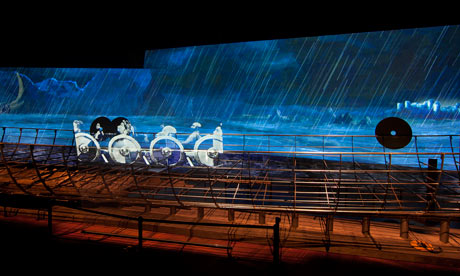
A violent animated backdrop to a reconstructed Viking warship

All around the hull of the longest Viking warship ever found there are swords and battle axes, many bearing the scars of long and bloody use, in an exhibition opening in Copenhagen that will smash decades of good public relations for the Vikings as mild-mannered traders and farmers.
"Some of my colleagues thought surely one sword is enough," archaeologist and co-curator Anne Pedersen said, "but I said no, one can never have too many swords."
The exhibition, simply called Viking, which will be opened at the National Museum by Queen Margrethe of Denmark on Thursday, and to the public on Saturday, will sail on to to London next year to launch the British Museum's new exhibition space.

Read the rest of this article...

Tuesday, 18 June 2013

Large Iron Age houses discovered

The Lofotr Viking Museum in Borg [Credit: MVFram]
Archaeologists from the science museum in Trondheim have located the foundations of two large houses from the Iron Age, close to one of the biggest burial grounds in Hallem, near Stiklestad in Trøndelag.
"This rarely happens in Norway, and it is completely unexpected" says archaeologist Marte Mokkelbost. The archaeologists have discovered two so-called "long houses" that confirm that Stiklestad was an area inhabited by people who were both wealthy and in power during the iron age.

The burial grounds at Stiklestad is one of the largest collection of cemeteries in Norway. The houses were found very close by, and one of the houses is more than 50 meters long and eight meters wide. 

Read the rest of this article...

Replica Viking ship takes to the water


A group of history enthusiasts from across the north west have successfully rowed the biggest replica Viking ship in the world.

Replica Viking ship takes to the water
Replica Viking ship [Credit: ITV]
Despite many of them being novices, the group managed to get the 70-ton Dragon Harald Fairhair up to a respectable 3 knots on the fjords near Karmoy island in Western Norway.It's hoped the ship, which is named after the king who united the country more than 1,000 years ago, will retrace the route of the Vikings and visit Merseyside and the Isle of Man next year.

Trials are currently underway near the town of Haugesund where she was built. If they are successful, the vessel will embark on a major international voyage that could see her sail as far as New York.The ship was funded by a local businessman to learn more about ancient boat-building techniques and the Vikings themselves. It has been designed using a combination of archaeological evidence, details from folklore and local knowledge handed down over the generations.While it is mainly wind power that will get the Dragon between destinations, organisers need volunteers to row her in to and out of port.

Read the rest of this article...

Monday, 17 June 2013

The First Vikings


Two remarkable ships may show that the Viking storm was brewing long before their assault on England and the continent

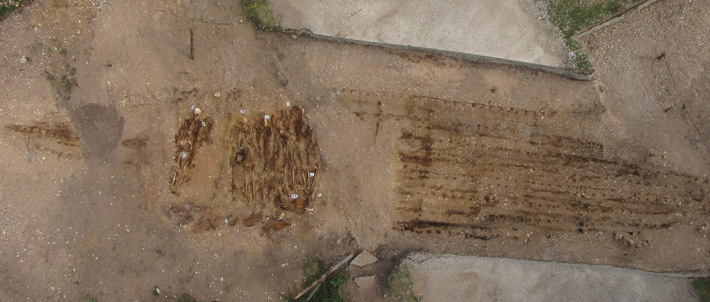
(Courtesy Liina Maldre, University of Tallinn)The carefully stacked remains of 33 men were buried in the ship that brought them from Scandinavia to an Estonian island more than a century before the Vikings are thought to have been able to sail across such distances.

According to historians, the Viking Age began on June 8, A.D. 793, at an island monastery off the coast of northern England. A contemporary chronicle recorded the moment with a brief entry: “The ravages of heathen men miserably destroyed God’s church on Lindisfarne, with plunder and slaughter.” The “heathen men” were Vikings, fierce warriors who sailed from Scandinavia and bore down on their prey in Europe and beyond in sleek, fast-sailing ships. In the centuries that followed, the Vikings’ vessels carried them deep into Russia and as far south as Constantinople, Sicily, and possibly even North Africa. They organized flotillas capable of carrying warriors across vast distances, and terrorized the English, Irish, and French coasts with lightning-fast raids. Exploratory voyages to the west took them all the way to North America.

The Vikings’ explosion across Europe and Asia and into the Americas was the result of the right combination of tools, technology, adventurousness, and ferocity. They came to be known as an unstoppable force capable of raiding and trading on four continents, yet our understanding of what led up to that June day on Lindisfarne is surprisingly shaky. A recent discovery on a remote Baltic island is beginning to change that. Two ships filled with slain warriors uncovered on the Estonian island of Saaremaa may help archaeologists and historians understand how the Vikings’ warships evolved from short-range, rowed craft to sailing ships; where the first warriors came from; and how their battle tactics developed. “We all agree these burials are Scandinavian in origin,” says Marge Konsa, an archaeologist at the University of Tartu. “This is our first taste of the Viking era.”
Read the rest of this article...

Monday, 10 June 2013

Research sheds new light on Viking travels in N.L.

Vikings settled at the L'Anse aux Meadows site on the northern peninsula of Newfoundland. (CBC)

Norsemen may have encountered Newfoundland Beothuk, study suggests


An American researcher has found new information about the movement of the Vikings in Newfoundland and Labrador which suggests they may have moved further inland than previously thought, and may have even travelled to other parts of Atlantic Canada.
Kevin Smith, chief curator at Haffenreffer Museum of Anthropology at Brown University in Rhode Island, says the Norsemen may have had contact with the Aboriginal Peoples a thousand years ago. He presented his findings in April at the annual meeting of the Society for American Archaeology.
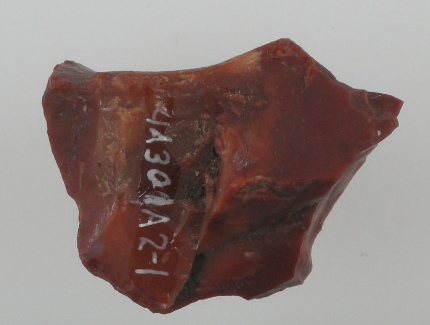
According to Smith, recent geochemical tests of a red stone-like flint used by the Vikings found at the L'Anse aux Meadows site on Newfoundland's Northern Peninsula show the flint came from a distinct volcanic formation in Notre Dame Bay on the island's northeast coast.
Read the rest of this article...

New North America Viking Voyage Discovered

An image showing part of the Notre Dame Bay coastline. At the time the Norse journey took place this area was populated by the ancestors of the Beothuk people. The land is also heavily forested, a sharp contrast to the relatively more barren lands in the North Atlantic which the Norse had sailed to earlier. It was also rich in fish, birds and sea mammals and the temperature was warmer. 
CREDIT: Kevin Smith.

Some 1,000 years ago, the Vikings set off on a voyage to Notre Dame Bay in modern-day Newfoundland, Canada, new evidence suggests.

The journey would have taken the Vikings, also called the Norse, from L'Anse aux Meadows on the northern tip of the same island to a densely populated part of Newfoundland and may have led to the first contact between Europeans and the indigenous people of the New World.

Read the rest of this article...

New Evidence of a Viking Voyage Found at L’Anse aux Meadows

Jasper

Chemical analysis of two jasper fire starters unearthed at the site of L’Anse aux Meadows, a Norse site in the New World, suggests that the raw material to make them came from the Notre Dame Bay area of Newfoundland. “This area of Notre Dame Bay [is] archaeologically the area of densest settlement on Newfoundland, at that time, of indigenous people, the ancestors of the Beothuk,” said Kevin Smith of Brown University. Smith thinks it’s possible that the Norse and the ancestral Beothuk may have made contact when the Norse traveled from L’Anse aux Meadows. Other trips may have taken them to the Gulf of St. Lawrence, where they may have obtained butternut seeds, and the Canadian Arctic, where they may have traded with indigenous people. Norse sagas tell of hostile meetings with peoples of the New World. 

Read the rest of this article...

Sunday, 2 June 2013

HaNoA - Häfen im Nordatlantik


Der Hafen von Búðasandur, Hvalfjörður, Island. Die Überreste eines Handelsplatzes befinden sich in der Bildmitte, das mittelalterliche Hafengebiet (rechts) ist heute versandet (Foto N. Mehler).

Fast alle bedeutenden mittelalterlichen Häfen des nordeuropäischen Festlandes waren Teil größerer Siedlungen, aus denen sich häufig Städte entwickelten. Viele dieser Häfen hatten spezielle Einrichtungen wie z. B. Kaianlangen, Landebrücken und Lagerhallen, die einen gut entwickelten und organisierten Schiffsbetrieb und Warenumschlag ermöglichten. Völlig anders ist die Situation im Nordatlantikraum zu dieser Zeit. Im marginalen Siedlungsgebiet von Island, Grönland, Shetland und den Färöer Inseln gab es in der Wikingerzeit und im Mittelalter keine Städte. 

Read the rest of this article...

Thursday, 16 May 2013

Danish teen makes rare Viking-era find with metal detector


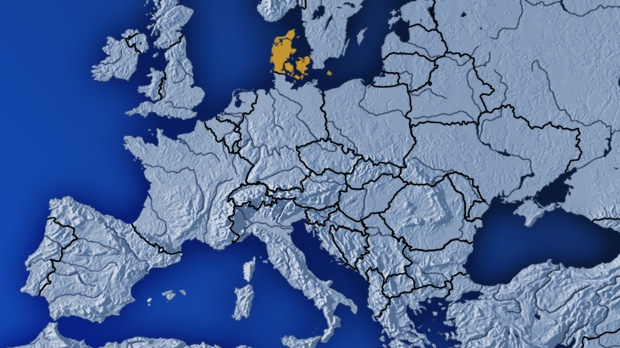
Denmark


Danish museum officials say that an archaeological dig last year has revealed 365 items from the Viking era, including 60 rare coins.

Danish National Museum spokesman Jens Christian Moesgaard says the coins have a distinctive cross motif attributed to Norse King Harald Bluetooth, who is believed to have brought Christianity to Norway and Denmark.

Sixteen-year-old Michael Stokbro Larsen found the coins and other items with a metal detector in a field in northern Denmark.

Stokbro Larsen, who often explores with his detector, said he is often laughed at because friends find him "a bit nerdy."


Read the rest of this article...

Monday, 6 May 2013

'Missing' rune stone turns up near Stockholm


A Viking-era rune stone has been "rediscovered" near Vaxholm in the Stockholm archipelago after a group of university students stumbled across the historic rock that had been hiding in plain sight for nearly 300 years.
'Missing' rune stone turns up near Stockholm
Researcher Magnus Källström examining the rune stone [Credit: The Local]
"It’s a very intriguing find, it shows that there is so much history yet to discover," researcher Magnus Källström from the Swedish National Heritage Board (Riksantikvarieämbetet) told The Local in reference to the 1,000-year-old stone.

The find took place last week while archaeologist Torun Zachrisson and a group of students from Stockholm University were on an excursion in hopes of finding a rune stone known as U 170.

According to Zachrisson the stone has "been missing" for 300 years, but was rumoured to be near Bogesund's brygga, a jetty just outside of the archipelago town that lies an hour east of the capital city.


Read the rest of this article...

Dealing with the doldrums on a Viking voyage


The outline of a foot on the Gokstad Ship gives us an inkling of what it might have been like for Vikings to cross the ocean.


The floorboard from the Gokstad ship. (Photo: Hanne Jakobsen)

He’s crowded into a sleek sailing ship with 65 other men. Scarcely room to move. It’s been days since anybody has seen land − longer since anyone bathed. The old-timers’ repeated tales of bygone raids and voyages are beginning to wear thin. 
His place is behind an oar, but there is no need to row continuously on the North Sea. With wind in the sail, the boat surges towards England, where riches await.
But what is there to do while waiting to reach a foreign coast?
Maybe it was a teenager engaged in a Viking version of tagging a school desk. In any case, someone took out his knife, bent down and traced the outline of his foot on the deck of the Gokstad Ship.

Read the rest of this article...

Friday, 26 April 2013

Online Courses in Archaeology


University of Oxford Online Courses in Archaeology
Cave paintings, castles and pyramids, Neanderthals, Romans and Vikings - archaeology is about the excitement of discovery, finding out about our ancestors, exploring landscape through time, piecing together puzzles of the past from material remains.
These courses enable you to experience all this through online archaeological resources based on primary evidence from excavations and artefacts and from complex scientific processes and current thinking. Together with guided reading, discussion and activities you can experience how archaeologists work today to increase our knowledge of people and societies from the past.
The following courses are available:

Sunday, 21 April 2013

The Battle of Fulford: War breaks out over 'forgotten' Yorkshire battlefield


Local historians say it's the site of the curtain-raiser to Hastings in 1066. The council wants to build hundreds of houses on it


Combatants are squaring up to do battle over the fate of a Yorkshire field more than 1,000 years after they say an earlier battle was fought there that helped to change the course of British history. Rival groups have issued a call to arms over the future of what some historians claim is the true site of the "forgotten" Battle of Fulford in September 1066. Local historians are fighting a rearguard action over developers' plans to build 600 homes on a field near York which they say is the site of the historic battle.


The Battle of Fulford is where an invading Viking army defeated an Anglo-Saxon force led by the northern earls, Edwin and Morcar. Historians say the battle is important because the defeat forced the Anglo-Saxon king, Harold Godwinson, to march his army north to fight and defeat the invaders at the Battle of Stamford Bridge five days later. Although victorious, Harold's forces suffered losses at Stamford Bridge and were exhausted after the march, and the campaign in the north diverted the king's attention away from the south coast, where William of Normandy launched his invasion.

Read the rest of this article...

Friday, 12 April 2013

Grabungen am Danewerk gehen weiter


Ausgrabungen am Danewerk. © ALSH

The most complete view yet of a possible human ancestor uncovered in South Africa has revealed an intriguing mix of human and ape traits.
The two-million-year-old remains of several partial skeletons belonging to a previously unknown humanlike species were found in 2008 near Johannesburg.
The new analysis shows this species -Australopithecus sediba - had a human-like pelvis, hands and teeth, and a chimpanzee-like foot.
The findings appear in Science journal.
In six separate research reports, scientists probed further into the anatomy of a juvenile male skeleton, commonly referred to as MH1, a female skeleton, known as MH2, and an isolated adult tibia or shinbone, known as MH4.

Read the rest of this article...

Sunday, 7 April 2013

Unmarked grave dug up in hunt for England's King Alfred the Great


Archaeologists dug up an unmarked grave in a quiet English churchyard in search of remains of King Alfred the Great, a ninth century monarch credited with fending off the Vikings.

The exhumation was apparently triggered by fears that interest over the recent discovery of the skeleton of Richard III could lead grave robbers to dig the area for his bones.

Alfred the Great is known to generations of schoolchildren through a popular legend that tells of his scolding by a peasant woman for letting her cakes burn while he watched over them.

He was at the time preoccupied with the problem of how to repel the Danes, who had captured swaths of Anglo-Saxon England.


Read the rest of this article...

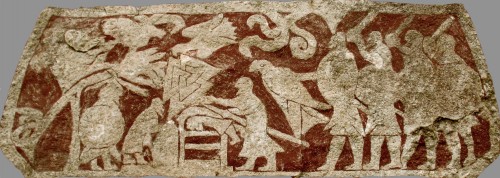
The Vengeance of Ivarr the Boneless


A section from the Stora Hammars I stone, preserved at Gotland in Sweden. The carving seems to show a victim about to be cut open from the back; a bird of prey appears behind him. It has been suggested that this depicts the rite of the blood eagle. Image: Wikicommons.

Ninth-century Scandinavia has had good press in recent years. As late as the 1950s, when Kirk Douglas filmed his notorious clunker The Vikings—a movie that featured lashings of fire and pillage, not to mention Tony Curtis clad in an ahistorical and buttocks-skimming leather jerkin—most popular histories still cast the Denmark and Norway of the Dark Ages as nations overflowing with bloodthirsty warriors who were much given to horned helmets and drunken ax-throwing contests. If they weren’t worshiping the pagan gods of Asgard, these Vikings were sailing their longships up rivers to sack monasteries while ravishing virgins and working themselves into beserker rages.

Since the early 1960s, though—we can date the beginning of the change to the publication of Peter Sawyer’s influential The Age of the Vikings (1962)—rehabilitation has been almost complete. Today, the early Viking age has become the subject of a History Channel drama, and historians are likely to stress that the Vikings were traders and settlers, not rapists and killers. The Scandinavians’ achievements have been lauded—they sailed all the way to America and produced the Lewis Chessmen—and nowadays some scholars go so far as to portray them as agents of economic stimulus, occasional victims of their more numerous enemies, or even (as a recent campaign organized by the University of Cambridge suggested) men who “preferred male grooming to pillaging,” carrying around ear spoons to remove surplus wax. To quote the archaeologist Francis Pryor, they “integrated into community life” and “joined the property-owning classes” in the countries they invaded.


Read the rest of this article...

Saturday, 23 March 2013

Online Viking Course


Vikings: Raiders, Traders and Settlers

University of Oxford Online and Distance Learning

8 May to 21 July 2013

Ravagers, despoilers, pagans, heathens - the Vikings are usually regarded as bloodthirsty seafaring pirates, whose impact on Europe was one of fear and terror. As they plundered the British Isles and the north Atlantic, these pagan invaders were seen by their Christian victims as a visitation from God.

Yet the Vikings were also traders, settlers and farmers with a highly developed artistic culture and legal system. Their network of trade routes stretching from Greenland to Byzantium and their settlements, resulted in the creation of the Duchy of Normandy in France, the foundation of the Kingdom of Russia in Kiev and Novgorod as well as the development of Irish towns including Cork, Dublin and Limerick. 

This course will use recent findings from archaeology together with documentary records, to examine these varied aspects of the Viking world and to give a detailed and balanced view of this fascinating period. 

A wide variety of online resources including Google Maps and Google Earth as well as specific Viking web pages, are used in conjunction with text books and specially designed online interactive media to create an exciting insight into the world of the Vikings.


Further details...

Pre-Viking tunic found by glacier as warming aids archaeology


A pre-Viking woollen tunic found beside a thawing glacier in south Norway shows how global warming is proving something of a boon for archaeology, scientists said on Thursday.
The greenish-brown, loose-fitting outer clothing - suitable for a person up to about 176 cms (5 ft 9 inches) tall - was found 2,000 metres (6,560 ft) above sea level on what may have been a Roman-era trade route in south Norway.
Carbon dating showed it was made around 300 AD.
"It's worrying that glaciers are melting but it's exciting for us archaeologists," Lars Piloe, a Danish archaeologist who works on Norway's glaciers, said at the first public showing of the tunic, which has been studied since it was found in 2011.
A Viking mitten dating from 800 AD and an ornate walking stick, a Bronze age leather shoe, ancient bows, and arrow heads used to hunt reindeer are also among 1,600 finds in Norway's southern mountains since thaws accelerated in 2006.

Read the rest of this article...

Stone Ships Show Signs of Maritime Network in Baltic Sea Region 3,000 Years Ago


 In the middle of the Bronze Age, around 1000 BC, the amount of metal objects increased dramatically in the Baltic Sea region. Around the same time, a new type of stone monument, arranged in the form of ships, started to appear along the coasts. New research from the University of Gothenburg, Sweden shows that the stone ships were built by maritime groups.

The maritime groups were part of a network that extended across large parts of northern Europe. The network was maintained largely because of the strong dependence on bronze.
Archaeologists have long assumed that bronze was imported to Scandinavia from the south, and recent analyses have been able to confirm this notion. The distribution of bronze objects has been discussed frequently, with most analyses focusing on the links in the networks. The people behind the networks, however, are only rarely addressed, not to mention their meeting places.

Read the rest of this article...

Friday, 8 March 2013

First evidence of Viking-like 'sunstone' pulled from shipwreck


Researchers say this crystal found at the Alderney shipwreck near the Channel Islands could prove that fabled Viking sunstones really did exist.


Ancient lore has suggested that the Vikings used special crystals to find their way under less-than-sunny skies. Though none of these so-called "sunstones" has ever been found at Viking archaeological sites, a crystal uncovered in a British shipwreck could help prove they did indeed exist.
The crystal was found in the wreckage of the Alderney, an Elizabethan warship that sank near the Channel Islands in 1592. The stone was discovered less than 3 feet (1 meter) from a pair of navigation dividers, suggesting it may have been kept with the ship's other navigational tools, according to the research team headed by scientists at the University of Rennes in France.
A chemical analysis confirmed that the stone was Icelandic Spar, or calcite crystal, believed to be the Vikings' mineral of choice for theirfabled sunstones, mentioned in the 13th-century Viking saga of Saint Olaf.

Read the rest of this article...

Thursday, 7 March 2013

'Viking sunstone' found in shipwreck


A clear view of the Sun was not necessary for Vikings to navigate, scientists believe


A crystal found in a shipwreck could be similar to a sunstone - a mythical navigational aid said to have been used by Viking mariners, scientists believe.
The team from France say the transparent crystal may have been used to locate the Sun even on cloudy days.
This could help to explain how the Vikings were able to navigate across large tracts of the sea - well before the invention of the magnetic compass.
However, a number of academics treat the sunstone theory with scepticism.

Read the rest of this article...

ScienceShot: Sunstone Unearthed From Shipwreck


In 1592, a British ship sank near the island of Alderney in the English Channel carrying an odd piece of cargo: a small, angular crystal. Though cloudy and scuffed up from 4 centuries at the bottom of the sea, its precise geometry and proximity to the ship's navigation equipment caught the eye of a diver exploring the wreckage. Once it was brought back to land, a few European scientists began to suspect the mysterious object might be a calcite crystal, which they believe Vikings and other European seafarers used to navigate before the introduction of the magnetic compass. 

A previous study showed that calcite crystals reveal the patterns of polarized light around the sun and, therefore, could have been used to determine its position in the sky even on cloudy days. That led researchers to believe these crystals, which are commonly found in Iceland and other parts of Scandinavia, might have been the powerful "sunstones" referred to in Norse legends, but they had no archaeological evidence to support their hypothesis—until now. 

Read the rest of this article...

Some DNA ancestry services akin to 'genetic astrology'


Some customers want to find Viking ancestry, but almost every Briton has some, say researchers
Scientists have described some services provided by companies tracing ancestry using DNA as akin to astrology.
Some test findings tell people that they have links to groups such as Vikings, to particular migrations of people and sometimes to famous figures such as Napoleon or Cleopatra
But researchers working with a campaign group say DNA tests cannot provide accurate information about ancestry.
Ancestry companies insist they are able to provide a valuable service.

Read the rest of this article...

Monday, 4 March 2013

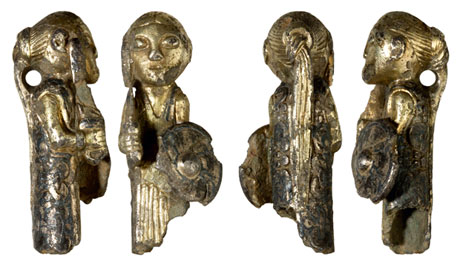
Flight of the valkyrie: the Viking figurine that's heading for Britain


Four views of the valkyrie, the only 3D depiction from the Viking era known to exist 
Photograph: Asger Kjærgaard/Odense Bys Museer

Thumb-sized figurine discovered in Denmark by amateur archaeologist is the only 3D representation of a valkyrie ever found – and will arrive at British Museum in 2014


A little face peering up from a clod of frozen mud in Denmark has proved to be a unique find: the only known 3D Viking representation of a valkyrie.
The figurine, believed to date from about AD800, was found in December and has gone straight from conservation to display in the National Museum in Copenhagen. It will then be included in the exhibition on the Viking age that opens there in June and at the British Museum in 2014.
The legends of the valkyries – the ominous companions of the god Odin who descend on battlefields to choose which warriors will die – have been among the most enduring in Scandinavian folklore and literature. Later images, often inspired by Wagner's music, tend to be romantic creatures with flowing locks and voluptuous bodies.

Read the rest of this article...
Sunday, 3 March 2013

‘Vikings’ Sheds Light On Dark Ages


This Image Released By History Shows Travis Fimmel As Ragnar (Center), In A Scene From ‘Vikings’, Premiering On March 3 On History. (AP)

Series Aims To Smash Some Stereotypes

ASHFORD, Ireland, March 2, (AP): If historical fiction guru Michael Hirst has his way, a legendary Viking raider named Ragnar soon will conquer North America on behalf of the History channel. History’s ambitious Dark Ages drama “Vikings,” debuted Sunday after five months of filming in Ireland, dramatizes the myth-cloaked story of Ragnar Lothbrok, leader of a Viking people typically depicted as horn-helmeted brutes. Here’s one pointed clue that “Vikings” aims to smash a few stereotypes along with English skulls: There’s not a horned head in sight because real Vikings never actually wore them. This lavishly produced nine-parter, the biggest production ever commissioned by History with a reported budget of $40 million, seeks to get viewers rooting for the Norsemen even as they butcher defenseless Christians and loot their way through Europe. With a cast including Gabriel Byrne, the series debuted on History Sunday at 10 pm.

“It’s always been in the background of my mind to do a Viking project,” said Hirst, whose reputation as a master of history-based drama has grown from his days as screenwriter of 1998’s film “Elizabeth” to his creation of the 2007-10 Showtime series “The Tudors” about the life, times and ill-fated brides of Henry VIII.
Speaking to The Associated Press during the final weeks of shooting, in a rain-soaked ash forest in the Wicklow hills south of Dublin, Hirst said he loved poring over the history of an ill-understood person or period, then weaving it into compelling entertainment.

Hirst, the showrunner and executive producer of “Vikings” as well as its sole writer, found working with 8th-century Scandinavian warriors a liberating experience because, while there’s such rich legend in Norse culture, there’s simply no written history from the illiterate Vikings’ point of view. “By definition, not as much is known about the Dark Ages. This is particularly true of the Vikings who were pagans and didn’t write anything down,” he said as, in the distance, actors on horseback worked on a scene of Ragnar taking his son on a mission to a magical tree, one facet of Norse religious belief. “Because not a huge amount is known, that gives me some liberty. But I like working from historical material. I always start projects by reading as much research as possible.”


Read the rest of this article...